📅 Last updated: 05.07.2026
- A Brief History: How the Church Arrived at the Cremation vs Burial Conversation
- Key Biblical Passages on the Body, Death, and Resurrection
- Honoring the Body: A Shared Christian Conviction
- Cremation vs Burial: Practical and Pastoral Considerations
- Theological Freedom: Why Many Christians Choose Cremation
- Honoring Tradition: Why Some Christians Choose Burial
- Making the Decision: A Pastoral Approach
- Conclusion: Hope That Transcends the Decision
The question of cremation vs burial is one that many Christians face, often during a time of grief or careful end-of-life planning. It is a topic that touches on deep matters of faith, tradition, and personal conviction, and it deserves a thoughtful, biblically grounded exploration. While the Bible does not issue a direct command for or against either practice, it provides profound principles about the body, the resurrection, and our hope in Christ that can guide our decision-making with wisdom and peace.
A Brief History: How the Church Arrived at the Cremation vs Burial Conversation
To understand the modern Christian debate over cremation vs burial, it helps to step back in time. For most of church history, burial was the overwhelmingly dominant practice among Christians. This was not merely a cultural preference but a reflection of deep theological convictions rooted in Jewish tradition and early Christian teaching.
The Jewish Foundation of Burial
In the Old Testament, burial was the standard and honorable practice for God’s people. Abraham purchased the cave of Machpelah to bury his wife Sarah (Genesis 23), and the patriarchs were laid to rest in family tombs. Joseph gave instructions that his bones be carried out of Egypt and buried in the Promised Land (Genesis 50:25). Even the law in Deuteronomy 21:22-23 required that a hanged criminal be buried the same day, emphasizing that leaving a body exposed was a disgrace.
Cremation, by contrast, was often associated with pagan nations and divine judgment. In accounts like the destruction of Sodom and Gomorrah (Genesis 19) or the judgment of Achan (Joshua 7:25), burning was a sign of God’s wrath, not a normal end for the faithful. For the ancient Israelite, burial in the land signified belonging to God’s covenant community and hope in future restoration.
The Early Church and the Shift Away from Cremation
The early Christians adopted the Jewish practice of burial, but they infused it with new meaning. In the Roman world, cremation was common among pagans. Christians, however, insisted on burial as an act of faith in the resurrection of the body. The early church father Tertullian (c. 160–220 AD) wrote that Christians “do not fear death, but we do fear the dishonor of the body, because we know that it will rise again.” This conviction was so strong that the Roman catacombs—vast underground burial chambers—became the resting place for countless believers.
For centuries, the church’s stance was firm. In 789 AD, Charlemagne made cremation a capital offense. The Catholic Church formally prohibited cremation in 1886, a ban that remained until 1963, when it was lifted under certain conditions. The Eastern Orthodox Church still largely prohibits cremation, while many Protestant denominations have come to accept it, especially over the last century.
Key Biblical Passages on the Body, Death, and Resurrection
The heart of the cremation vs burial discussion is not about a single proof text but about what Scripture teaches regarding the human body. Several key passages form the foundation for Christian thinking.
Genesis 3:19: From Dust to Dust
“By the sweat of your brow you will eat your food until you return to the ground, since from it you were taken; for dust you are and to dust you will return.” This pronouncement after the Fall reminds us of our mortality. Whether through burial or cremation, the body eventually returns to the elements. This verse is often cited by those who see cremation as a natural, honest acknowledgment of that reality.
1 Corinthians 15: The Resurrection Body
The most extended treatment of resurrection in the Bible is 1 Corinthians 15. Paul uses the powerful analogy of a seed planted in the ground: “What you sow does not come to life unless it dies. And what you sow is not the body that will be, but a bare kernel” (1 Corinthians 15:36-37). The image of “sowing” a body is one of planting, not destroying. For many Christians, this reinforces the symbolism of burial as an act of faith—entrusting the body to God like a seed awaiting new life.
However, Paul’s emphasis is on the transformation God will accomplish, not on the preservation of the corpse. He writes, “Flesh and blood cannot inherit the kingdom of God” (1 Corinthians 15:50). The resurrection body will be a spiritual body, gloriously different from our current one. This frees Christians to see that God is not limited by the condition of our earthly remains.
Philippians 3:20-21: Our Lowly Body Transformed
“But our citizenship is in heaven, and from it we await a Savior, the Lord Jesus Christ, who will transform our lowly body to be like his glorious body.” This verse affirms that God will personally transform our bodies—regardless of what happens to them after death. Whether the body is buried, cremated, lost at sea, or consumed in a fire, God’s power to raise it is not diminished.
John 12:24: The Grain of Wheat
Jesus himself used the image of a grain of wheat falling into the earth and dying to produce much fruit. For many believers, this reinforces the beauty of burial as a picture of death leading to new life. But again, the principle is about surrender and trust, not a specific method of disposition.
Honoring the Body: A Shared Christian Conviction
Regardless of where you land on cremation vs burial, Christians are united in the belief that the human body is sacred. This conviction shapes how we approach both options.
The Body as a Temple
Paul writes in 1 Corinthians 6:19-20, “Do you not know that your bodies are temples of the Holy Spirit, who is in you, whom you have received from God? You are not your own; you were bought at a price. Therefore honor God with your bodies.” This passage speaks primarily to how we live, but it has implications for how we treat the body after death. The body that housed the Spirit of God is not merely a discarded shell. It deserves dignity.
Respectful Treatment in Death
The early Christians’ care for the bodies of the dead was a distinctive mark of their faith. They washed, anointed, and wrapped bodies for burial (as Joseph of Arimathea did with Jesus in John 19:38-42). This practice expressed hope in the resurrection and respect for the person who had been made in God’s image.
Today, many Christians who choose cremation still insist on a funeral service with the body present beforehand. This allows for the same acts of love—viewing, prayer, remembrance—before the cremation takes place. Others choose cremation with the ashes buried or placed in a columbarium, treating them with the same reverence as a traditional grave.
A Note on Ashes and Scattering
One area where Christians often differ is the scattering of ashes. While the Bible does not address this directly, many pastors and theologians advise against it. The concern is that scattering can feel less like honoring the person and more like disposal. It can also deprive family members of a permanent place to visit and remember. If cremation is chosen, burial of the ashes in a cemetery or church columbarium often provides a meaningful, dignified resting place.
Cremation vs Burial: Practical and Pastoral Considerations
Beyond theology, the decision involves real-world factors. The cremation vs burial choice affects finances, geography, family dynamics, and personal values.
Cost and Accessibility
One of the most practical drivers of cremation’s rise is cost. In the United States, the median cost of a funeral with burial is around $7,000–$12,000, while direct cremation can cost $1,000–$3,000. For families facing financial strain, this difference can be significant. It is worth noting that a simple, dignified burial is also possible at lower cost, but many funeral homes emphasize more expensive packages.
Environmental Stewardship
Some Christians consider environmental impact. Traditional burial uses embalming chemicals, concrete vaults, and land. Cremation uses energy and releases carbon emissions. Newer options like “green burial” (no embalming, biodegradable casket) or “aquamation” (alkaline hydrolysis) are gaining attention. A thoughtful Christian might weigh these factors as part of their stewardship of creation.
Family and Community Traditions
For many, the decision is shaped by family history and church tradition. A family with generations buried in a church cemetery may feel a strong pull toward burial. Conversely, a family that has moved frequently or has no strong ties to a particular place may find cremation more practical. It is important to consider not only your own preferences but also the needs of those who will grieve. A gravesite can be a tangible place of comfort and remembrance for loved ones.
Cultural Shifts and the Rise of Cremation
In 2021, the cremation rate in the United States surpassed 60% for the first time, according to the National Funeral Directors Association. This is a dramatic shift from 1970, when it was under 5%. Among Christians, this change reflects not only financial and practical factors but also a theological shift. Many believers today see cremation as biblically permissible and personally meaningful, while still holding to the hope of the resurrection.
Theological Freedom: Why Many Christians Choose Cremation
For those who wonder if cremation is unbiblical, it is helpful to consider what the Bible does not say. Nowhere does Scripture forbid cremation for believers. The Old Testament examples of burning bodies are almost always punitive, not normative. The New Testament is silent on the matter.
God’s Power Is Not Limited
The most powerful argument for Christian freedom in this area is the nature of God. If God can raise a body that has decayed in a grave for centuries, he can certainly raise a body that has been cremated. The martyrs who were burned at the stake—from Polycarp in the second century to countless believers today—are not beyond God’s reach. Their ashes were scattered to the wind, yet they are raised in glory.
The third-century martyr Polycarp’s story is instructive. When Roman authorities tried to burn his body, Christians later gathered his bones, “more valuable than precious stones,” and buried them. They did not believe the fire had thwarted God’s plan for his resurrection.
A Focus on the Soul, Not the Method
The writer of 2 Corinthians 5:8 says, “We are confident, I say, and would prefer to be away from the body and at home with the Lord.” For the Christian, death means immediate presence with Christ. The disposition of the earthly body is secondary to this glorious reality. As one pastor put it, “The body is the trailer; the soul is the feature film.”
Honoring Tradition: Why Some Christians Choose Burial
For many believers, burial remains the preferred choice, and there are strong theological and emotional reasons for this.
The Symbolism of Burial
Burial mirrors the burial of Jesus himself. Joseph of Arimathea placed Jesus’ body in a new tomb, and on the third day, the tomb was empty. This pattern—burial followed by resurrection—is a powerful picture of our own hope. Many Christians find deep comfort in this symbolism.
A Witness to the Resurrection
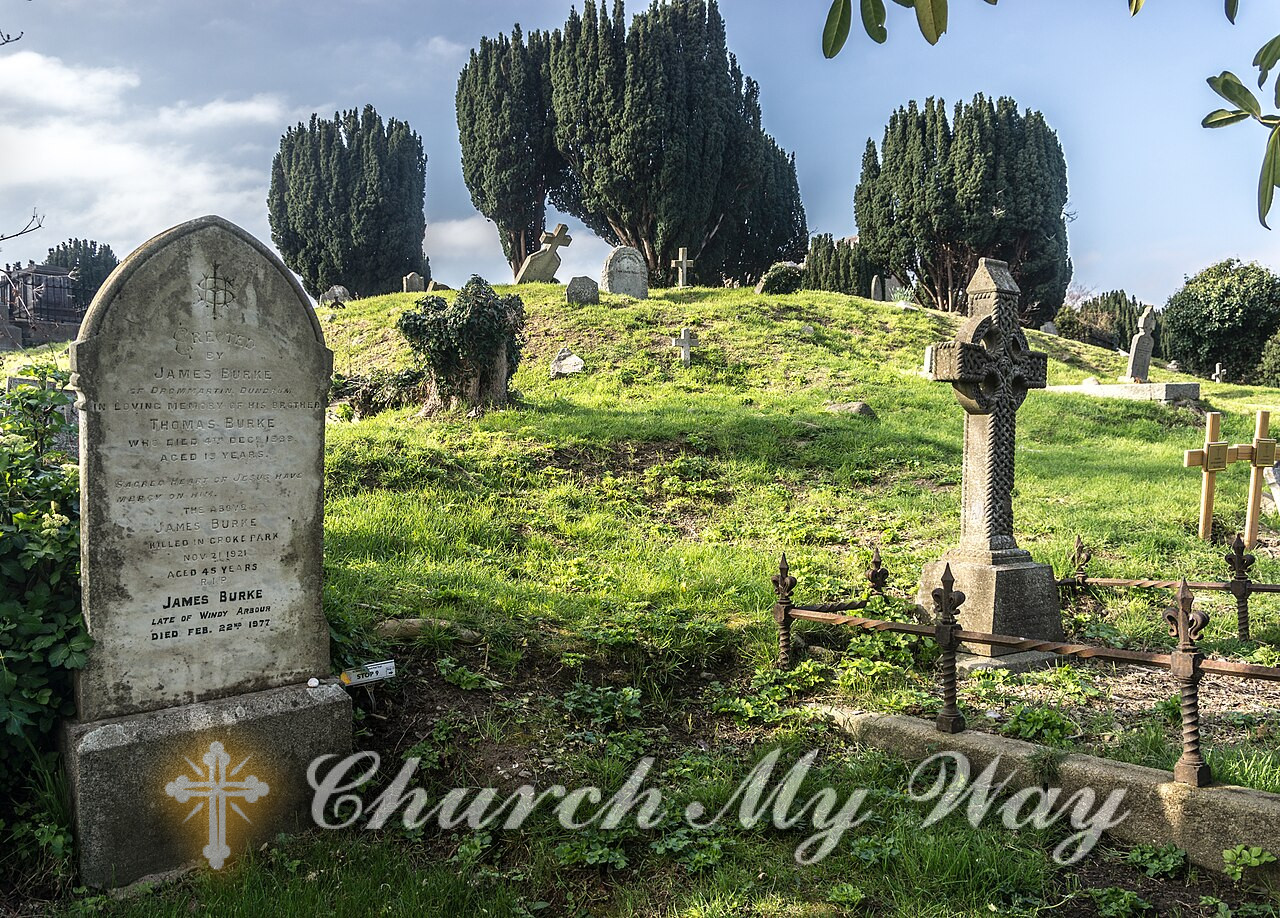
A Christian cemetery, filled with headstones marked by crosses and Scripture, is a quiet testimony to the world. It proclaims that death is not the end. For centuries, the church has gathered at gravesides to say, “In sure and certain hope of the resurrection to eternal life.” This public witness matters.
Continuity with the Faith of the Ages
Choosing burial connects a believer with the vast majority of Christians who have gone before. It honors a tradition that stretches back to Abraham and continues through the early church, the medieval saints, and the reformers. For some, this sense of continuity is deeply meaningful.
Making the Decision: A Pastoral Approach
How should a Christian approach the cremation vs burial decision? Here are some practical steps grounded in faith and wisdom.
Pray and Study
Begin with prayer. Ask God for wisdom and peace. Study the relevant Scriptures. Read what trusted Christian teachers have written. Do not make the decision out of fear or pressure, but out of a clear conscience before God.
Consult Your Church and Family
Talk with your pastor or church leaders. Many denominations have statements or guidelines that can help. Also, have an open conversation with your family. Let them know your wishes and listen to their concerns. A decision made together can prevent confusion and conflict later.
Consider Your Testimony
Think about how your choice will be perceived by others. If you are a leader in your church, your decision may have an influence. That does not mean you must choose one way or the other, but it is worth considering how your choice reflects your faith.
Plan Ahead with Care
Whichever option you choose, plan ahead. Pre-arranging your funeral can be an act of love for your family. It relieves them of a heavy burden during a time of grief. Document your wishes clearly and share them with a trusted family member or pastor.
Conclusion: Hope That Transcends the Decision
In the end, the question of cremation vs burial is important, but it is not ultimate. What matters most is not how our earthly remains are treated, but that we have placed our faith in the One who conquered death. The apostle Paul captures this beautifully in Romans 8:38-39: “For I am convinced that neither death nor life, neither angels nor demons, neither the present nor the future, nor any powers, neither height nor depth, nor anything else in all creation, will be able to separate us from the love of God that is in Christ Jesus our Lord.”
Whether your body is laid in the earth or returned to ashes, nothing can separate you from that love. The resurrection does not depend on the preservation of our remains but on the power of God. The same God who formed Adam from the dust and raised Jesus from the dead will raise you on the last day.
So choose with a clear mind and a peaceful heart. Honor your body as God’s temple. Consider your family and your church. But above all, rest in the assurance that your hope is not in a grave or an urn, but in a living Savior. He is the resurrection and the life. Whoever believes in him, though he die, yet shall he live. And that is the only truth that ultimately matters.
📚 Related Articles You Might Enjoy
- Does God See Us As Broken
- What Did Jesus Mean by 'Blessed Are the Poor in Spirit'?
- Religious Nationalism – Political Ideology
- Do Amish Pay Taxes
This post is also available in:
 Español (Spanish)
