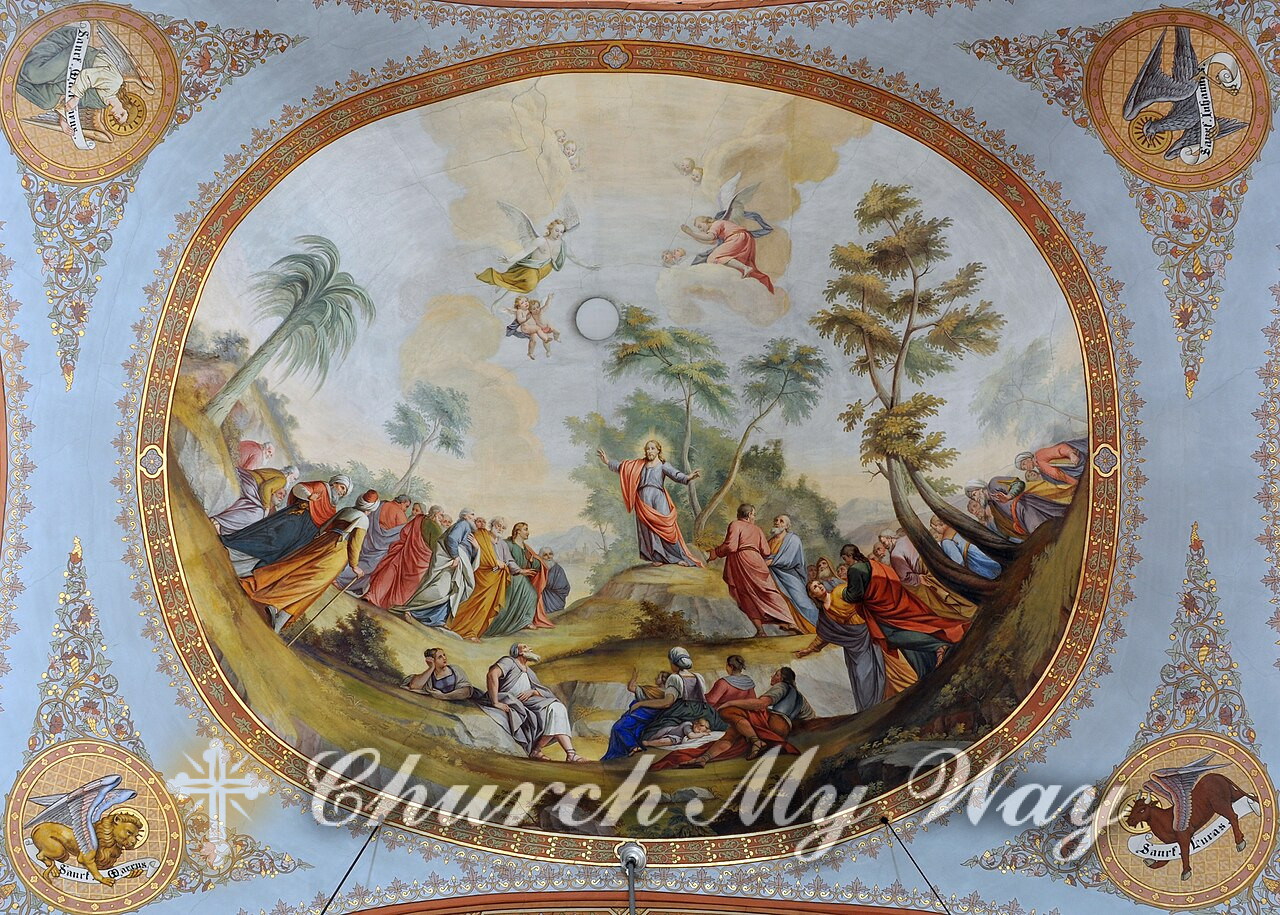
When Jesus sat down on a mountainside near Capernaum and opened His mouth to teach, the very first word out of His mouth in what we now call the Beatitudes was a declaration about the “poor in spirit.” For two thousand years, this single phrase has inspired saints, puzzled scholars, and challenged everyone who has ever picked up a Bible. What did Jesus mean by “poor in spirit,” and why did He place this condition at the very threshold of the Kingdom of Heaven? The answer is not merely a theological curiosity; it is the key that unlocks the door to a life of genuine blessing, freedom, and joy in Christ. Let us journey together into the heart of this first Beatitude, exploring its ancient context, its deep spiritual meaning, and its radical, life-changing application for us today.
The Shocking Context: A Blessing on the Poor
To understand what Jesus meant, we must first shed our modern, comfortable assumptions and step into the dusty, sun-scorched world of first-century Galilee. When Jesus declared, “Blessed are the poor in spirit, for theirs is the kingdom of heaven” (Matthew 5:3), His audience was largely comprised of the *anawim*—a Hebrew term for the “poor” or “afflicted” of the land. These were not just people lacking money; they were people who had been crushed by life. They were the peasant farmers burdened by Roman taxes, the widows stripped of their inheritance, the day laborers who never knew if they would feed their children, and the sick who were often considered cursed by God.
The *Anawim* and the Language of the Old Testament
The Old Testament is saturated with the cry of the poor. The Psalms, in particular, are the prayer book of the *anawim*. King David, a man who knew both power and desperate flight, wrote, “This poor man cried, and the Lord heard him and saved him out of all his troubles” (Psalm 34:6). The Hebrew word for “poor” here, *ani*, carries the connotation of being bent down, oppressed, and afflicted. It is the posture of someone who has no resources left in themselves.
By the time of Jesus, this physical and social poverty had become a spiritual metaphor. The *anawim* were not just economically destitute; they were spiritually dependent. They knew, deep in their bones, that they had no claim on God. They had no righteousness to offer, no strength to boast in, and no leverage to bargain with. They could only stretch out empty hands. The prophet Isaiah captured this perfectly: “But this is the one to whom I will look: he who is humble and contrite in spirit and trembles at my word” (Isaiah 66:2). This is the soil in which the seed of the Gospel was planted.
Why This Was Shocking to the First Listeners
The religious establishment of the day, the Pharisees and scribes, had built an entire system around spiritual wealth. They believed that blessing was a reward for righteousness. If you were poor, it was likely because of some secret sin (John 9:2). If you were sick, you or your parents had sinned. The successful, the healthy, the learned—these were the ones who appeared to have God’s favor. They were the “rich in spirit”—full of their own knowledge, their own rule-keeping, and their own self-righteousness.
When Jesus said, “Blessed are the poor in spirit,” He was turning that entire world upside down. He was essentially saying, “The kingdom of God does not belong to those who think they have it all figured out. It does not belong to the spiritually self-sufficient. It belongs to the ones who know they are bankrupt.” This was not just a nice sentiment; it was a revolutionary act of redefining what it means to be blessed.
Defining “Poor in Spirit”: More Than Just Humility
So, what is this poverty of spirit? It is easy to mistake it for a vague humility or a low self-esteem. But it is something far more profound and specific. The great preacher D. Martyn Lloyd-Jones, in his classic work *Studies in the Sermon on the Mount*, described it as “a consciousness of our utter nothingness in the sight of God.” It is not a false modesty that says, “Oh, I’m not that great,” while secretly thinking you are. It is an honest, sober, and Spirit-given realization of your true spiritual state.
The Three Dimensions of Spiritual Poverty
Let us break down what it means to be poor in spirit into three concrete dimensions:
1. **A Radical Honesty About Sin:** The poor in spirit person does not minimize their sin. They do not compare themselves to others (“Well, at least I’m not like that tax collector”). Instead, they see their sin the way God sees it—as a deep, systemic rebellion that separates them from Him. They agree with the prophet Isaiah, who cried out, “Woe is me! For I am lost; for I am a man of unclean lips” (Isaiah 6:5). This is not morbid self-flagellation; it is the first step toward the light.
2. **A Complete Renunciation of Self-Righteousness:** This is the most difficult dimension for religious people. We naturally want to bring something to the table. We want to say, “God, I have been a good person. I go to church. I give to the poor. I read my Bible.” The poor in spirit person says, “Lord, even my best deeds are like filthy rags before Your holiness. I have nothing to offer but my need.” They have abandoned all hope in their own goodness. Like the tax collector in the temple, they beat their breast and say, “God, be merciful to me, a sinner!” (Luke 18:13).
3. **A Deep, Desperate Dependence on Grace:** This is the positive side of the coin. When you know you are spiritually bankrupt, you have no other option but to cry out for mercy. The poor in spirit person is like a drowning man who stops flailing and lets the lifeguard save him. They stop trying to earn God’s favor and simply receive it as a gift. This dependence is not a one-time event; it is the daily posture of the Christian life. As Jesus said in John 15:5, “Apart from me you can do nothing.”
A Practical Example: The Pharisee and the Tax Collector
Jesus Himself gave us the perfect illustration of this in Luke 18:9-14. Two men went up to the temple to pray. One was a Pharisee, the epitome of religious wealth. He stood and prayed about himself: “God, I thank you that I am not like other men—robbers, evildoers, adulterers—or even like this tax collector. I fast twice a week and give a tenth of all I get.” He was rich in spirit. He had a full account.
The other man, a tax collector, stood at a distance. He would not even look up to heaven. He beat his breast and said, “God, have mercy on me, a sinner.” He was poor in spirit. He had nothing. He was an empty vessel.
Jesus concluded: “I tell you that this man, rather than the other, went home justified before God.” The one who was spiritually poor was declared righteous. The one who was spiritually rich was left empty. This is the Gospel in a nutshell. The Kingdom of Heaven belongs to the poor in spirit because they are the only ones who will let God give it to them.
The Great Paradox: How Poverty Becomes Riches
The Beatitude contains a magnificent paradox: “Blessed are the poor in spirit, for *theirs is the kingdom of heaven*.” How can poverty be a blessing? How can emptiness lead to fullness? This is the mystery of the Gospel. The condition for receiving everything is admitting you have nothing.
The Mechanics of the Exchange
Think of it like this: The Kingdom of Heaven is not a reward for good behavior; it is a gift given to those who recognize their desperate need. A person who is full cannot be filled. A person who is healthy has no need of a physician (Mark 2:17). Jesus came not for the righteous, but for sinners. The poor in spirit are the ones who acknowledge they are sinners. They are the sick who know they are dying. And to them, Jesus offers the cure.
This is why the Apostle Paul, a man who by his own admission was “a Hebrew of Hebrews,” could count all his religious achievements as “rubbish” (Philippians 3:8). He had learned the secret of being poor in spirit. He had stopped trusting in his own pedigree and began boasting only in the cross of Christ. In his weakness, he found strength (2 Corinthians 12:9-10). The kingdom he received was infinitely greater than the one he had tried to build for himself.
A Historical Example: The Desert Fathers and Mothers
In the 3rd and 4th centuries, men and women like Anthony the Great and Syncletica of Alexandria fled the wealth and comfort of Roman society to live in the deserts of Egypt. They were not simply trying to be ascetic. They were pursuing this poverty of spirit. They wanted to strip away every distraction, every comfort, and every source of pride so that they could stand naked before God. They believed that by becoming physically and materially poor, they could more fully embrace spiritual poverty. Their writings are filled with the theme of *kenosis*—self-emptying. As Saint John Chrysostom, the great Archbishop of Constantinople, preached in the late 4th century, “The beginning of wisdom is to know that we are nothing. The beginning of salvation is to confess our poverty.”
Living “Poor in Spirit” in a World That Praises Self-Sufficiency
Now we must ask the hardest question: How do we live this out in the 21st century? We live in a culture that worships self-sufficiency, independence, and the curated perfection of social media. We are told to be strong, to pull ourselves up by our bootstraps, and to project an image of having it all together. The virtue of being poor in spirit seems like a foreign language.
The Danger of Spiritual Consumerism
One of the greatest threats to being poor in spirit is what we might call “spiritual consumerism.” This is the attitude that treats church, prayer, and Bible study as products to consume in order to feel better about ourselves or to get God to do something for us. We can read the Bible to gain knowledge to feel superior, pray to check a box, and serve in church to earn a reputation. All of these activities, good in themselves, can become a source of spiritual wealth. We can become “rich in spirit” while doing all the right things.
The antidote is a daily, intentional practice of coming before God with empty hands. It means starting each day with a prayer like this: “Lord, I have nothing to offer You today. I am weak, I am prone to wander, and I am dependent on Your grace for every breath I take. Please fill me with Your Spirit, because I am empty.”
Practical Disciplines for Cultivating Spiritual Poverty
How can we intentionally cultivate this posture? Here are a few practical, time-tested disciplines:
– **The Discipline of Confession:** This is not just a vague “I’m sorry.” It is a regular, specific, and honest naming of our sins—to God, and where appropriate, to a trusted brother or sister in Christ. James 5:16 says, “Confess your sins to one another… that you may be healed.” Confession keeps us humble and reminds us of our ongoing need for grace.
– **The Discipline of Silence and Solitude:** Our world is loud. We fill every moment with noise—podcasts, music, news, notifications. Silence forces us to sit with ourselves and with God. It is in the silence that we often hear the painful truth about our own hearts. It strips away the distractions we use to avoid confronting our spiritual poverty.
– **The Discipline of Fasting:** Fasting is a physical act of saying “no” to our bodies to say “yes” to God. It is a tangible reminder that we do not live by bread alone (Matthew 4:4). It physically enacts the posture of dependence, teaching our souls that God is our true sustenance.
– **The Discipline of Serving in Obscurity:** One of the quickest ways to become rich in spirit is to seek recognition for our service. Jesus told us not to let our left hand know what our right hand is doing (Matthew 6:3). Serving in a way that no one sees—cleaning the church bathrooms, visiting a lonely shut-in, helping a struggling family anonymously—can be a powerful cure for spiritual pride.
The Connection to the Other Beatitudes
It is no accident that this is the first Beatitude. It is the foundation upon which all the others are built. You cannot mourn over your sin (the second Beatitude) unless you first recognize that you are spiritually bankrupt. You cannot be meek (the third Beatitude) unless you have first surrendered your rights and your claims. You cannot hunger and thirst for righteousness (the fourth Beatitude) unless you know you are empty and starving.
Think of the Beatitudes as a staircase, and the first step is poverty of spirit. If you try to skip this step, you will stumble on all the others. You cannot have the gentle, merciful, pure heart of Christ unless you have first been broken by your own need for Him. The entire Christian life flows from this single, humble admission: “I am nothing, and You are everything.”
Blessed Are You: The Promise of the Kingdom
Finally, we must return to the promise. Jesus does not just give us a command; He gives us a promise. “Theirs is the kingdom of heaven.” This is a present-tense promise. It is not just something we will receive when we die. It is something we can experience *now*.
The Kingdom Within the Broken Heart
When we are poor in spirit, we stop fighting for control. We stop pretending. We stop trying to be our own savior. And in that moment of surrender, the King Himself comes to dwell with us. The kingdom of heaven is not a distant place; it is the reign and rule of God in the heart of a humble person. As Jesus said in Luke 17:21, “The kingdom of God is in the midst of you” (or “within you”).
The poor in spirit person experiences a peace that the world cannot give. They are free from the crushing burden of having to appear perfect. They are free from the anxiety of earning God’s love, because they know they already have it as a gift. They are free from the fear of failure, because their identity is not in their success but in Christ.
A Prayer for the Journey
If you read this and feel a stirring in your heart—a sense that you are not yet poor in spirit, or that you have lost this posture—take heart. That very feeling is the first whisper of the Spirit. It is the beginning of the blessing. You can simply turn to Jesus right now and say, “Lord, I want to be poor in spirit. I confess that I am proud. I confess that I try to earn Your love. I confess that I am full of myself. Please empty me. Break me. And fill me with Your grace. I cannot do this. But You can.”
The Blessing of Being Broken
The world tells us that blessing is found in having more—more money, more influence, more health, more comfort. Jesus tells us that the greatest blessing is found in having less of ourselves. The poor in spirit are not the weak; they are the strongest of all, for they have learned the secret of resting in the strength of Another. They are not the defeated; they are the victors, for they have surrendered to the King who has already won the war.
To be poor in spirit is to stand at the foot of the cross, knowing that you deserve nothing, and to hear the voice of the Savior say, “It is finished. The debt is paid. The kingdom is yours.” It is the only place where we can truly say, “My soul magnifies the Lord, and my spirit rejoices in God my Savior” (Luke 1:46-47). This is the first and greatest blessing. May we all have the courage to become poor, so that we might be made truly and eternally rich.
