📅 Last updated: 08.07.2026
When we talk about the Christian life, few topics are as central—or as challenging—as understanding what the Bible says about forgiveness. The concept of Bible forgiveness is not merely a suggestion for the faithful; it is a divine mandate that lies at the very heart of the Gospel, shaping our relationship with God and with one another. From the Old Testament law to the parables of Jesus and the teachings of the apostles, Scripture presents forgiveness not as an optional spiritual practice but as a fundamental expression of God’s character and the defining mark of His people. Yet, for all its importance, forgiveness remains one of the most misunderstood and difficult commands to live out. It raises painful questions: Does forgiving someone mean I have to trust them again? What if they never apologize? How do I forgive when the wound is still fresh? This article will journey through the biblical landscape of forgiveness, exploring its Old Testament roots, its radical redefinition by Jesus, its practical outworking in the church, and the profound freedom it offers to those who dare to embrace it.
- The Foundation of Bible Forgiveness in the Old Testament
- The Radical Call of Bible Forgiveness in the Teachings of Jesus
- Forgiveness in the Early Church: A Community of Reconciliation
- Practical Steps for Living Out Bible Forgiveness
- Common Misconceptions About Bible Forgiveness
- The Freedom Found in Bible Forgiveness
- Conclusion: Embracing the Lifelong Journey of Forgiveness
The Foundation of Bible Forgiveness in the Old Testament
Our understanding of Bible forgiveness must begin where the story of redemption begins: with God revealing Himself to Israel. The Old Testament does not treat forgiveness as an abstract concept but as a concrete reality rooted in God’s covenant faithfulness. The Hebrew word most commonly translated as “forgive” is salach, which carries the weight of “to pardon” or “to lift up.” It is used almost exclusively of God, emphasizing that true forgiveness originates with Him and is not something humanity can generate on its own.
The Day of Atonement: A Picture of Divine Provision
Perhaps the most vivid Old Testament picture of forgiveness is found in the ritual of Yom Kippur, the Day of Atonement, described in Leviticus 16. On this single day each year, the high priest would enter the Holy of Holies—the innermost chamber of the Tabernacle where God’s presence dwelt—to offer the blood of a bull and a goat as a sacrifice for the sins of the entire nation. The ritual was detailed, precise, and deeply symbolic. The high priest would lay his hands on the head of a live goat, the “scapegoat,” confessing over it all the sins and rebellions of Israel. That goat, bearing the people’s guilt, was then led away into the wilderness, never to return. This powerful image demonstrates that forgiveness in the Old Testament was not cheap. It required a substitutionary sacrifice and a tangible removal of guilt. The sins were literally “carried away,” a foreshadowing of what Christ would accomplish on the cross.
God’s Character: The Source of Forgiveness
Beyond the rituals, the Old Testament prophets and psalmists constantly point to God’s character as the foundation of His willingness to forgive. In Exodus 34:6-7, God proclaims His own name to Moses: “The Lord, the Lord, the compassionate and gracious God, slow to anger, abounding in love and faithfulness, maintaining love to thousands, and forgiving wickedness, rebellion and sin.” This self-revelation is the bedrock of biblical forgiveness. God forgives not because He is obligated by human merit, but because it is who He is. David, after his horrific sins of adultery and murder, cries out in Psalm 51:1, “Have mercy on me, O God, according to your unfailing love; according to your great compassion blot out my transgressions.” David understood that forgiveness was not a transaction he could earn but a gift he could only receive.
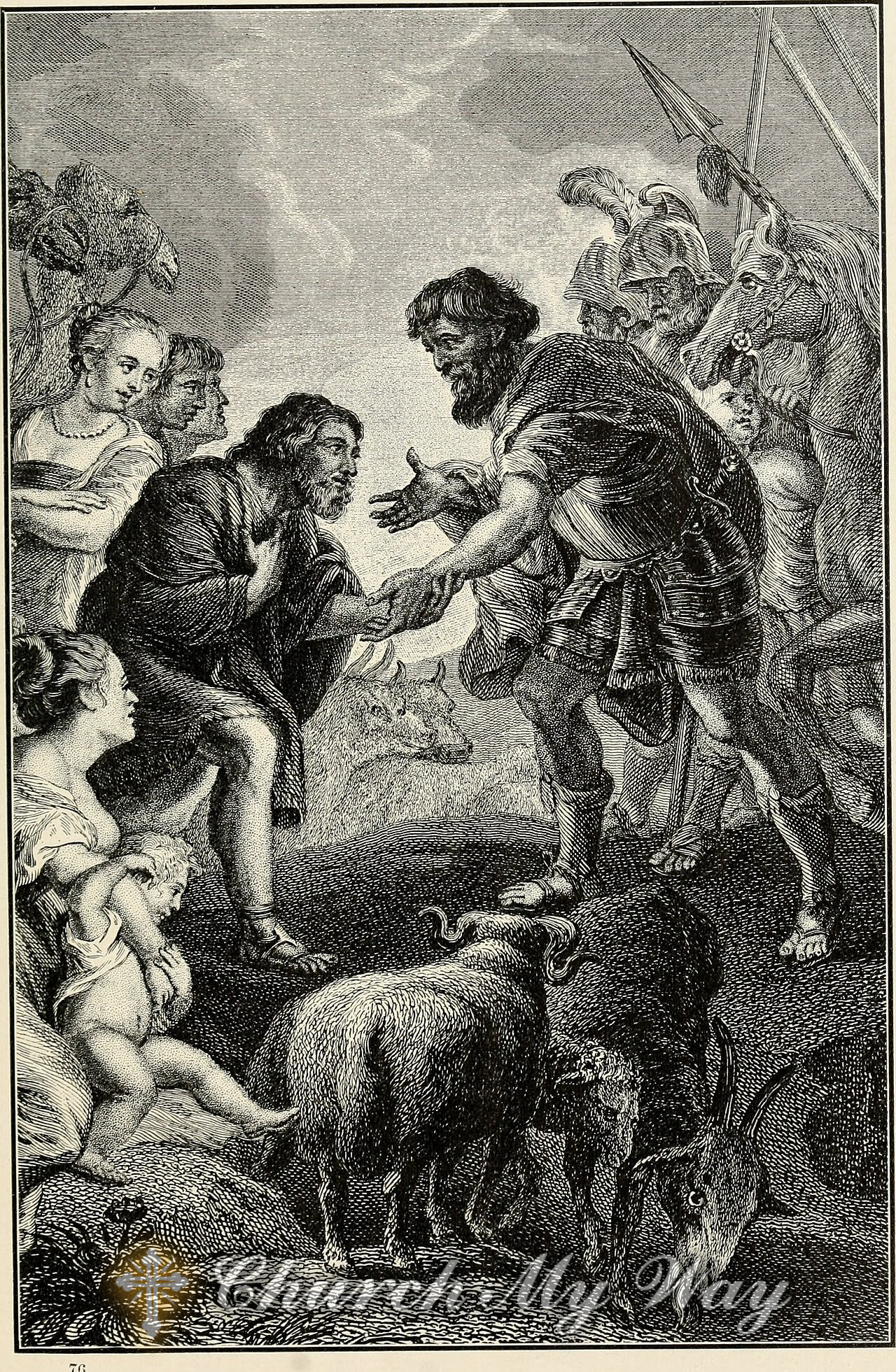
The Old Testament also makes it clear that human forgiveness is tied to divine forgiveness. In the wisdom literature, Proverbs 17:9 states, “Whoever would foster love covers over an offense,” and Proverbs 19:11 adds, “It is to one’s glory to overlook an offense.” These proverbs teach that forgiveness is a mark of wisdom and maturity, reflecting the character of the God who “covers over” our sins. Yet, the Old Testament also acknowledges the profound difficulty of this command, especially in cases of deep betrayal. The story of Joseph and his brothers in Genesis 45 and 50 provides a stunning example. After years of slavery and imprisonment caused by his brothers’ jealousy, Joseph does not simply forget their crime. He weeps, he confronts them gently, and then he explicitly forgives them, saying, “You intended to harm me, but God intended it for good” (Genesis 50:20). Joseph’s forgiveness was not a denial of the wrong but a trust in God’s sovereign purposes.
The Radical Call of Bible Forgiveness in the Teachings of Jesus
When Jesus arrives on the scene, He takes the Old Testament foundation of Bible forgiveness and intensifies it to a degree that shocked His original audience and continues to challenge us today. Jesus does not merely teach about forgiveness; He embodies it. His entire ministry is a demonstration of God’s willingness to forgive the most egregious sinners—tax collectors, prostitutes, even the Roman soldiers who crucified Him.
The Parable of the Unmerciful Servant
One of the most sobering teachings on forgiveness is found in Matthew 18:21-35. Peter asks Jesus, “Lord, how many times shall I forgive my brother or sister who sins against me? Up to seven times?” Peter likely thought he was being generous, as rabbinic teaching suggested forgiving someone three times was sufficient. Jesus’ response must have stunned Peter: “I tell you, not seven times, but seventy-seven times” (or seventy times seven, depending on the translation). The point is not a precise number but an unlimited posture of forgiveness. To drive this home, Jesus tells the parable of a servant who owes his master an astronomical debt—ten thousand talents, a sum that would take a lifetime of labor to repay. The master, moved with compassion, cancels the debt entirely. Yet that same servant goes out and finds a fellow servant who owes him a paltry hundred denarii (about a hundred days’ wages). He grabs him by the throat and demands payment, refusing to show the same mercy he had received. When the master hears of this, he is furious and hands the wicked servant over to be tortured until he can pay back all he owed.
This parable reveals several profound truths about biblical forgiveness. First, our debt to God is incalculable. We have sinned against an infinite God, and we could never repay what we owe. Second, God’s forgiveness is complete and costly. The master absorbed the loss; he did not simply ignore the debt. Third, receiving forgiveness from God obligates us to extend it to others. To refuse forgiveness to someone who has wronged us is to show that we have not truly grasped the magnitude of our own forgiveness. As theologian Miroslav Volf writes in Exclusion and Embrace, “Forgiveness flounders because I exclude the enemy from the community of humans and myself from the community of sinners.”
The Lord’s Prayer: A Conditional Petition
Perhaps no passage is more familiar—or more unsettling—than the Lord’s Prayer in Matthew 6:9-13. Jesus teaches His disciples to pray, “Forgive us our debts, as we also have forgiven our debtors.” The word “as” does not mean “in the same way” but carries a conditional sense: “insofar as we have forgiven.” Immediately after the prayer, Jesus adds a stark commentary in verses 14-15: “For if you forgive other people when they sin against you, your heavenly Father will also forgive you. But if you do not forgive others their sins, your Father will not forgive your sins.” This is not teaching that we earn salvation by forgiving others. Rather, it reveals that an unforgiving heart is incompatible with a forgiven heart. The person who has truly experienced God’s grace will inevitably become a channel of that grace to others. An unforgiving spirit is evidence that we have not yet understood or received the forgiveness God offers in Christ.
Forgiveness in the Early Church: A Community of Reconciliation
The apostles carried forward Jesus’ radical teaching on forgiveness, applying it to the life of the growing church. The early Christian communities were composed of people from vastly different backgrounds—Jews and Gentiles, slaves and free, rich and poor. Forgiveness was not an abstract ideal but a practical necessity for maintaining unity in a diverse body.
Paul’s Teaching on Forgiveness
The Apostle Paul consistently links forgiveness to the example of Christ. In Colossians 3:13, he commands, “Bear with each other and forgive one another if any of you has a grievance against someone. Forgive as the Lord forgave you.” The standard is not our feelings or the offender’s worthiness; it is the cross of Christ. Paul also emphasizes that forgiveness is part of putting off the old self and putting on the new self. In Ephesians 4:31-32, he writes, “Get rid of all bitterness, rage and anger, brawling and slander, along with every form of malice. Be kind and compassionate to one another, forgiving each other, just as in Christ God forgave you.” Notice the progression: forgiveness is not just about the individual act of pardoning; it is about the transformation of our entire character. Bitterness and unforgiveness are like poison that corrodes the soul. Forgiveness, by contrast, is the antidote that restores our capacity for kindness and compassion.
Paul also addresses the practical challenges of forgiveness in situations of ongoing conflict. In 2 Corinthians 2:5-11, he urges the church to forgive and comfort a man who had been disciplined for sin, “so that he will not be overwhelmed by excessive sorrow.” Paul warns that failure to forgive can give Satan a foothold in the church. This pastoral insight reminds us that forgiveness is not just for the sake of the offender; it is for the health and witness of the entire Christian community.
Peter’s Call to Covering Sins
Peter, who had personally experienced Jesus’ forgiveness after denying Him three times, also writes about forgiveness. In 1 Peter 4:8, he says, “Above all, love each other deeply, because love covers over a multitude of sins.” This echoes Proverbs 10:12 and reminds us that forgiveness is an expression of deep, covenantal love. It does not mean pretending the sin did not happen, but rather refusing to let it define the relationship. Peter’s own story is a powerful testament to this: Jesus did not minimize Peter’s denial, but He restored him and gave him a new commission (John 21:15-19).
Practical Steps for Living Out Bible Forgiveness
Understanding the theology of Bible forgiveness is essential, but it must translate into action. Forgiveness is a process, not a one-time event, and it often requires intentional steps, especially in cases of deep hurt or ongoing sin.
Acknowledge the Wrong
Biblical forgiveness does not require us to pretend that no wrong was committed. In fact, genuine forgiveness must be preceded by an honest acknowledgment of the offense. We cannot forgive what we refuse to name. This means we are allowed to feel the pain of betrayal, to grieve the loss, and to name the specific sin. David’s psalms of lament, such as Psalm 55, give us a model for bringing our raw emotions to God. He does not pretend he is not hurt; he pours out his anguish honestly, trusting God to hear him.
Release the Debt
At its core, forgiveness is a decision to release the other person from the debt we believe they owe us. This does not mean we automatically restore trust or reconcile the relationship—those are separate steps that may or may not be possible or wise. But it does mean we choose to no longer demand payment. We give up our right to revenge, to hold the offense over their head, or to wish them harm. This is often a daily choice, especially in the early stages of healing. As C.S. Lewis wrote, “Everyone says forgiveness is a lovely idea, until they have something to forgive.”
Seek Reconciliation Where Possible
While forgiveness is a unilateral decision we can make in our own hearts, reconciliation requires the participation of both parties. Romans 12:18 says, “If it is possible, as far as it depends on you, live at peace with everyone.” We are called to pursue peace actively, but we cannot force another person to repent or change. In cases of abuse or ongoing harm, reconciliation may not be safe or appropriate. Forgiveness can coexist with healthy boundaries. The goal is not to return to a harmful situation but to release the bitterness that would otherwise consume us.
Pray for the Offender
Jesus commands us in Matthew 5:44, “Love your enemies and pray for those who persecute you.” There is something profoundly transformative about praying for the person who has hurt us. It is difficult to remain bitter toward someone we are genuinely praying for. Our prayers may begin with a clenched fist, but over time, God can soften our hearts and give us a measure of His compassion for that person. This is not about pretending the hurt does not exist; it is about inviting God into the process of healing.
| Key Term | Biblical Meaning | Practical Implication |
|---|---|---|
| Forgiveness | Releasing a debt; not holding an offense against someone | A decision to let go of resentment, even if feelings linger |
| Repentance | A change of mind and direction; turning away from sin | Necessary for full reconciliation, but not required for personal forgiveness |
| Reconciliation | Restoration of a broken relationship | Requires both parties; may not always be possible or safe |
| Restitution | Making amends for wrong done | An expression of genuine repentance (e.g., Zacchaeus in Luke 19) |
| Grace | Unmerited favor; giving what is not deserved | The foundation of all forgiveness; we forgive because we have been forgiven |
Common Misconceptions About Bible Forgiveness
Despite its centrality in Scripture, forgiveness is often misunderstood. Let us address a few common misconceptions that can hinder our ability to forgive and receive forgiveness.
Misconception: Forgiveness Means Forgetting
Many people struggle with forgiveness because they believe it requires them to erase the memory of the offense. This is not biblical. God Himself, in passages like Isaiah 43:25, says He “remembers our sins no more.” This is not a statement about divine amnesia but about God’s decision to no longer hold our sins against us. He chooses not to bring them up in accusation. Similarly, our forgiveness means we choose not to use the offense as a weapon against the person. We may still remember the hurt, but we no longer allow it to define our relationship or our identity.
Misconception: Forgiveness Requires Immediate Trust
Trust is earned over time through consistent, trustworthy behavior. Forgiveness is a gift we give freely, but trust must be rebuilt. In the Bible, Paul warns the Corinthians not to be “yoked together with unbelievers” (2 Corinthians 6:14), and Jesus tells His disciples to be “wise as serpents and innocent as doves” (Matthew 10:16). It is possible—and often wise—to forgive someone while maintaining appropriate boundaries to protect yourself from further harm.
Misconception: Forgiveness Is a Feeling
Forgiveness is first a decision, not a feeling. The feelings of warmth and release may follow, but they are not prerequisites. When we choose to forgive, we often do so in obedience to God, even when our emotions are still raw and angry. Over time, as we continue to choose forgiveness, our feelings can catch up with our decision. This is why Jesus tells us to forgive “seventy-seven times”—it is a repeated choice, not a single emotional breakthrough.
The Freedom Found in Bible Forgiveness
Ultimately, Bible forgiveness is not primarily about the person who wronged us; it is about our own freedom. Unforgiveness is like drinking poison and expecting the other person to die. It keeps us bound to the past, replaying the offense over and over in our minds. It robs us of joy, peace, and the ability to move forward. By contrast, forgiveness is the key that unlocks the prison door. It does not change the past, but it changes our relationship to the past. It allows us to remember without being controlled by the memory.
The greatest example of this freedom is seen in the life of Jesus Himself. On the cross, as He was being tortured and killed, He prayed, “Father, forgive them, for they do not know what they are doing” (Luke 23:34). Jesus was not denying the injustice; He was entrusting Himself to the Father and releasing His tormentors from their debt. In that moment, He demonstrated the very heart of God. And because of His sacrifice, we can experience the ultimate forgiveness—the complete pardon of all our sins through faith in Him. As 1 John 1:9 promises, “If we confess our sins, he is faithful and just and will forgive us our sins and purify us from all unrighteousness.”
Conclusion: Embracing the Lifelong Journey of Forgiveness
Forgiveness is not a destination we arrive at once and for all; it is a journey we walk every day. There will be moments when the old wound reopens and we must choose again to release the debt. There will be relationships that remain broken despite our best efforts. And there will be times when we ourselves need to receive the forgiveness we so freely extend. But in all of this, we are held by the grace of God, who “has compassion on all he has made” (Psalm 145:9). The call to forgive is not a burden we bear alone; it is a gift we receive and pass on, empowered by the Holy Spirit who works in us to will and to act according to God’s good purpose (Philippians 2:13).
As you consider the relationships in your own life that may need the healing touch of forgiveness, take heart. The same God who forgave David, who restored Peter, who pardoned the thief on the cross, and who welcomes prodigal children home is ready to meet you in your struggle. He does not ask you to forgive in your own strength. He asks you to receive His forgiveness first, and then to let it flow through you to others. It may be the hardest thing you ever do. But it will also be the most freeing. And in the end, it will be a reflection of the Gospel itself—a story of a God who loved us so much that He forgave us everything, and calls us to do the same.
