📅 Last updated: 13.07.2026
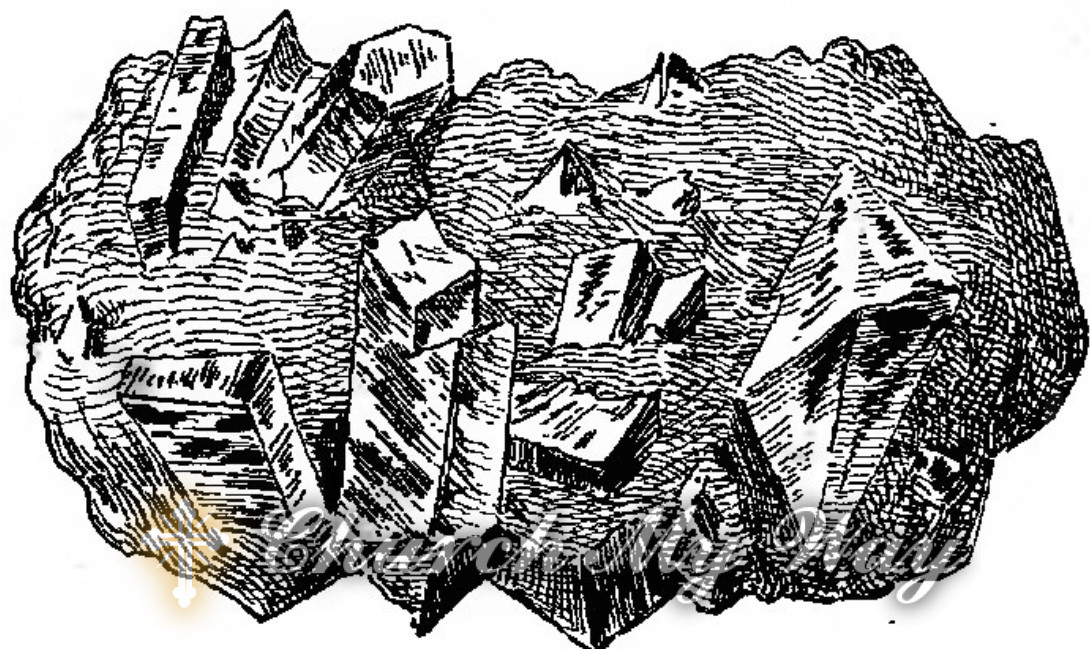
When we ask what the Bible says about crystals, a thoughtful crystals Christian view requires us to explore Scripture carefully, balancing both the beauty of God’s creation and the clear warnings against practices that can lead us away from Him. Crystals—whether shimmering geodes, polished stones, or raw minerals—have captivated human hearts for millennia, but their place in a believer’s life deserves more than a quick yes or no. Let’s journey together through the pages of the Bible, church history, and practical wisdom to discover what it truly means to honor God with our choices about crystals.
- A Biblical Foundation for a Crystals Christian View: Creation, Symbolism, and Warning
- Historical Context: How Did Crystals Enter Christian Practice?
- What Does the Bible Specifically Warn Against?
- Can a Christian Appreciate Crystals Without Compromising Faith?
- The Heart of Worship: Where Does Our Trust Lie?
- Conclusion: A Balanced, Faithful Path Forward
A Biblical Foundation for a Crystals Christian View: Creation, Symbolism, and Warning
The Bible speaks of crystals and precious stones in several key contexts, and understanding these passages helps shape a faithful perspective. First, we see crystals as part of God’s magnificent creation. In Genesis 2:12, the land of Havilah is described as having “bdellium and onyx stone”—a precious gem that adorned the very garden of Eden. This establishes an important truth: crystals are not inherently evil or occultic. They are part of the material world God declared “very good” (Genesis 1:31).
Yet the Bible also uses crystals as symbols of divine glory and human responsibility. In Exodus 28, God Himself commands the creation of the high priest’s breastplate, set with twelve precious stones—including sapphire, emerald, and jasper—each representing one of the twelve tribes of Israel. This wasn’t about harnessing mystical energy; it was about bearing the people of God before His presence in beauty and remembrance. The stones served as tangible reminders of covenant relationship.
However, we must also consider the warnings. Throughout the Old Testament, God repeatedly forbids practices like divination, sorcery, and consulting spirits (Deuteronomy 18:10-12). These prohibitions become crucial when we encounter modern claims that crystals can heal, protect, or channel spiritual energy. The Bible never attributes supernatural power to stones themselves. Instead, it consistently points to God alone as the source of power, healing, and guidance.
Crystals in the New Testament: A Shift in Focus
The New Testament continues this theme but with a striking reorientation. In Revelation 21, the New Jerusalem is described with foundations adorned by every kind of precious stone—jasper, sapphire, chalcedony, emerald, and more. Here, crystals symbolize the beauty, permanence, and perfection of God’s eternal kingdom. They are not objects of worship but part of the glorious environment where God dwells with His people.
Importantly, the New Testament never instructs believers to use crystals for healing, protection, or spiritual growth. When the apostle Paul speaks of spiritual gifts (1 Corinthians 12) or the armor of God (Ephesians 6), he points to the Holy Spirit, prayer, Scripture, and faith—not physical objects. Jesus Himself healed the sick, cast out demons, and calmed storms through His word and authority, never through stones or crystals.
Historical Context: How Did Crystals Enter Christian Practice?
To fully understand a crystals Christian view, it helps to know how crystals became associated with spirituality in the first place. The use of crystals for healing and divination predates Christianity by thousands of years. Ancient Mesopotamian cultures, Egyptian priests, and Greek philosophers all attributed various powers to gemstones. The Roman naturalist Pliny the Elder wrote extensively about the supposed medicinal properties of crystals in his Natural History (c. 77 AD).
As Christianity spread through the Roman Empire, early church leaders confronted these pagan practices. The second-century theologian Tertullian warned against using crystals and gems for divination, calling them “the devil’s tools.” However, medieval Christians sometimes wore crystal amulets as protective charms—a practice that church authorities repeatedly condemned as superstition. The Fourth Lateran Council (1215) explicitly forbade clergy from using “divination or incantations” involving stones or gems.
In more recent centuries, the New Age movement of the 1970s and 1980s popularized crystals for healing, meditation, and spiritual awakening. This revival drew from Eastern religions, occult traditions, and modern paganism—not from biblical Christianity. Today, a quick internet search reveals thousands of claims about crystals: rose quartz for love, amethyst for peace, citrine for abundance. These ideas have become so widespread that many Christians wonder if they can participate without compromising their faith.
What Does the Bible Specifically Warn Against?
When developing a crystals Christian view, we must take seriously the biblical warnings that relate to how we use created things. Here are key passages that speak directly to practices often associated with crystal use:
- Deuteronomy 18:10-12 — “Let no one be found among you who… practices divination or sorcery, interprets omens, engages in witchcraft… Anyone who does these things is detestable to the Lord.” Using crystals to predict the future, channel spirits, or manipulate outcomes falls under this prohibition.
- Isaiah 47:12-15 — God mocks Babylon’s reliance on “your many sorceries” and “your spells,” saying their astrologers and stargazers “cannot save you.” This reminds us that no created object can deliver what only God can provide.
- Acts 19:18-19 — When the gospel came to Ephesus, new believers publicly burned their scrolls of magic arts—valuable books worth a fortune. This radical act demonstrates that following Christ means renouncing all practices that seek power apart from Him.
- Colossians 2:8 — Paul warns, “See to it that no one takes you captive through hollow and deceptive philosophy, which depends on human tradition and the elemental spiritual forces of this world rather than on Christ.” Many crystal teachings are precisely this—human traditions that sound spiritual but displace Christ from His rightful place.
These passages don’t condemn crystals as objects, but they strongly caution against using them as tools for spiritual power, protection, or guidance. The heart of the matter is intent and reliance. Are we looking to a stone for what only God can provide? That is where the line is crossed.
Can a Christian Appreciate Crystals Without Compromising Faith?
Absolutely. A mature crystals Christian view recognizes that God created all things, including the stunning variety of minerals in the earth. Many believers enjoy crystals as beautiful decorations, as reminders of God’s creative power, or even as tangible prompts for prayer. The key difference lies in how we relate to them.
Consider this comparison table to help distinguish between healthy appreciation and spiritually problematic use:
| Healthy Appreciation | Spiritually Problematic Use |
|---|---|
| Admiring a crystal’s beauty as a reflection of God’s artistry | Believing a crystal has inherent spiritual power or energy |
| Using a crystal as a decorative object or conversation starter | Using a crystal to heal, protect, or ward off negative energy |
| Keeping a crystal as a reminder to pray or trust God | Meditating on a crystal to achieve altered states or contact spirits |
| Learning about geology and creation through studying crystals | Consulting crystal “experts” for guidance on life decisions |
| Thanking God for the diversity of His creation | Attributing outcomes (love, money, peace) to the crystal itself |
The apostle Paul offers a helpful principle in 1 Corinthians 10:23: “‘I have the right to do anything,’ you say—but not everything is beneficial. ‘I have the right to do anything’—but not everything is constructive.” Even if something is not explicitly forbidden, we must ask: Does this build my faith? Does it draw me closer to Christ? Does it cause a weaker brother or sister to stumble?
Practical Questions for Discernment
If you’re wondering whether a particular use of crystals is appropriate for your faith, here are some questions to prayerfully consider:
- What is my motivation? Am I seeking beauty, knowledge, or comfort—or am I looking for spiritual power apart from God?
- Does this practice align with Scripture? Can I find biblical support for how I’m using this object, or does it resemble practices the Bible warns against?
- What does my conscience say? Romans 14:23 reminds us that “everything that does not come from faith is sin.” If you feel uneasy, it’s wise to step back.
- How does this affect my witness? Would another believer—or an unbeliever—be confused or misled by seeing me use crystals in a way that appears spiritually significant?
- Is Christ sufficient? Am I trusting in a stone for peace, protection, or guidance, or am I trusting fully in Jesus Christ, who is “the same yesterday and today and forever” (Hebrews 13:8)?
The Heart of Worship: Where Does Our Trust Lie?
At its core, a biblical crystals Christian view is about the orientation of our hearts. The first commandment is clear: “You shall have no other gods before me” (Exodus 20:3). Anything we look to for what only God can provide—whether crystals, money, relationships, or even our own abilities—can become an idol. Idolatry is not about the object itself but about the trust we place in it.
The prophet Isaiah powerfully captures this truth in Isaiah 44:9-20, where he describes a craftsman who cuts down a tree, uses part of it for firewood to warm himself, and then carves the rest into an idol and prays to it. The absurdity is striking: we worship the work of our own hands. While crystals are not carved idols in the same sense, the same danger exists. If we attribute power to a stone—something God created—we are essentially giving glory to the creation rather than the Creator (Romans 1:25).
The Bible offers a beautiful alternative. Instead of looking to stones for peace, we can “present your requests to God, and the peace of God, which transcends all understanding, will guard your hearts and your minds in Christ Jesus” (Philippians 4:6-7). Instead of seeking protection from crystals, we can trust that “the Lord watches over you—the Lord is your shade at your right hand” (Psalm 121:5). Instead of expecting stones to bring love or abundance, we can rely on the God who “supplies seed to the sower and bread for food” (2 Corinthians 9:10).
A Personal Word of Encouragement
Perhaps you’ve been drawn to crystals because you long for peace, healing, or a deeper spiritual connection. These are beautiful desires—desires that God Himself placed in your heart. But He wants to satisfy them directly, through a relationship with His Son. Jesus said, “Come to me, all you who are weary and burdened, and I will give you rest” (Matthew 11:28). He didn’t say, “Go to the crystals.” He said, “Come to me.”
If you’ve been using crystals in ways that trouble your conscience, there is no condemnation in Christ (Romans 8:1). You can simply set them aside, pray for guidance, and ask God to fill the space they occupied with His presence. Many believers have found freedom by giving away or discarding items that had become spiritually problematic. Others have kept crystals as beautiful objects, but only after examining their hearts and ensuring their trust remains solely in God.
Conclusion: A Balanced, Faithful Path Forward
As we conclude this exploration of a crystals Christian view, let me offer a final word of pastoral encouragement. The Bible does not list crystals in a catalog of forbidden objects, nor does it elevate them as tools for spiritual growth. Instead, it gives us principles: worship God alone, trust in Christ for everything, avoid practices associated with paganism and divination, and let your conscience be guided by Scripture and the Holy Spirit.
You are free to appreciate the stunning beauty of crystals as part of God’s creation—amethyst geodes that shimmer like the foundations of the New Jerusalem, clear quartz that catches the light like the sea of glass before God’s throne. But let your heart’s deepest trust rest in the one who created them. Let your prayers be directed to the Father, not to a stone. Let your healing come from the Great Physician, not from a mineral. Let your peace be found in the Prince of Peace, not in a polished rock.
In the end, the most beautiful crystal is the one that points us not to itself, but to the God who “formed the earth and made it” (Isaiah 45:18). When we see a crystal and are filled with wonder at the Creator’s artistry, we are using it rightly. When we hold a crystal and remember that God’s love is more enduring than any gem, we are walking in wisdom. And when we set aside anything—even something beautiful—that threatens to displace Christ from the center of our lives, we are choosing the “one thing necessary” that Mary of Bethany chose: sitting at the feet of Jesus (Luke 10:42).
May you walk in freedom, joy, and a deepening love for the God who made all things—including crystals—and who alone is worthy of all praise.
📚 Related Articles You Might Enjoy
- What Does the Bible Say About Zodiac Signs?
- What Does the Bible Say About Forgiveness?
- What Does the Bible Say About Cremation?
- What Does the Bible Say About Tithing in the New Testament?
This post is also available in:
 Español (Spanish)
