📅 Last updated: 08.11.2026
The Nicene Creed history begins in a dusty Anatolian town in the summer of AD 325, when roughly 318 bishops gathered at the summons of Emperor Constantine to settle the most explosive theological question of the ancient church. What emerged from that council—and from the even more turbulent decades that followed—became the most widely confessed statement of Christian faith in the world. To trace that history is to watch ordinary men, under extraordinary pressure, hammer out words that still shape the prayers of billions.
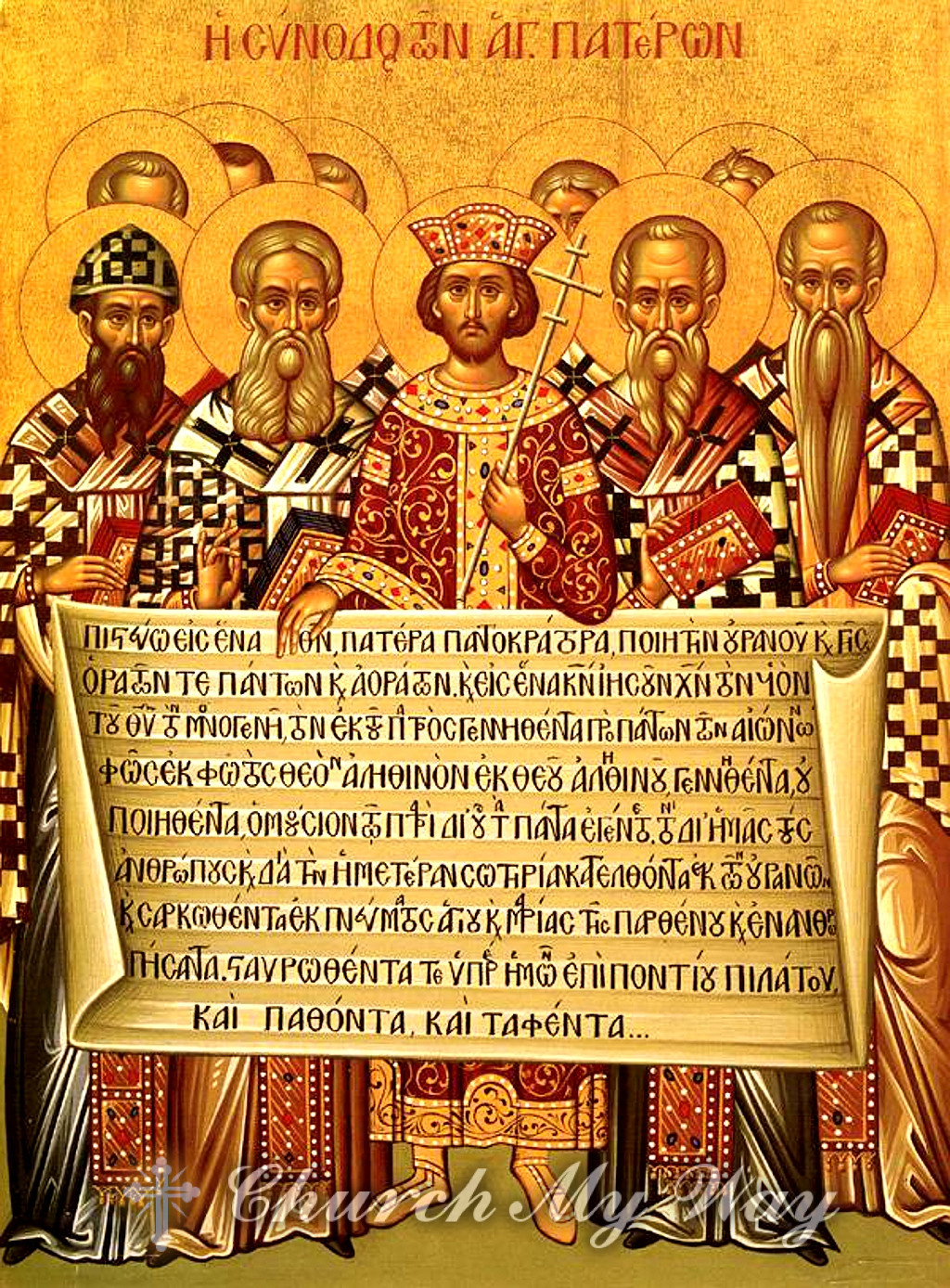
The Nicene Creed was first formulated at the Council of Nicaea in AD 325, where about 318 bishops affirmed that the Son is “true God from true God, begotten not made, of one substance (homoousios) with the Father,” condemning Arius’s teaching that the Son was a created being. The creed was substantially expanded at the Council of Constantinople in AD 381, which added material on the Holy Spirit and produced the form still recited today as the Nicene-Constantinopolitan Creed.
- Why Did the Church Need a Creed at All? The Crisis Behind Nicene Creed History
- The Council of Nicaea, AD 325: 318 Bishops and One Controversial Word
- The Forgotten Middle Years: How Nicene Creed History Nearly Unraveled
- The Council of Constantinople, AD 381: Completing the Creed
- What Does the Creed Actually Say? A Line-by-Line Look
- How Did the Creed Spread? From Council Hall to Baptismal Font
- Why the Nicene Creed Still Matters for Ordinary Believers
- What About the "318 Bishops"? Separating Fact from Legend in Nicene Creed History
- Conclusion: A Confession That Still Holds
Why Did the Church Need a Creed at All? The Crisis Behind Nicene Creed History
Before there was a creed, there was an argument. Around AD 318, a presbyter named Arius in Alexandria began teaching that the Son of God was not eternal but was himself created by the Father—”there was a time when he was not,” as his supporters summarized it. Arius was articulate, politically adept, and skilled at setting his teaching to catchy verse. His bishop, Alexander, saw the danger immediately: if the Son is a creature, then the church worships a creature, and the gospel of a God who enters creation to save it collapses.
The dispute spread far beyond Egypt. Constantine, newly master of the Roman world after his victory at the Milvian Bridge in AD 312 and increasingly favorable toward Christianity, saw in the quarrel a threat to imperial unity. He dispatched his advisor Hosius of Cordoba to mediate, and when mediation failed, he called the bishops to Nicaea in Bithynia (modern Iznik, Turkey). The church had held regional synods before, but nothing on this scale—and nothing convened by an emperor.
What Was at Stake Theologically?
The question was not a philosophical parlor game. Scripture speaks of the Son as the one “through whom all things were made” (John 1:3) and as existing “in the beginning” with God (John 1:1–2). It also insists that “there is one God” (Deuteronomy 6:4; 1 Corinthians 8:6). The bishops had to say both things at once: the Son is genuinely divine, and the church has not abandoned monotheism. Arius’s solution—a Son who is exalted but created—preserved a kind of monotheism at the cost of the incarnation’s logic. If Christ is a creature, then God himself has not come near; a deputy has. The council rejected that trade.
The Council of Nicaea, AD 325: 318 Bishops and One Controversial Word
The traditional number of 318 bishops, preserved by Athanasius and later writers, echoes Genesis 14:14, where Abraham arms 318 servants—a symbolic resonance ancient Christians enjoyed. Historians note the figure is likely approximate, but the gathering was genuinely representative: bishops from Egypt, Syria, Palestine, Asia Minor, and even a few from beyond the empire’s frontiers. Many bore the scars of the recent persecutions under Diocletian. Constantine himself attended, dressed modestly, and reportedly told the assembly that he was “a bishop for those outside the church.”
The council’s work moved quickly. A proposed creed from Eusebius of Caesarea was examined and judged insufficient—it was biblical in language but ambiguous on the Son’s eternity. The bishops then adopted a text with decisive additions, most famously the word homoousios, “of one substance” or “consubstantial” with the Father. The Son is:
- “begotten, not made”—closing the door on the idea that the Son is a creature;
- “true God from true God”—denying any lesser divinity;
- “of one substance with the Father”—asserting shared divine being, not merely similar honor;
- “through whom all things were made”—grounding creation itself in the Son.
The council also appended anathemas against Arius’s key phrases, and it issued twenty canons on church order, including the famous provision that provincial synods should meet twice yearly. Only two bishops initially refused to sign; the dissenting party was small but not eliminated. As church historian Philip Schaff observed, Nicaea settled the question in principle but not in practice—the creed’s reception would take another half-century of struggle.
The Forgotten Middle Years: How Nicene Creed History Nearly Unraveled
Here is where popular accounts often skip ahead. Between AD 325 and 381, the Nicene faith was repeatedly on the defensive. Constantine’s later sympathies drifted toward Arius’s allies, and his son Constantius II actively promoted a rival theological program—often called “Arianism” in the broad sense, though its adherents preferred terms like “homoian” (the Son is “like” the Father). Councils at Sirmium, Ariminum, and Seleucia produced alternative creeds. At one point in the 350s, the Nicene party in the West was pressured into near-isolation.
Athanasius and the Cost of “Contending Earnestly”
Athanasius, bishop of Alexandria, became the emblem of resistance. Exiled five times and spending some seventeen years away from his see, he insisted that the creed was not a party platform but the church’s life. His treatise On the Incarnation made the practical stakes plain: the Son became human so that humans might become divine by grace—a created mediator cannot accomplish that. The church father Jerome later quipped, “The whole world groaned and marveled to find itself Arian”—a line that captures how thoroughly the Nicene cause seemed lost in the late 350s.
The turning point came with the accession of Theodosius I in AD 379, a staunch Nicene emperor in the East. The Cappadocian fathers—Basil of Caesarea, his brother Gregory of Nyssa, and their friend Gregory of Nazianzus—had already done the theological groundwork, particularly on the Holy Spirit. Their arguments, drawn from Scripture and from the church’s worship (we pray to the Spirit, therefore the Spirit is divine), set the stage for the second ecumenical council.
The Council of Constantinople, AD 381: Completing the Creed
The council of 150 bishops in Constantinople did not reinvent the creed; it confirmed and expanded the Nicene text. The most substantial addition was the article on the Holy Spirit, which confesses him as “the Lord, the giver of life, who proceeds from the Father, who with the Father and the Son is together worshiped and glorified, who spoke through the prophets.” The creed also gained the opening “I believe in one God, the Father almighty, maker of heaven and earth, of all things visible and invisible,” and a more developed confession of the church, baptism, resurrection, and the life to come.
What most Christians recite today, whether in a Catholic Mass, an Orthodox Divine Liturgy, or a Protestant service, is this Nicene-Constantinopolitan Creed of 381—not the shorter 325 original. The two are so closely related that the church’s tradition treats them as one confession. The council also condemned Apollinarianism (which denied Christ a human mind) and affirmed the full humanity of Christ alongside his full divinity, protecting the reality of the incarnation.
| Date | Event | Key Contribution |
|---|---|---|
| c. AD 318 | Arius begins teaching in Alexandria | Claims the Son was created; “there was a time when he was not” |
| AD 325 | Council of Nicaea | ~318 bishops; affirms homoousios, “begotten not made,” “true God from true God” |
| AD 325–378 | Decades of controversy | Athanasius exiled five times; rival councils and creeds proliferate |
| AD 381 | Council of Constantinople | Expands the creed; full article on the Holy Spirit; 150 bishops |
| AD 431 | Council of Ephesus | Confirms the Nicene Creed as the standard of faith against Nestorius |
| AD 451 | Council of Chalcedon | Recites the creed as the church’s definitive confession; defines Christ’s two natures |
What Does the Creed Actually Say? A Line-by-Line Look
The creed is not a devotional poem but a boundary marker and a doxology at once. Its structure follows the Trinity: Father, Son, Holy Spirit. Each clause answers a specific error that once threatened the church’s faith.
The Father: Creator of All
“Maker of heaven and earth, of all things visible and invisible” echoes Genesis 1:1 and Colossians 1:16. Against Gnostic views that treated matter as evil, the creed insists that the physical world is God’s good creation—a conviction with enormous consequences for how Christians regard bodies, work, and the material order.
The Son: For Us and for Our Salvation
“For us and for our salvation he came down from heaven” is the creed’s beating heart. It confesses the incarnation (John 1:14), the virgin birth (Luke 1:34–35), the crucifixion “under Pontius Pilate”—a deliberate anchor in datable history—and the resurrection “on the third day according to the Scriptures” (1 Corinthians 15:3–4). The phrase “according to the Scriptures” reminds us that the earliest Christians read the Old Testament as pointing to Christ (Luke 24:27).
The Spirit: Lord and Giver of Life
The 381 expansion on the Spirit answered the Pneumatomachi (“Spirit-fighters”) who accepted the Son’s divinity but balked at the Spirit’s. The creed’s logic is worship-shaped: the Spirit is “together worshiped and glorified” with the Father and the Son, and therefore is God. The clause “who spoke through the prophets” ties the Spirit to Scripture itself (2 Peter 1:21).
How Did the Creed Spread? From Council Hall to Baptismal Font
The creed’s journey from council chamber to congregation is one of the great stories in Nicene Creed history. In the early church, candidates for baptism were taught a short “rule of faith” and asked to affirm it at the font. Over time, the Nicene confession displaced local baptismal creeds because it was more precise and widely shared. By the fifth century, it was recited in the liturgy; by the early medieval period, it was standard in the West and East alike.
One notable wrinkle: the Western church later added the word Filioque (“and the Son”) to the clause about the Spirit’s procession. The addition, which spread from Spain and Gaul and was eventually endorsed at Rome, became one of the flashpoints of the East-West schism of 1054. That dispute is a reminder that creeds are not merely historical documents; they remain living texts that communities argue about because they care.
Why the Nicene Creed Still Matters for Ordinary Believers
Reciting the creed can become rote—a liturgical habit performed while the mind wanders. But its history suggests otherwise. The creed exists because Christians discovered that vague spirituality is not enough when the gospel is at stake. Three practical takeaways emerge from its story:
- Doctrine is pastoral. The bishops at Nicaea were not quibbling over metaphysics for its own sake; they were protecting the church’s ability to say that God himself has saved us in Christ.
- Worship shapes belief. The church prayed before it defined. The creed’s confession of the Spirit’s divinity grew from the church’s practice of baptizing and worshiping in the triune name (Matthew 28:19).
- Faithfulness often costs. Athanasius’s exiles remind us that holding to the apostolic faith has never been socially convenient. The creed’s survival was not inevitable; it was contended for.
There is also a unifying function. When a congregation stands to recite the creed, it joins believers across centuries and continents—Coptic monks in Egypt, Lutheran farmers in Minnesota, Orthodox parishioners in Athens, Pentecostals in Lagos. The words are the same, and so is the confession: one God, Father, Son, and Holy Spirit.
What About the “318 Bishops”? Separating Fact from Legend in Nicene Creed History
The number 318 is traditional rather than precisely documented, and it carries symbolic weight. Ancient chroniclers loved the Abrahamic echo of Genesis 14:14, and the figure became a kind of shorthand for the council’s authority. What we can say with confidence is that the gathering was substantial, that it included both seasoned confessors and learned theologians, and that its decisions were received over time as the mind of the church—not because the bishops were infallible, but because their confession proved faithful to Scripture and was ratified by the wider church’s worship and teaching.
It is worth noting, too, that the council did not invent the creed out of nothing. It drew on baptismal formulas, on the Rule of Faith, and on scriptural language. The genius of Nicaea was selecting the right word—homoousios—to guard the right truth. As the fourth-century bishop Hilary of Poitiers put it, the creed’s purpose was not to multiply words but to fence the gospel.
Conclusion: A Confession That Still Holds
Nearly seventeen centuries after those 318 bishops gathered in Nicaea, the creed they shaped—completed at Constantinople and confessed ever since—remains the church’s most ecumenical statement of faith. Its history is a case study in how the Holy Spirit guides the church through conflict, how Scripture norms theology, and how worship and doctrine belong together. When we say “I believe in one God, the Father almighty,” we are not merely repeating ancient words. We are standing in a long line of witnesses who found, through controversy and persecution, that the triune God of the gospel is worth confessing with the whole heart—and that the words we use to say so matter more than we might imagine.
