📅 Last updated: 05.11.2026
The Septuagint vs Masoretic Text question sits at the crossroads of textual criticism, ancient history, and living faith—and it deserves a careful, honest answer rather than a slogan. When you open a modern English Bible, the Old Testament you read descends, almost without exception, from the Hebrew Masoretic Text. Yet the New Testament writers, and the earliest Greek-speaking churches, most often quoted a different family of manuscripts: the Greek Septuagint. Understanding how these two textual traditions arose, where they agree, and why they sometimes differ will deepen your confidence in Scripture rather than shake it.
The Septuagint is an ancient Greek translation of the Hebrew Scriptures begun in the third century BC in Alexandria, while the Masoretic Text is the standardized Hebrew text preserved by Jewish scribes and finalized around AD 900–1000. They agree in the vast majority of passages but differ in some readings, book order, and the presence of additional books. Modern Old Testaments generally follow the Masoretic Text, while many New Testament quotations reflect the Septuagint.
- What Exactly Are the Septuagint and the Masoretic Text?
- Septuagint vs Masoretic Text: A Timeline of Transmission
- Why Do the Septuagint and Masoretic Text Differ?
- Septuagint vs Masoretic Text in the New Testament
- Which Text Is More Reliable?
- Objections and Common Misconceptions
- What This Means for Your Bible Reading
- A Lasting Perspective: One Word, Many Witnesses
What Exactly Are the Septuagint and the Masoretic Text?
Before comparing them, we should be clear about what each actually is—because the terms are often used loosely.
The Septuagint (LXX)
The Septuagint—abbreviated LXX, after the seventy (or seventy-two) translators of tradition—is the Greek rendering of the Hebrew Bible produced primarily in Alexandria, Egypt. According to the Letter of Aristeas (second century BC), Ptolemy II Philadelphus (reigned 285–246 BC) commissioned the translation of the Torah for his great library. The Pentateuch was translated first, around 280–250 BC; the Prophets and Writings followed over the next century or two. The name “Septuagint” strictly refers to the Torah translation, but by convention it covers the whole Greek Old Testament, including books like 1–2 Maccabees, Sirach, and Wisdom of Solomon that were composed in or translated into Greek.
The LXX became the Bible of the Hellenistic synagogue and, crucially, of the early church. When Paul wrote that “all Scripture is breathed out by God” (2 Timothy 3:16), the Scripture he and Timothy had known from childhood (2 Timothy 3:15) was being read in Greek-speaking congregations across the Roman world.
The Masoretic Text (MT)
The Masoretic Text is the Hebrew (and partly Aramaic) text of the Old Testament as preserved and standardized by Jewish scribes called Masoretes, active roughly from the seventh to the eleventh centuries AD in Tiberias, Babylonia, and Jerusalem. The most famous family, the Ben Asher dynasty, produced the great codices: the Aleppo Codex (c. 930) and the Leningrad Codex (c. 1008), the latter still the base text for most scholarly Hebrew Bibles.
“Masoretic” comes from masorah, meaning “tradition.” The Masoretes did not invent the text; they inherited consonantal Hebrew manuscripts and added a sophisticated system of vowel points, accent marks, and marginal notes designed to preserve exact pronunciation and guard against scribal error. Their work reflects a chain of careful transmission reaching back to the Second Temple period.
Septuagint vs Masoretic Text: A Timeline of Transmission
The chronological distance between these traditions is the single most important fact for understanding their relationship. The Septuagint was translated from Hebrew manuscripts that predate the Masoretic standardization by a thousand years or more.
| Period | Key Development | Significance |
|---|---|---|
| c. 280–250 BC | Translation of the Pentateuch into Greek in Alexandria | Earliest major witness to the Hebrew text’s content |
| c. 250–100 BC | Translation of Prophets and Writings; later Greek books added | LXX becomes the Bible of Diaspora Judaism |
| c. 250 BC – AD 68 | Dead Sea Scrolls copied and preserved at Qumran | Hebrew manuscripts showing both proto-Masoretic and LXX-like readings |
| AD 90–100 | Council of Jamnia (Yavneh) and consolidation of Hebrew canon | Jewish focus shifts decisively to the Hebrew text |
| AD 100–500 | Origen’s Hexapla (c. 240); Jerome’s Vulgate (382–405) | Christian scholars compare Hebrew and Greek witnesses |
| AD 600–1000 | Masoretes standardize vowel pointing and textual notes | Fixes the Hebrew text that underlies most modern Bibles |
Why Do the Septuagint and Masoretic Text Differ?
The differences fall into several categories, and each has its own explanation.
1. Textual Variants (Different Readings)
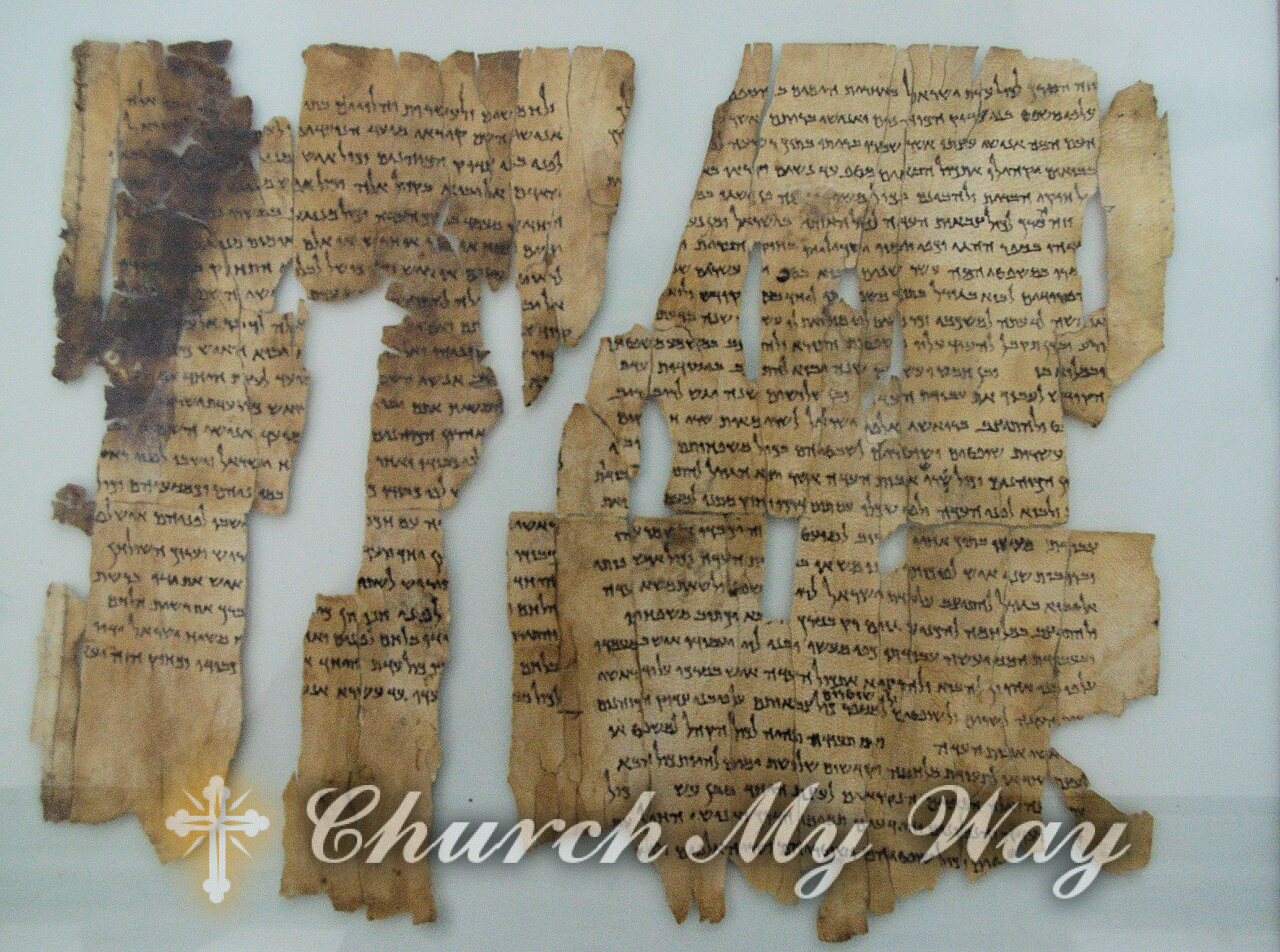
In some passages the LXX reflects a Hebrew Vorlage (the manuscript it was translating) that differs from the later Masoretic text. The Dead Sea Scrolls, discovered from 1947 onward, proved this decisively. Among the Isaiah scrolls from Qumran Cave 1 (1QIsaa, c. 125 BC), some readings align with the Masoretic Text, others with the Septuagint. The book of Jeremiah is the most dramatic case: the Greek Jeremiah is about one-eighth shorter than the Hebrew, and the Qumran fragments preserve a Hebrew text matching the shorter Greek form. This means the LXX translators were not careless—they were translating a genuinely different, earlier edition.
2. Translation Technique
Some apparent differences are simply translation choices. The LXX Pentateuch tends toward fairly literal rendering, while books like Isaiah and Job show more freedom. Idioms, wordplay, and Hebrew constructions do not always transfer cleanly into Greek. A variant in the LXX is not automatically evidence of a different Hebrew original.
3. Theological and Liturgical Adaptation
Occasionally translators smoothed or clarified texts. The famous example is Isaiah 7:14: the Hebrew almah (“young woman”) is rendered parthenos (“virgin”) in the LXX. Matthew 1:23 quotes the Greek form directly. This is not a corruption but a legitimate interpretive translation that the New Testament author, under inspiration, adopts.
4. Canonical Scope
The LXX contains books absent from the Hebrew canon—Tobit, Judith, Wisdom, Sirach, Baruch, 1–2 Maccabees, and additions to Esther and Daniel. These “deuterocanonical” or “apocryphal” books were valued in the early church but were not part of the Hebrew Scriptures recognized by the rabbis. This is a canon question, not strictly a textual one, but it shapes how the two Bibles are compared.
Septuagint vs Masoretic Text in the New Testament
New Testament quotations of the Old Testament provide a living laboratory for this comparison. Of roughly 300 direct quotations, the majority align more closely with the Septuagint than with the Masoretic Text.
- Hebrews 1:6 quotes Deuteronomy 32:43 (“Let all God’s angels worship him”), a line present in the LXX but absent from the Masoretic Hebrew.
- Matthew 1:23 follows the LXX’s parthenos in Isaiah 7:14.
- Acts 7:14 gives seventy-five persons in Jacob’s family, following the LXX of Genesis 46:27 and Exodus 1:5, where the Masoretic Text reads seventy.
- James 4:6 and 1 Peter 5:5 quote Proverbs 3:34 in a form matching the LXX.
This pattern does not mean the Masoretic Text is inferior—it means the apostles and evangelists, writing in Greek for Greek-speaking audiences, used the Bible those audiences actually read. The Holy Spirit worked through the textual situation of the first century, which included the Septuagint as a genuine witness to the Word of God.
Which Text Is More Reliable?
This is the question most readers actually want answered, and the honest answer is nuanced.
The Masoretic Text has the advantage of being in the original language, preserved with extraordinary care by scribes who counted letters and developed checksums to prevent copying errors. Its stability is remarkable: the Great Isaiah Scroll from Qumran, copied over a thousand years before the Leningrad Codex, agrees with it in more than 95 percent of the text.
The Septuagint has the advantage of antiquity for its underlying Hebrew Vorlage—in some books, it preserves readings from a Hebrew textual tradition older than the one the Masoretes standardized. Where the LXX and the Dead Sea Scrolls agree against the MT, there is good reason to think the LXX reflects an early, sometimes original, reading.
Most modern critical editions of the Hebrew Bible, such as Biblia Hebraica Stuttgartensia and Biblia Hebraica Quinta, follow the Masoretic Text as their base but note Septuagint readings in the apparatus. English translations like the ESV, NIV, and NASB generally follow the MT, occasionally adopting a reading supported by the LXX and Dead Sea Scrolls when the evidence warrants. The NRSV and its successors more readily incorporate LXX readings. This is not theological drift; it is the ordinary work of textual criticism done with integrity.
Neither the Septuagint nor the Masoretic Text is a “corrupted” Bible. Both are faithful witnesses to the same inspired Scriptures, transmitted through different communities—Greek-speaking Jewish and Christian readers on one side, Hebrew-speaking Jewish scribes on the other—and both are essential for reconstructing the original text.
Objections and Common Misconceptions
“The Masoretes Changed the Text to Hide Jesus”
This claim, popular in some circles, overstates the evidence. The Masoretes were preservers, not editors; their entire system was designed to prevent alteration. Where the LXX and MT differ in messianic passages (Isaiah 7:14 is the classic case), the difference is best explained by translation choice, not conspiracy. The Hebrew almah genuinely means “young woman,” and the LXX translators chose parthenos because it fit the context of a miraculous sign. Matthew, writing under inspiration, affirms that choice.
“The Septuagint Is Just a Translation and Therefore Inferior”
Every translation is an interpretation, but the LXX is also a textual witness. Because it was made from Hebrew manuscripts centuries older than the Masoretic standardization, it sometimes preserves readings the MT lost. Its value is historical as well as theological.
“The King James Bible Uses the Masoretic Text, So It Is the Pure Text”
The KJV’s Old Testament does follow the MT (via the Bomberg Rabbinic Bible of 1524–25), but so do most modern translations. The KJV translators also consulted the LXX and other ancient versions. Textual purity is not a property of one translation but a matter of faithful transmission across many witnesses.
What This Means for Your Bible Reading
The Septuagint vs Masoretic Text discussion is not an academic curiosity. It shapes how you read familiar passages and how you trust the Bible you hold.
- Trust the transmission. The overwhelming agreement between the LXX, the MT, and the Dead Sea Scrolls demonstrates that Scripture has been preserved with remarkable fidelity. Variants exist, but they are minor and do not affect any central doctrine.
- Read with humility about textual details. When a footnote says “some manuscripts read…,” that is the honest record of the church’s careful stewardship, not a sign of uncertainty about the gospel.
- Appreciate the early church’s Bible. The Septuagint shaped the vocabulary and theology of the New Testament writers. Reading it alongside the Hebrew can illuminate passages like Hebrews 1 or Acts 7.
- Use a good study Bible. The textual notes in the ESV, NIV, and NRSV will tell you when the LXX or Dead Sea Scrolls support a different reading, so you can see the evidence for yourself.
A Lasting Perspective: One Word, Many Witnesses
The Septuagint vs Masoretic Text comparison ultimately reveals something encouraging about how God has preserved His Word. He did not entrust Scripture to a single manuscript line or a single community. He allowed it to be copied by Hebrew scribes, translated by Greek-speaking Jews, quoted by apostles, and studied by church fathers across the Mediterranean world. The Masoretic Text and the Septuagint are not rivals but partners—two streams flowing from the same source, each carrying the living water of the Word to different generations.
When Jesus stood in the synagogue at Nazareth and read from Isaiah (Luke 4:16–21), He read a text close to what the Septuagint preserves. When Paul reasoned from the Scriptures in the synagogues (Acts 17:2–3), he appealed to the same body of revelation. The text has been copied, translated, and debated for over two thousand years, and it has never failed to accomplish what God intends (Isaiah 55:11). That is the confidence the Septuagint vs Masoretic Text conversation should leave with every reader: the Word of the Lord endures forever (1 Peter 1:25), whatever manuscript tradition carries it to your hands.
