📅 Last updated: 01.11.2026
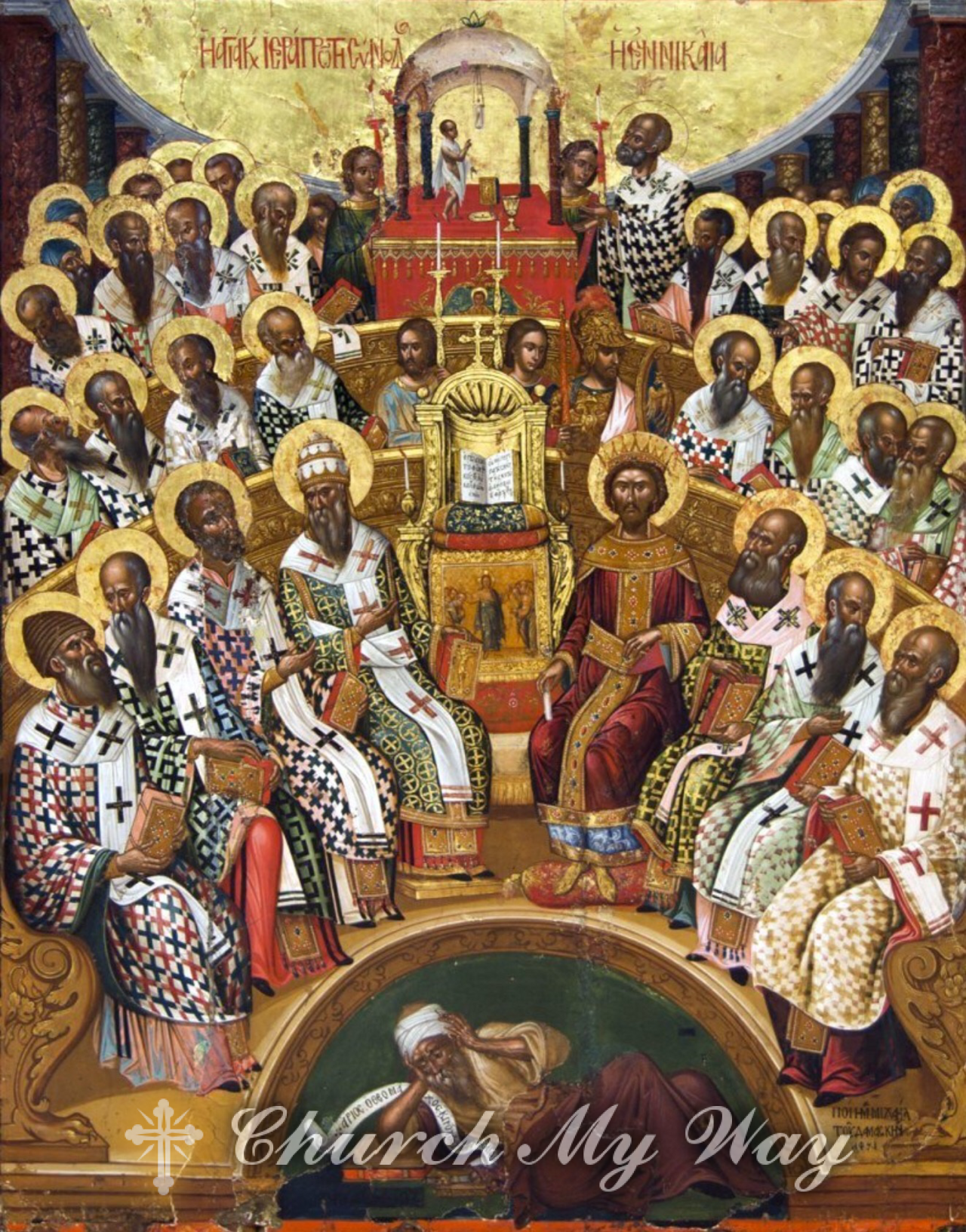
The Council of Nicaea stands as one of the most consequential gatherings in the history of the church, a moment when bishops from across the Roman world convened to confront a theological crisis that threatened to fracture Christianity at its foundations. Convened in 325 AD by Emperor Constantine, this assembly addressed the teachings of Arius, a presbyter from Alexandria whose claim that the Son was a created being ignited fierce controversy. What transpired over those weeks in the lakeside city of Bithynia shaped Christian doctrine, canon law, and the relationship between church and empire for centuries to come.
The Council of Nicaea (325 AD) was the first ecumenical council of the Christian church, convened by Emperor Constantine to resolve the Arian controversy over the nature of Christ. Roughly 300 bishops gathered in Nicaea (modern Iznik, Turkey), producing the Nicene Creed affirming that the Son is “of the same substance” (homoousios) as the Father, establishing a uniform date for Easter, and issuing twenty canons on church discipline. It was not where the biblical canon was finalized, nor where the doctrine of the Trinity was invented—but it decisively shaped how the church would articulate both.
- Why Was the Council of Nicaea Called?
- Who Attended the Council of Nicaea?
- What Happened at the Council of Nicaea? Key Events and Debates
- What Did the Nicene Creed Actually Say?
- What the Council of Nicaea Did Not Do
- What Was the Aftermath of the Council of Nicaea?
- Why Does the Council of Nicaea Still Matter Today?
- The Council of Nicaea: A Lasting Perspective
Why Was the Council of Nicaea Called?
The controversy began not with emperors or bishops but with a preacher. Around 318 AD, Arius, a respected presbyter in the church of Alexandria, began teaching that the Son of God was not eternal but was begotten by the Father as the first and highest of created beings. His slogan, preserved by his opponents, was “there was a time when He was not.” For Arius, the Son was ktisma—a creature—supremely exalted but not divine in the same sense as the Father.
Alexandria’s bishop, Alexander, saw this as a denial of the church’s worship of Christ. He convened a local synod that condemned Arius. But Arius had allies—including Eusebius of Nicomedia, a bishop with connections to the imperial court—and the dispute spilled across the eastern Mediterranean. Letters flew, congregations divided, and the controversy became the dominant theological question of the age.
Constantine, who had defeated Licinius in 324 and unified the empire under his rule, saw the dispute as a threat to the social order he was trying to consolidate. His letter to Alexander and Arius, preserved by Eusebius of Caesarea in his Life of Constantine, reveals his initial frustration: he treated the quarrel as a trivial dispute over “idle questions” and urged reconciliation. When that failed, he summoned the bishops to Nicaea.
The Political and Spiritual Stakes
The council was not merely a theological seminar. Constantine had recently converted (or at least aligned himself with Christianity), and he understood that a divided church meant a divided empire. Yet the bishops who gathered did not see themselves as servants of imperial policy. Most had lived through the Great Persecution under Diocletian (303–313 AD), and some bore its scars. Their concern was the apostolic faith once delivered to the saints (Jude 3). The convergence of imperial convenience and theological conviction made Nicaea unique—and, at times, uneasy.
Who Attended the Council of Nicaea?
Historical sources vary on the exact number. Eusebius of Caesarea, an eyewitness, reports around 250 bishops; Athanasius, Alexander’s deacon who attended as a young man, later cites 318—a number that may carry symbolic weight (Genesis 14:14, the 318 servants of Abraham). Most modern historians settle on roughly 300 attendees.
The composition of the council matters. The vast majority came from the Greek-speaking East. Only a handful represented the Latin West—legates from Rome and a few others. The bishop of Rome, Sylvester, did not attend; his representatives signed the creed. This fact alone dismantles later claims that the council was a Roman papal affair.
Among the attendees were confessors who had endured torture under Diocletian—men missing eyes or crippled by the mines. Eusebius of Caesarea, the church historian, was present and initially sympathetic to Arius’s language. Nicholas of Myra (later the basis of the Santa Claus legend) is traditionally listed among the bishops, though the famous story of him striking Arius is a later medieval embellishment with no early attestation. Athanasius, though not yet a bishop, emerged as a key defender of orthodoxy and would spend the rest of his life defending Nicaea.
What Happened at the Council of Nicaea? Key Events and Debates
The council opened in late May or early June 325 AD in the imperial palace at Nicaea. Constantine presided ceremonially, though he was not a bishop and did not vote. The sessions were conducted in Greek. The central question was simple to state and agonizing to resolve: Is the Son of God truly God, or the highest of creatures?
The Debate Over the Son’s Nature
Arius and his supporters argued from texts like Proverbs 8:22 (in the Septuagint: “The Lord created me…”) and John 14:28 (“the Father is greater than I”) that the Son had a beginning. The orthodox party, led by Alexander of Alexandria and championed by Athanasius, insisted that the Son is eternally begotten, not made—otherwise the church was worshipping a creature, and salvation itself was in doubt. If Christ is not truly God, how can He reveal God or deify humanity?
The council rejected Arius’s formula. But the decisive move was the insertion of a non-biblical word: homoousios, “of the same substance” or “consubstantial” with the Father. This term, controversial even among the orthodox because it was not scriptural, forced the issue. It left no room for the Arian claim. The creed declared the Son “begotten, not made, being of one substance with the Father.”
Only two bishops—Theonas of Marmarica and Secundus of Ptolemais—refused to sign. Arius himself was condemned and exiled. Constantine, initially lenient, later hardened his stance as the controversy persisted.
Other Decisions: Easter, Canons, and the Meletian Schism
Nicaea was not only about Christology. The council addressed the dating of Easter, resolving the Quartodeciman controversy by ruling that the resurrection should be celebrated on the Sunday following the first full moon after the spring equinox—independent of Jewish Passover calculations. This decision, aimed at uniformity, remains the basis for most churches’ Easter dates (though the Orthodox churches still use the Julian calendar).
The council also dealt with the Meletian schism in Egypt, a dispute over bishops who had lapsed during persecution, and issued twenty canons on church order—covering the readmission of the lapsed, the treatment of clergy who had denied the faith, and the jurisdiction of bishops. These canons reveal a church grappling with the aftermath of persecution and the need for uniform discipline.
A Timeline of the Council of Nicaea
| Date | Event | Significance |
|---|---|---|
| c. 318 AD | Arius begins teaching in Alexandria | Ignites the controversy over the Son’s nature |
| 320–321 AD | Local synods condemn Arius | Alexander of Alexandria and supporters reject Arianism |
| 324 AD | Constantine unifies the empire | Creates political context for a church council |
| May–June 325 AD | Council convenes at Nicaea | ~300 bishops gather; creed debated and adopted |
| 325 AD (summer) | Nicene Creed signed; canons issued | Homoousios affirmed; Easter date fixed; Arius exiled |
| 325–381 AD | Aftermath and further councils | Continued Arian conflict; Constantinople (381) expands the creed |
What Did the Nicene Creed Actually Say?
The original creed of 325 is not the version most Christians recite today. The Nicene Creed used in churches—with its expanded articles on the Holy Spirit and the church—comes largely from the Council of Constantinople (381). The 325 text reads:
“We believe in one God, the Father Almighty, Maker of all things visible and invisible. And in one Lord Jesus Christ, the Son of God, begotten of the Father, only-begotten, that is, of the substance of the Father, God of God, Light of Light, true God of true God, begotten not made, of one substance with the Father, through whom all things were made…”
The key phrases—”begotten not made” and “of one substance”—were designed as doctrinal fences. They excluded Arianism while affirming the church’s worship of Christ. The creed also included anathemas against those who say “there was a time when He was not” or that the Son is “of another substance or essence” or “created” or “changeable.”
The creed’s language is not philosophical speculation for its own sake. It is doxological. The church was not trying to define God but to protect the gospel: the One who died on the cross and rose again is the eternal Son, the same in being as the Father. As the apostle John wrote, “In the beginning was the Word, and the Word was with God, and the Word was God” (John 1:1). Nicaea was, in a sense, the church catching up to John’s prologue.
What the Council of Nicaea Did Not Do
Popular misconceptions about Nicaea are as influential as the facts. Correcting them is essential to understanding what really happened.
Did Nicaea Finalize the Biblical Canon?
No. The council did not decide which books belong in the Bible. The canon of Scripture emerged over centuries through use in worship, apostolic association, and consensus. The first formal list matching the 27 New Testament books appears in Athanasius’s Festal Letter of 367 AD—decades after Nicaea. The idea that Nicaea voted on the canon is a later legend, popularized by novels and internet claims, with no basis in the historical record.
Did Nicaea Invent the Trinity?
No. The doctrine of the Trinity—one God in three persons—was not invented at Nicaea. The council articulated and defended what Christians had believed and worshipped from the beginning: the Father, the Son, and the Holy Spirit are each divine, yet God is one. The baptismal formula of Matthew 28:19 (“in the name of the Father and of the Son and of the Holy Spirit”) and the apostolic benediction of 2 Corinthians 13:14 reflect this triune faith. Nicaea gave the church precise language to defend it against Arianism; the fuller Trinitarian formulation came at Constantinople in 381.
Was Nicaea a Power Grab by Constantine?
Constantine’s role was significant but not dictatorial. He convened the council, provided transportation and lodging, and presided over sessions with ceremonial deference to the bishops. He did not dictate the creed; the theological work was done by the bishops. Yet his involvement set a precedent for imperial influence in church affairs that would prove problematic. Subsequent emperors—some Arian, some orthodox—would use councils as instruments of policy. The church’s independence from the state has been contested ever since.
What Was the Aftermath of the Council of Nicaea?
The council did not end the controversy. It intensified it. Arius was exiled, but his ideas had powerful defenders, including Eusebius of Nicomedia, who later baptized Constantine and gained influence over his son Constantius II. In the decades following Nicaea, Arianism gained ground in the imperial court, and orthodox bishops—including Athanasius, who became bishop of Alexandria in 328—were repeatedly exiled.
Athanasius’s life became a symbol of resistance. Exiled five times, he famously declared, “Athanasius against the world” (Athanasius contra mundum). His perseverance preserved the Nicene faith when it seemed politically doomed. The tide turned with the Council of Constantinople in 381, convened by Emperor Theodosius I, which reaffirmed and expanded the Nicene Creed and condemned Arianism decisively.
Key Factors in Nicaea’s Legacy
- Theological clarity: The term homoousios provided a precise, non-negotiable standard for Christ’s full divinity.
- Conciliar precedent: Nicaea established the model of ecumenical councils as the church’s highest doctrinal authority.
- Persecution and perseverance: The decades of Arian resurgence tested the church’s commitment to the creed and produced heroes like Athanasius.
- Church-state entanglement: Imperial involvement in doctrine set a precedent with mixed consequences for centuries.
Why Does the Council of Nicaea Still Matter Today?
Nicaea is not a dusty historical footnote. It defines what most Christians—Catholic, Orthodox, Protestant—believe about Jesus Christ. Every recitation of the Nicene Creed in worship is a direct inheritance from that gathering. When Christians confess that Jesus is “true God of true God, begotten not made,” they are speaking the language hammered out at Nicaea.
The council also teaches a lesson about theological precision. The bishops could have compromised. They could have used vague language that satisfied both sides. Instead, they recognized that the gospel itself was at stake. If Christ is a creature, then God has not come to us in Him; we are still in our sins. The apostle Paul wrote, “God was in Christ, reconciling the world to himself” (2 Corinthians 5:19, KJV). Nicaea defended that reality.
The council also reminds us that orthodoxy is not the enemy of unity but its foundation. True unity in the church is unity in the truth—the truth of who God is and what He has done. The bishops at Nicaea did not invent a new faith; they defended the faith once delivered (Jude 3). Their work, though imperfect and contested, was a labor of love for the church and for the Savior she worships.
The Council of Nicaea: A Lasting Perspective
What really happened at Nicaea? Bishops gathered, debated, prayed, and produced a creed that has shaped Christian faith for seventeen centuries. They did not invent the Trinity, finalize the Bible, or bow to imperial whim. They confronted a genuine threat to the gospel and answered it with careful, biblical, and, at times, painful precision.
The council was not a golden age of unity. It was a hard-won victory that required decades of struggle to secure. But it gave the church a gift: a clear, confessional statement of who Jesus is. When we stand in church and recite the creed, we join our voices with those bishops of 325 and with the faithful of every age who have refused to reduce Christ to a creature. We affirm with them that the One who was crucified for us is “God of God, Light of Light, true God of true God”—the eternal Son, of one substance with the Father. That confession is worth contending for, and it is worth singing.
