📅 Last updated: 24.11.2026
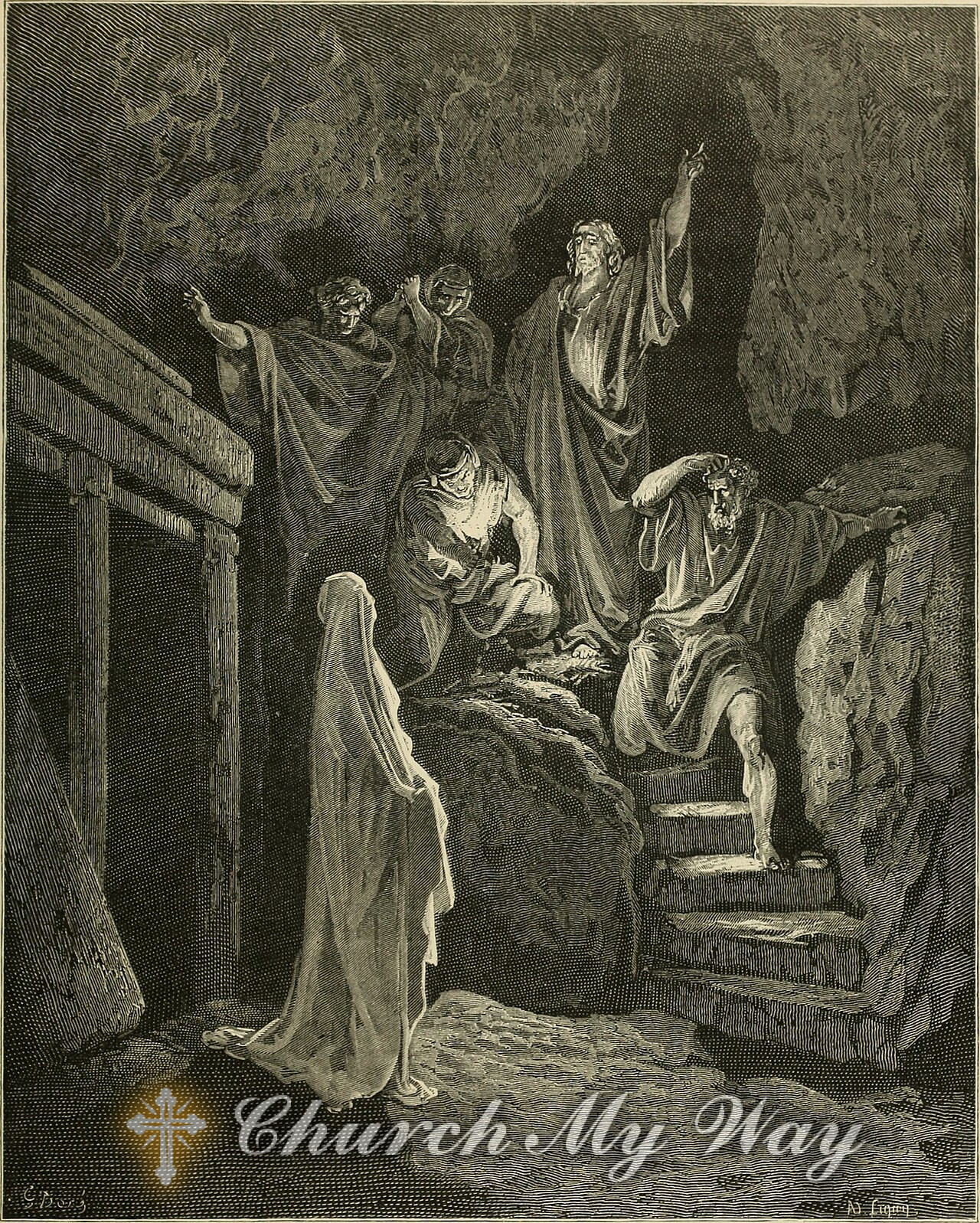
“Jesus wept” is one of the shortest and most arresting sentences in all of Scripture—just two words in English, three in Greek (edakrysen ho Iēsous), yet it has carried the weight of two thousand years of Christian reflection on the humanity of Christ and the compassion of God. Standing at the tomb of his friend Lazarus, surrounded by mourners, the Son of God did something no one expected: he cried. The verse (John 11:35) is famous for its brevity, but its brevity conceals a depth that rewards careful study of the Greek text, the historical setting, and the theological storm gathering around that grave in Bethany.
Jesus wept at Lazarus’s tomb (John 11:35) because he was genuinely grieved by death, by the sorrow of those he loved, and by the human condition sin had broken—even though he knew he was about to raise Lazarus from the dead. His tears reveal both his full humanity and his divine compassion, showing that God does not stand distant from human suffering but enters into it.
- What Does "Jesus Wept" Actually Mean in the Original Text?
- Why Did Jesus Weep If He Knew He Would Raise Lazarus?
- What Was the Historical and Cultural Setting of John 11?
- Why Did Jesus Weep Publicly When He Could Have Wept Privately?
- How Does "Jesus Wept" Connect to the Rest of Scripture?
- What Does "Jesus Wept" Teach Us About God's Compassion?
- How Should Believers Respond to the Tears of Jesus?
- What Is the Lasting Significance of "Jesus Wept"?
What Does “Jesus Wept” Actually Mean in the Original Text?
The English phrase “Jesus wept” translates the Greek edakrysen ho Iēsous. The verb dakryō means to shed tears, to cry quietly—a silent, restrained weeping rather than loud wailing. This distinction matters, because John’s Gospel uses a different verb for the mourners a few verses earlier. In John 11:33, the crowd is described as klaiontas—wailing, the loud, public lamentation customary at Jewish funerals. Jesus does not join that kind of display. He weeps in a way that is quieter, more interior, and, in John’s telling, more striking.
The verse sits at the emotional center of the Lazarus narrative, a chapter that functions as the seventh and climactic “sign” in John’s Gospel. John has been building toward this moment since chapter 1, where he declares the Word became flesh (John 1:14). Here, in the shortest verse in the New Testament, that incarnation becomes almost unbearably concrete: the eternal Word is standing at a tomb, and water is running down his face.
John’s Gospel is often described as the most theological of the four, emphasizing Christ’s divinity with titles like “the Word,” “the Light,” and “I AM.” Yet it is John alone who records this raw moment of grief. The same Gospel that opens with cosmic language about creation closes its account of Jesus’ public ministry with a man weeping at a friend’s grave. The two are not in tension; they are the point.
Why Did Jesus Weep If He Knew He Would Raise Lazarus?
This is the question that has occupied interpreters from Augustine onward. Jesus knew Lazarus was dead before he left Perea (John 11:11–14). He knew what he intended to do. He had already told his disciples, “This illness does not lead to death. It is for the glory of God, so that the Son of God may be glorified through it” (John 11:4). So why the tears?
He was not weeping out of ignorance or despair
Jesus’ grief was not the grief of someone caught off guard. It was the grief of someone who sees death clearly and hates it fully. The tears are not a failure of faith; they are the response of a holy God to an unholy intrusion. Death was never part of God’s original design for humanity (Genesis 2:17; Romans 5:12), and Jesus, who came to destroy death, stands before it with revulsion as well as sorrow.
He was weeping with those who wept
John 11:33 says Jesus saw Mary weeping and “the Jews who had come with her also weeping,” and he was “deeply moved in his spirit and greatly troubled.” The Greek phrase enebrimēsato tō pneumati is vivid—it carries the sense of a snort or a surge of indignation, an inward churning. Jesus is not merely sad; he is stirred to his core. Some scholars read this as anger at death itself and at the enemy who wields it. Others read it as profound compassion for the mourners. The text supports both, and the two are not mutually exclusive.
He was weeping as a true man
The Council of Chalcedon (AD 451) later formalized what the church had always confessed: Jesus is one person with two natures, fully divine and fully human, without confusion or mixture. John 11:35 is one of the clearest windows into that second nature. The Son of God did not merely appear to grieve; he grieved. Hebrews 4:15 makes the pastoral point explicit: “we do not have a high priest who is unable to sympathize with our weaknesses.” The tears at Bethany are the proof.
- Humanity: Jesus experienced real sorrow, real loss, and real tears—not a theatrical display.
- Compassion: He entered the grief of Mary and Martha rather than standing above it.
- Indignation: He confronted death as an enemy, not a neutral fact of life.
- Anticipation: He wept knowing the resurrection was minutes away, which makes the tears about more than Lazarus alone.
What Was the Historical and Cultural Setting of John 11?
Understanding the scene requires some first-century context. Bethany sat on the eastern slope of the Mount of Olives, roughly two miles from Jerusalem (John 11:18). It was a small village, close enough to the city that “many of the Jews had come to Martha and Mary to console them concerning their brother” (John 11:19). The presence of a large crowd of mourners was standard Jewish practice: friends and neighbors would gather for a period of mourning that could last up to thirty days, with the first seven being the most intense.
The timing is also significant. John places this event just before the final Passover, the one at which Jesus would be crucified (John 11:55). The raising of Lazarus becomes the immediate catalyst for the plot against Jesus’ life: the Sanhedrin convenes, and Caiaphas famously says it is expedient that one man die for the people (John 11:49–50). Jesus’ tears at the tomb, in other words, are shed in the shadow of his own coming death. He is grieving Lazarus, but he is also walking toward his own grave.
There is a further cultural detail worth noting. When Martha meets Jesus on the road, she says, “Lord, if you had been here, my brother would not have died” (John 11:21). Mary says the same thing when she reaches him (John 11:32). Both sisters express a faith that is real but bounded by the assumption that Jesus’ power operates only at a distance. Jesus’ response—”I am the resurrection and the life” (John 11:25)—pushes them past that assumption. The tears come after this exchange, after the theology has been spoken. Jesus does not choose between truth and tears; he gives both.
| Element | Detail from John 11 | Significance |
|---|---|---|
| Location | Bethany, about two miles from Jerusalem (v. 18) | Close to the city; a large crowd of mourners is present |
| Timing | Four days after Lazarus’s death (v. 17, 39) | Jewish belief held that the soul lingered near the body for three days; by day four, hope of recovery was gone |
| Key dialogue | Martha’s and Mary’s “if you had been here” (vv. 21, 32) | Reveals genuine faith constrained by a limited expectation of Jesus’ power |
| Jesus’ emotional response | “Deeply moved” and “greatly troubled” (v. 33); “Jesus wept” (v. 35) | Grief, compassion, and indignation at death converge |
| Result | Lazarus raised (vv. 43–44); plot against Jesus intensifies (vv. 49–53) | The sign that seals Jesus’ fate and foreshadows his own resurrection |
Why Did Jesus Weep Publicly When He Could Have Wept Privately?
The public nature of the tears is easy to overlook. John tells us the crowd saw him weeping and said, “See how he loved him!” (John 11:36). Some, however, responded with skepticism: “Could not he who opened the eyes of the blind man also have kept this man from dying?” (John 11:37). The tears were visible enough to prompt both admiration and doubt. Jesus did not hide them.
This is a pattern in Scripture. The psalms are full of public lament—”My tears have been my food day and night” (Psalm 42:3); “I am weary with my moaning; every night I flood my bed with tears” (Psalm 6:6). The Bible does not treat tears as a spiritual failure to be managed. It treats them as a language of the soul before God. Jesus, the sinless one, weeps without shame. That alone is worth pausing over in a culture that often equates emotional restraint with maturity.
There is also a pastoral dimension. The crowd’s interpretation—”See how he loved him”—is not wrong, only incomplete. Jesus’ tears are a visible sign of an invisible love. John wants us to see that the one who raises the dead is not a distant miracle-worker dispensing power from a safe distance. He is a friend who stands at the grave and cries. The miracle that follows is not the opposite of the tears; it is their answer.
How Does “Jesus Wept” Connect to the Rest of Scripture?
The tears at Bethany are not an isolated moment. They belong to a larger biblical pattern in which God’s presence and human sorrow intersect.
The God who grieves
In Genesis 6:6, God is grieved in his heart over human wickedness. In Hosea 11:8, God cries out, “How can I give you up, O Ephraim? … My heart recoils within me; my compassion grows warm and tender.” The prophets describe a God who is not impassive but emotionally engaged with his people. Jesus’ tears are the incarnation of that divine grief—the invisible heart of God made visible in a human face.
The man of sorrows
Isaiah 53:3 describes the coming servant as “a man of sorrows and acquainted with grief.” The Gospels show this repeatedly: Jesus weeps over Jerusalem (Luke 19:41), he is “troubled in spirit” before his betrayal (John 13:21), and he prays in Gethsemane with “loud cries and tears” (Hebrews 5:7). John 11:35 is one verse in a life saturated with compassion.
The hope of resurrection
Jesus’ tears are shed in the presence of a coming resurrection. Lazarus will walk out of that tomb within minutes. Yet Jesus still weeps. This tells us something crucial: the tears are not only about Lazarus. They are about every grave, every funeral, every family that has ever stood in a cemetery and felt the wrongness of death. When Jesus weeps, he weeps for the whole human race. And when he calls Lazarus out, he previews the day when every tear will be wiped away (Revelation 21:4).
What Does “Jesus Wept” Teach Us About God’s Compassion?
The doctrine of divine impassibility—the idea that God cannot be affected by anything outside himself—has a long history in Christian theology, and it is not without biblical warrant. But John 11:35 keeps that doctrine honest. Whatever we mean by God’s transcendence, we cannot mean that God is indifferent to human suffering. The incarnation settles the question. In Jesus, God has a face, a voice, and tear ducts.
This has practical consequences for how believers pray and how they minister. If Jesus wept, then tears are not a sign that faith has failed. They are a sign that we are alive to the world God made and the brokenness sin has introduced into it. The church has often been tempted to rush people past grief toward resolution—toward the “right” verse, the “right” perspective, the “right” smile. Jesus does not do that. He stands at the tomb and weeps before he speaks the word of power.
- Grief is not unbelief. Jesus wept while believing perfectly.
- Compassion is presence. He entered the mourners’ space rather than summoning Lazarus from a distance.
- Tears can be prayer. Romans 8:26 speaks of groanings too deep for words; the Spirit prays within them.
- Hope does not cancel sorrow. The resurrection was minutes away, and Jesus still cried.
How Should Believers Respond to the Tears of Jesus?
The verse is short enough to memorize and deep enough to spend a lifetime on. For the believer, it offers at least three invitations.
Come to him with your grief
If Jesus wept at a friend’s grave, he is not embarrassed by your tears at the graveside—or at the hospital bed, or in the car after a hard phone call. Hebrews 4:16 tells us to draw near to the throne of grace with confidence, “that we may receive mercy and find grace to help in time of need.” The one seated on that throne has wept.
Weep with those who weep
Romans 12:15 commands it: “Rejoice with those who rejoice, weep with those who weep.” Jesus models the command before it is ever written. Presence often matters more than explanation. The mourners at Bethany did not need a lecture on the afterlife; they needed someone to stand with them. Jesus gave both—tears first, then truth, then resurrection.
Hope in the one who wept and then raised the dead
The tears of Jesus are not the final word in John 11. The final word is “Lazarus, come out” (John 11:43). The one who wept is the one who has authority over the grave. That sequence—tears, then power—is the shape of the Christian hope. We grieve, but not as those without hope (1 Thessalonians 4:13). The same Lord who cried at Bethany will one day speak the word that ends all crying.
What Is the Lasting Significance of “Jesus Wept”?
Two words in English, three in Greek, and the whole gospel is in them. “Jesus wept” tells us that God is not a cold abstraction or a distant force. He is the God who saw a friend’s tomb, felt the wrongness of death, and cried in front of a crowd. It tells us that the incarnation is not a doctrine to be defended from a safe distance but a reality to be lived in—God with us, God among us, God weeping with us.
It also tells us that our own tears are not wasted. The psalms teach it, the prophets teach it, and the shortest verse in the Bible seals it. The Lord of glory has wept. He knows the taste of grief. And because he wept at a tomb and then emptied it, we can trust him with ours.
When you stand at a grave, or sit in a hospital corridor, or lie awake in the dark, remember Bethany. Remember the crowd, the sisters, the stone, and the man who cried. He is the same yesterday, today, and forever (Hebrews 13:8). The one who wept then is the one who will wipe away every tear from our eyes. And on that day, the shortest verse in the Bible will finally be fulfilled in reverse: no more weeping, no more death, no more graves—only the risen Lord and the joy of his presence forever.
