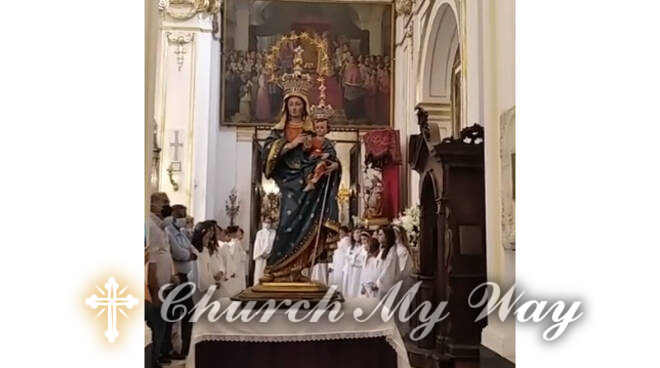
Positano, with the end of the Marian month the statue of the Madonna Assunta leaves the main altar to return to the Starry Chapel
Positano. The month of May ended during which the statue of the Our Lady of the Assumption was displayed on the high altar to bless with its loving gaze all the faithful who participated in the celebrations for the Marian month and the children who approached the Eucharistic banquet for the first time.
And this evening many people from Positano accompanied the Madonna with prayer who was once again placed in the Starry Chapel to continue receiving the prayers and devotion of her children.
A moment that is always very engaging and heartfelt, during which many entrust their prayers to the Heavenly Mother.
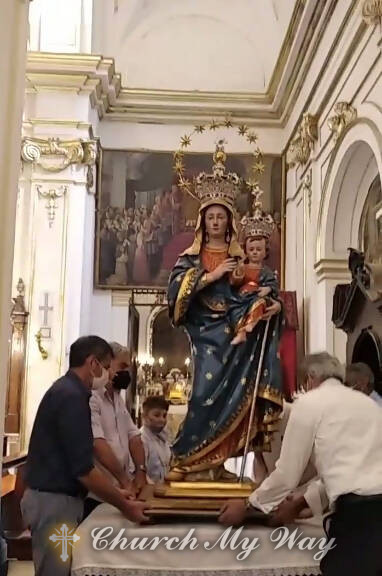
The Deeper Significance of the Madonna’s Journey
While the physical transfer of the statue from the high altar back to its niche in the Starry Chapel marks the liturgical calendar’s progression, this movement is imbued with a profound symbolism that resonates through Positano’s history and spiritual identity. The journey is not merely administrative; it is a re-enactment of the Assumption itself—a celestial homecoming. Just as the Virgin Mary was assumed into heaven, her effigy is “assumed” back into the chapel’s star-studded vault, a symbolic heaven on earth. This annual ritual reinforces the community’s connection to the divine, serving as a tangible reminder that sacred presence, while sometimes more prominently displayed, is a constant and enduring force within the fabric of the town.
Expert Insight: The Artistry of the Starry Chapel
To fully appreciate the Madonna’s return, one must understand the sanctuary that awaits her. The Starry Chapel, or Cappella della Madonna delle Stelle, is a Baroque masterpiece often overshadowed by the main church’s grandeur. Art historian Dr. Elena Rossi notes, “The chapel’s intimate scale and its namesake celestial dome are deliberate architectural choices. The dark blue vault, speckled with golden stars, creates a microcosm of the night sky. Placing the statue here is an assertion that the Queen of Heaven resides among the cosmos, yet is accessible to the faithful in this secluded, heavenly grotto.” The statue’s placement is precise, allowing the soft, indirect light from strategically placed lamps to illuminate her serene face, making her appear as if she is emerging from the heavens themselves.
Practical Tips for Witnessing the Tradition
For visitors hoping to experience this or similar local traditions, a degree of planning and cultural sensitivity is required. The transfer ceremony, while public, is a deeply felt communal prayer, not a staged spectacle.
- Timing is Everything: Arrive at the Collegiate Church of Santa Maria Assunta well before the announced time. The interior fills quickly with locals, and positioning yourself respectfully to the side is key.
- Dress Code: This is a religious service. Shoulders and knees should be covered as a sign of respect for the sacred space and the community.
- Observe, Don’t Interrupt: Refrain from using flash photography or speaking loudly. The procession is often accompanied by traditional hymns; listen and absorb the atmosphere.
- Visit the Chapel Afterward: The most meaningful viewing of the Madonna in her Starry Chapel often comes in the quiet days following the ceremony. Return for a moment of personal reflection when the church is less crowded.
Common Mistakes Visitors Make
Even with the best intentions, visitors can sometimes misstep when engaging with such intimate traditions. A common error is viewing the statue purely as a tourist attraction, missing its living devotional context. The Madonna Assunta is not a museum piece; she is a spiritual mother to the people of Positano. Another mistake is overlooking the rest of the chapel’s art in the focus on the statue. The frescoes and marble work tell a cohesive theological story. Finally, many assume the event is a large festival. It is, in fact, a tender and solemn moment. Expect reverent silence punctuated by prayer, not celebratory noise.
The Historical Thread: From Sea-Faring Faith to Artistic Patronage
The devotion to the Madonna Assunta in Positano is inextricably linked to the town’s maritime soul. For centuries, fishermen and sailors would look to the church atop the cliff as a guiding beacon and a source of protection. The statue’s month-long prominence in May coincides with the beginning of the safer sailing season in the Mediterranean. Her subsequent return to the stars mirrored the navigators’ reliance on the night sky for guidance. This deep-seated faith translated into remarkable artistic patronage. The Baroque silver statue itself, a work of immense value, was funded by the contributions of Positano’s seafaring families, each giving a portion of their earnings for its creation in the late 18th century, making it a true communal treasure.
A Legacy in Art and Culture
The influence of this devotion extends beyond the church walls. The iconic image of the Madonna Assunta is echoed in local ceramics, paintings sold in boutique galleries, and even in the designs of the famed Positano fashion. The annual ritual has inspired poets, writers, and filmmakers who have captured the essence of the town. It serves as a cultural anchor, a fixed point in the year around which the community’s identity revolves, reinforcing bonds not just among the living but with generations past who participated in the same heartfelt procession.
Ultimately, the transfer of the Madonna Assunta is a powerful metaphor for Positano itself—a place where the sacred and the scenic, history and daily life, the celestial and the earthly, are in constant, beautiful dialogue. Witnessing this event offers a rare glimpse past the stunning vistas and into the heart of a community that has, for centuries, entrusted its joys, sorrows, and safe journeys to the loving gaze of the Heavenly Mother, whether she shines from the high altar or from her throne among the stars.
📅 Last updated: 24.12.2025
❓ Frequently Asked Questions
💬 What is the Starry Chapel in Positano?
The Starry Chapel is a chapel within the Church of Santa Maria Assunta in Positano, Italy. It is the usual home for the town’s revered statue of the Madonna Assunta, known for its star-studded vault that represents a symbolic heaven.
💬 When is the statue of the Madonna moved in Positano?
The statue is moved onto the main altar at the beginning of May for the Marian month and is returned to the Starry Chapel at the end of May. This transfer is a significant annual ritual for the Positano community.
💬 What is the significance of the Madonna Assunta statue in Positano?
The statue is central to Positano’s spiritual identity and devotion. Its annual journey symbolizes the Assumption of Mary, acting as a celestial homecoming that reinforces the community’s connection to the divine and the constant nature of sacred presence.
