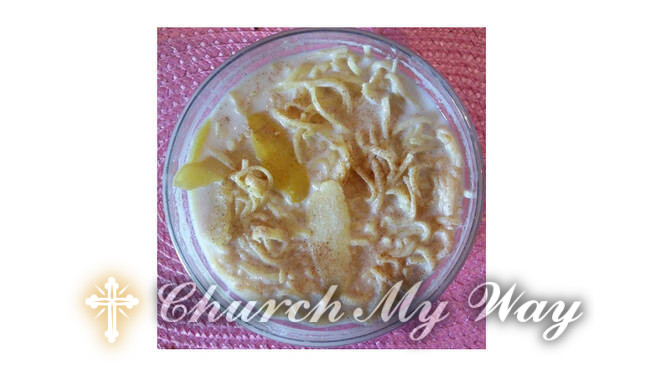
Amalfi, the journalist Sigismondo Nastri and the “ritual” of tagliolini with milk on the feast of the Ascension
Amalfi. There are many traditions linked to the Feast of the Ascension and among these, there is also that of tagliolini with milk. In this regard, we report an interesting post by the journalist Sigismondo Nastri: «There is a beautiful and moving poem by Giuseppe Liuccio, in Cilentano dialect, dedicated to the“ rite ”of“ tagliolini al latte ”on the Ascension feast.
This singular delicious dish originates, I believe, in Basilicata, and from there it spread to Irpinia and Cilento. It is linked to the world of sheep farming because, originally – so I was told – it was based on goat’s milk, which was even distributed free for the Ascension. Then he moved on to the use of cow’s milk, more readily available.
It was believed, in fact, that on that particular day – the rise of the risen Jesus into Heaven – the milk should not be “processed” (that is, transformed into cheese): I don’t know if the devotional sentiment was stronger, in this case. or the fear, deriving from superstition, that – contrary to tradition – the goats (or cows) would become sterile.
The milk is brought to a boil with the addition of sugar and a good dose of cinnamon, without forgetting a pinch of salt, and the egg pasta noodles are cooked – in skeins -, preferably homemade. At the end of cooking the dish must be sweet, fragrant, and well flavored. It must be kept at rest for a while before serving. Consumed the day after, these tagliolini are even better ».
Beyond the Tradition: Mastering the Modern Tagliolini al Latte
While the devotional and superstitious origins of the dish are fascinating, bringing tagliolini al latte from a historical curiosity to your table requires a blend of respect for tradition and practical culinary wisdom. This seemingly simple dish is deceptively complex, where the balance of few ingredients is paramount. Understanding the “why” behind each step can elevate your preparation from a mere pasta in milk to an authentic experience of this Ascension Day ritual.
Practical Tips for the Perfect Consistency
The greatest challenge with tagliolini al latte is achieving the ideal texture, where the pasta is perfectly cooked and the milk transforms into a creamy, clinging sauce rather than a thin, separate soup. A common mistake is using a pot that is too small, leading to overcrowding and uneven cooking. Always choose a wide, heavy-bottomed saucepan or a Dutch oven. This allows the tagliolini skeins enough space to be submerged and stirred gently without breaking. Furthermore, do not make the error of adding all the milk at once. Start with about two-thirds of your total milk, bringing it to a gentle simmer with the sugar, cinnamon, and salt. Once you add the pasta, the starches will begin to thicken the liquid. You can then gradually add the remaining warm milk as needed during the final minutes of cooking to reach a luxurious, velvety consistency.
Expert Advice on Ingredients and Technique
Chef Maria Rossi, a culinary historian from Salerno, emphasizes the importance of ingredient temperature. “The pasta should be at room temperature, not cold from the fridge, especially if it’s homemade. Adding cold pasta to hot milk shocks the mixture and can cause the milk to separate or create a grainy texture.” She also advocates for a “toasted cinnamon” technique: lightly toast a whole cinnamon stick in the dry pot before adding the milk. This unlocks deeper, warmer aromatic oils without the sometimes-dusty texture of ground cinnamon. For the milk itself, while tradition speaks of goat or cow, a blend can be magical. Using whole cow’s milk with a splash of richer, tangier goat’s milk (if available) honors the dish’s pastoral roots while creating a more complex flavor profile. Remember, the “pinch of salt” mentioned in the original recipe is non-negotiable; it is the secret weapon that heightens both the sweetness and the fragrance.
Another layer of expertise involves the resting period. This is not merely a suggestion but a critical phase where the pasta completes its absorption. “Cover the pot with a lid and let it stand off the heat for a full ten minutes before serving,” advises Rossi. “This allows the tagliolini to drink up the last of the sauce and become incredibly tender. The difference between a good and a sublime dish is often in this patient pause.”
Interesting Facts: A Tapestry of Regional Variations
The journey of tagliolini al latte from its suspected Basilicata origins reveals a tapestry of regional adaptations. In some inland villages of Irpinia, for instance, a small amount of finely minced candied citrus peel is added with the cinnamon, a nod to the historic trade routes that brought such luxuries inland. In parts of Cilento, a version exists using scaldatelli, a short, rustic pasta, instead of long tagliolini, often for practical, family-style serving. The superstition surrounding milk processing on Ascension Day also has parallels across the Mediterranean. In certain Greek Orthodox communities, similar beliefs held that one should not sew or perform work that “pierces” on holy days, metaphorically linking cheese-making (piercing curds) to a form of prohibited labor.
Furthermore, the dish’s connection to sheep farming is deeper than just milk provision. The Feast of the Ascension, 40 days after Easter, falls in late spring, a time of abundant pasture. The lush, fresh herbs consumed by the flocks were believed to impart a special sweetness and richness to the milk, making it particularly suited for this celebratory, unprocessed dish. It was a way to taste the season itself.
Common Mistakes to Avoid
- Using Pre-Ground Cinnamon Exclusively: It can become bitter if simmered too long. Use a whole stick for simmering and, if desired, a light dusting of fresh ground cinnamon for serving.
- Vigorous Stirring: Tagliolini, especially homemade, are delicate. Stir gently with a wooden spoon in a folding motion to prevent breaking the pasta into short pieces.
- Over-sweetening at the Start: The sweetness will concentrate as the milk reduces. Add sugar modestly, and taste at the end of cooking, adjusting as necessary.
- Skipping the Rest: Serving immediately results in a soupier dish. The resting period is crucial for sauce integration and is what makes the next-day leftovers so famously good.
- Using a Rapid Boil: Milk boils over easily and high heat can cause it to scorch on the bottom, imparting a burnt flavor. Maintain the gentlest possible simmer throughout the cooking process.
Ultimately, preparing tagliolini al latte is an act of connecting with a culinary ritual that transcends mere sustenance. It is about embracing the slow, thoughtful process—from selecting the milk to honoring the mandatory rest. Each step is a thread in a larger story of faith, season, and pastoral life. By mastering these practical aspects, you do not just cook a pasta dish; you help preserve a fragile and delicious piece of intangible heritage, one sweet, fragrant, and perfectly textured plate at a time.
📅 Last updated: 20.12.2025
❓ Frequently Asked Questions
💬 What are tagliolini al latte?
Tagliolini al latte is a traditional sweet pasta dish from Southern Italy, specifically associated with the Feast of the Ascension. It consists of egg pasta noodles cooked in milk that is sweetened with sugar and flavored with cinnamon and a pinch of salt. The dish is served fragrant and well-rested, originating from sheep farming areas where it was originally made with goat’s milk.
💬 Why is tagliolini with milk eaten on the Feast of the Ascension?
The dish is part of a devotional and superstitious ritual for the Ascension, marking Jesus’s rise into Heaven. It was believed that on this day, milk should not be processed into cheese, so it was used for this pasta instead. Some also feared that breaking this tradition could cause goats or cows to become sterile.
💬 What is the origin of tagliolini al latte?
The dish is believed to have originated in the Basilicata region of Italy before spreading to Irpinia and Cilento. It is deeply linked to pastoral traditions, initially prepared with freely distributed goat’s milk for the feast day before cow’s milk became more common. The tradition was highlighted by journalist Sigismondo Nastri and poet Giuseppe Liuccio.
