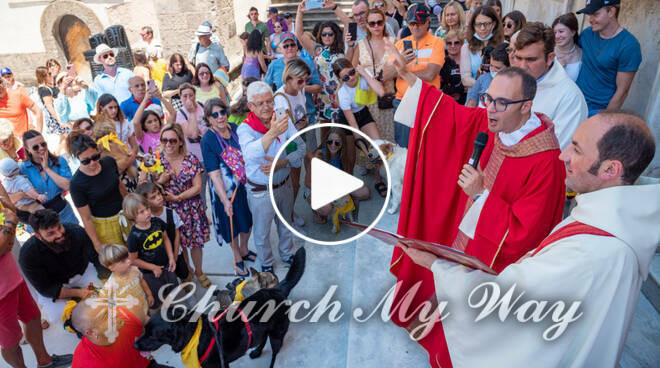
Positano, many in the churchyard for the traditional blessing of dogs on the occasion of the feast of San Vito
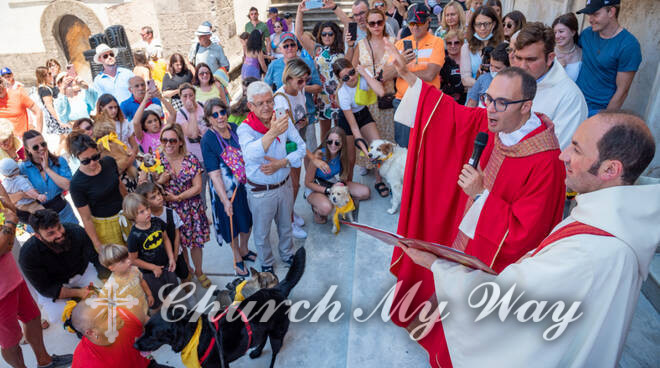
Positano, on the occasion of the solemnity of the patron saint San Vito this morning in the churchyard of the Church of Santa Maria Assunta, the traditional blessing of dogs was repeated, an event much awaited by all citizens.
Many citizens were present together with their four-legged friends who received the blessing from Don Adriano, parish priest in Piano di Montoro in the Parish of Saints John the Baptist, and San Nicola da Tolentino, who celebrated Holy Mass this morning.
But why is the figure of San Vito linked to man’s best friends? Legend has it that Diocletian tried multiple ways to hurt and torture Vito in multiple ways. In fact, it seems that among other things, he had thrown at him one or more dogs suffering from rabies. But, instead of being bitten, he healed them by associating his figure with the animal that is man’s best friend par excellence, the dog.
Beyond the Blessing: A Deeper Look at Positano’s Canine Celebration
While the morning’s blessing is the luminous centerpiece of the tradition, the event signifies far more than a momentary gesture. It represents a profound, living thread in the social and cultural fabric of Positano, one that intertwines faith, community, and a shared love for creatures that are unequivocally family. To view it merely as a charming photo opportunity is to miss its deeper resonance. This annual gathering is a powerful, tactile expression of the town’s identity—a place where ancient legend seamlessly meets modern life in the sun-drenched piazza. The presence of so many dogs, from the tiniest Chihuahua to the most majestic rescue, creates a uniquely egalitarian space where conversations flow easily between neighbors and visitors alike, all united by their four-legged companions.
Practical Tips for Attending with Your Dog
If you are fortunate enough to plan a visit to Positano coinciding with the Feast of San Vito, and wish to participate with your own dog, a little preparation will ensure the experience is joyful for all. The Amalfi Coast climate in June can be warm, and the churchyard gathering, while heartfelt, can become crowded.
- Hydration is Key: Bring a collapsible water bowl and a bottle of water for your dog. The excitement and heat can lead to dehydration quickly.
- Early Arrival: To secure a spot with some shade and allow your dog to acclimate to the growing crowd, aim to arrive at least 20-30 minutes before the scheduled blessing.
- Secure Leash and Harness: A crowded, potentially stimulating environment is not the place for retractable leashes. Use a secure, fixed-length leash and a well-fitting harness for better control and your dog’s comfort.
- Respectful Distance: Not all dogs are social butterflies. Be mindful of your dog’s proximity to others, and always ask before allowing interactions. The blessing is for all, including those canine attendees who may be anxious.
- Post-Blessing Plans: Have a quiet, cool place in mind to retreat to afterwards. A leisurely walk along a less-crowded *vicolo* (alleyway) or a restful pause on your hotel terrace can help your dog decompress after the event’s stimulation.
Common Mistakes Visitors Make
Even with the best intentions, participants can sometimes stumble. Awareness of these common missteps helps preserve the sanctity and smoothness of the event.
First, forcing participation. If your dog is visibly stressed by crowds, loud noises, or other animals, it is more compassionate to observe from a very distant fringe or simply enjoy the festival in other ways. The spirit of San Vito is one of healing, not anxiety. Second, neglecting cleanup. While the local commune is prepared for the event, responsible pet ownership is paramount. Always have bags on hand. Third, treating it as a spectacle alone. While photography is natural, remember to be present. Prioritize the experience of the ritual over capturing the perfect shot, and always be respectful—never block the path of the priest or other attendees for a photo. Lastly, assuming all dogs are “festival-ready”. The well-behaved demeanor of most local dogs is often a result of gradual exposure to Positano’s vibrant, bustling environment. Manage your expectations for your own pet accordingly.
Expert Insights: The Canine-Human Bond in Italian Culture
We spoke with Dr. Elena Bianchi, a cultural anthropologist from Salerno who has studied regional feast days, for a broader perspective. “The blessing of the animals,” she notes, “is a pan-Mediterranean tradition with roots deep in agrarian societies, where the health of a livestock dog or a mule was directly tied to family survival. What is fascinating in Positano’s case is the complete, seamless transition from blessing beasts of burden to blessing beloved companions. It speaks to the evolving, yet constant, role of animals in our domestic sphere.”
Dr. Bianchi also highlights the social function. “In an era where community ties can fray, such rituals act as a powerful social glue. They create a non-commercial, authentically shared space. The dog becomes the passport to interaction. You see the elderly resident chatting with the young foreign tourist because their dogs sniffed each other. It’s a beautiful, unscripted moment of *comunità* fostered by the legacy of a saint.”
Interesting Facts: San Vito and Canine Patronage
Delving deeper into the hagiography, the link between San Vito and dogs is even more unique than the standard patron saint association. Unlike Saint Francis, who is known for a generalized love of all creatures, or Saint Roch, who is depicted with a dog that brought him bread, San Vito’s story is specifically about healing canines. This makes him a potential patron for veterinary professionals, dog trainers working with traumatized animals, and even researchers studying zoonotic diseases like rabies.
Furthermore, the iconography is telling. In many depictions, San Vito is shown with a dog, often at his feet, looking up at him peacefully. This is a direct visual narrative of the legend—the transformation of a rabid, attacking beast into a calm, loyal companion. It is a symbol of taming chaos through faith and compassion. This specific narrative may explain why the tradition in Positano feels so intensely focused and personal for dog owners; it is not a general blessing, but one that echoes a very particular miracle of canine salvation.
The survival of this tradition also underscores Positano’s character. In a town that effortlessly balances cosmopolitan flair with rustic soul, the blessing is a steadfast anchor to the latter. It is a reminder that beneath the glamorous veneer of a world-famous destination beats the heart of a close-knit southern Italian village, where the stories of the past are not just told but lived annually, with a joyful bark and a wagging tail marking the passage of another year in the company of San Vito.
📅 Last updated: 23.12.2025
❓ Frequently Asked Questions
💬 Why is there a blessing of dogs in Positano?
The blessing is part of the feast day of San Vito, Positano’s patron saint. According to legend, San Vito healed rabid dogs that were set upon him, which is why he is associated with the protection and blessing of dogs.
💬 When and where is the dog blessing in Positano?
The traditional blessing takes place on the feast day of San Vito in the churchyard of the Church of Santa Maria Assunta in Positano. The event is held in the morning and includes a Holy Mass.
💬 What is the significance of the dog blessing in Positano?
Beyond the religious ritual, the event is a significant community gathering that strengthens social bonds. It reflects the deep cultural tradition of honoring the relationship between people and their pets, who are considered family.
