📅 Last updated: 16.07.2026
- Understanding the Biblical Silence and the Ancient Context
- Bible Cremation and the Early Christian Witness
- Key Biblical Principles for Deciding on Bible Cremation
- A Practical Table: Burial vs. Cremation in Christian Thought
- The Modern Shift: When and Why Did Christians Accept Cremation?
- Pastoral Guidance for Making a Decision on Bible Cremation
- The Heart of the Matter: Our Hope is in the Resurrection
- A Final Word of Grace
When a loved one passes away, families face a deeply personal and often emotionally charged decision: burial or cremation? As this practice becomes increasingly common in the Western world, many believers find themselves asking a sincere and pressing question. What does the Bible say about cremation? This is not a trivial matter of preference; for the Christian, it touches on our theology of the body, the resurrection, and our ultimate hope in Christ. To find a faithful answer, we must look beyond modern trends and church traditions, and dig deep into the biblical narrative, historical context, and the core of our faith.
Understanding the Biblical Silence and the Ancient Context
The first and most important thing to acknowledge is that the Bible does not contain a direct command for or against cremation. The word “cremation” never appears in the pages of Scripture. This silence is not an oversight, but a reflection of the cultural and religious world in which the biblical authors lived.
Burial as the Norm in Ancient Israel
For the people of Israel, burial was the overwhelming norm. This practice was deeply rooted in their identity as God’s covenant people. The patriarchs purchased tombs, as seen when Abraham bought the cave of Machpelah from Ephron the Hittite for the burial of his wife Sarah (Genesis 23). This cave became a family burial site for Abraham, Isaac, Rebekah, Leah, and Jacob. Burial was an act of honoring the dead and maintaining a connection to the Promised Land.
The most significant burial in the Old Testament is that of Moses. In a remarkable act of divine care, God Himself buried Moses in a valley in the land of Moab, though no one knows the exact location (Deuteronomy 34:5-6). This act underscores the dignity God affords the human body, even in death. Similarly, the bones of Joseph were carried from Egypt and buried in Shechem, fulfilling a promise made centuries earlier (Joshua 24:32). Burial was an act of faith, a statement that the deceased belonged to the people of God and to the land of promise.
When Cremation Appeared in Scripture
Cremation is mentioned in the Bible, but almost exclusively in negative contexts. In the Old Testament, burning a body was often a form of punishment or a mark of extreme disgrace. Achan and his family were stoned and then burned after his sin brought defeat upon Israel (Joshua 7:25). The bodies of certain enemies, like the king of Ai, were hanged and then burned as a sign of divine judgment (Joshua 8:29). The prophet Amos condemns the Moabites for burning the bones of the king of Edom into lime, a heinous act of desecration (Amos 2:1).
For the ancient Jew, fire was a symbol of judgment, purification, and finality. The fire of Gehenna (the Valley of Hinnom) was a place where refuse and the bodies of criminals were burned, and it became a powerful metaphor for hell. To be burned was to be utterly destroyed, denied the dignity of a proper burial, and cut off from the community. This cultural backdrop is crucial. The early Christians, who were Jewish, inherited this deep-seated aversion to cremation.
Bible Cremation and the Early Christian Witness
As the Gospel spread into the Greco-Roman world, the early church faced a culture where both burial and cremation were practiced. The Romans often cremated their dead, while the Greeks used both methods. Yet, from the very beginning, Christians chose burial almost exclusively.
Why the Church Rejected Cremation
The early church’s rejection of cremation was not based on a single Bible verse, but on a profound theological conviction rooted in the biblical story. Three core beliefs drove this choice:
- The Theology of the Body: Christianity affirmed that the human body was created by God, declared “very good” (Genesis 1:31), and was destined for redemption. The body was not a prison for the soul, as some pagan philosophies taught, but an integral part of the whole person. St. Paul asks, “Do you not know that your bodies are temples of the Holy Spirit, who is in you, whom you have received from God?” (1 Corinthians 6:19). To burn a temple seemed a grave dishonor.
- The Hope of the Resurrection: The central Christian hope is not the immortality of the soul, but the resurrection of the body. Jesus’ own resurrection validated this promise. He did not leave His body in the tomb; He was raised bodily. The early Christians believed they would follow Him. As Paul argues in 1 Corinthians 15, the body is sown perishable, but raised imperishable. Cremation, to their minds, could be seen as a denial of this hope, an act that treated the body as mere matter to be disposed of.
- Witness Against Paganism: Cremation was closely associated with pagan funeral rites and beliefs. Many pagans cremated to release the soul from the body, a concept alien to Christian teaching. By choosing burial, Christians made a public statement of their distinct faith in the God who raises the dead.
- Pastoral Sensitivity: Church leaders recognized that many faithful Christians were choosing cremation for practical reasons (cost, geography, family wishes) and not out of a denial of the resurrection. To condemn them seemed pastorally harsh and theologically unnecessary.
- Clarified Theology: Theologians argued that the early church’s rejection of cremation was a valid cultural witness, but not a binding doctrine. They emphasized that God’s power to resurrect is not dependent on the state of the remains. As Paul asks in 1 Corinthians 15:35, “How are the dead raised? With what kind of body will they come?” The answer is a spiritual body, not a physical reconstruction.
- Changing Culture: As cremation became the majority practice in many countries (over 50% in the U.S. as of 2020, and over 75% in the UK and Canada), the church had to engage the culture rather than simply reject it.
- What is my motivation? Am I choosing cremation out of convenience, cost, or a desire to avoid the “messiness” of death? Or am I choosing it for valid reasons that honor God and my family? Are there any unspoken beliefs behind my choice (e.g., that the body is unimportant)?
- How can I honor God with my body, even in death? This might mean writing a will that specifies your wishes, ensuring a Christian funeral service is held, and choosing a final resting place (a columbarium, a grave, or a scattering location) that is dignified and meaningful.
- What about my family? How will this decision affect the grieving process of my spouse, children, and friends? Will they have a place to grieve? Some families find great comfort in a grave to visit. Others find freedom in a memorial service without a body present. Discuss this openly with your loved ones.
- Does my church have a position? While this is a matter of liberty, it is wise to know your local church’s tradition. Some denominations (like Eastern Orthodoxy) still forbid cremation. Others strongly encourage burial. Respect your church’s teaching, but seek understanding.
- Hold a funeral service with the body present first. Many families choose to have a traditional viewing and funeral service with the body present, and then have the cremation take place afterwards. This honors the body and allows for the full ritual of Christian grief and hope.
- Have a memorial service with the ashes present. If the cremation occurs before the service, the ashes can be placed in a beautiful urn and treated with reverence during the service. The urn can be a focal point for prayer and remembrance.
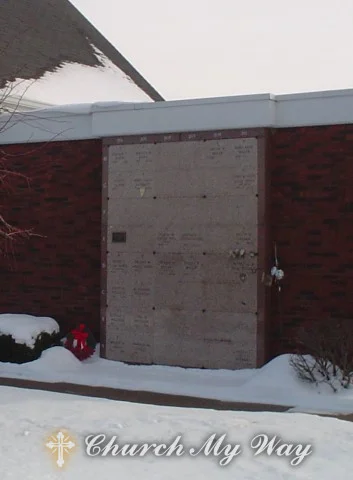
- Choose a dignified final resting place. Scattering ashes is a personal choice, but it can make it difficult for future generations to have a place to mourn. Many churches now have columbaria (walls with niches for urns) in their gardens or chapels. A family plot in a cemetery is also a wonderful option.
- Read Scripture and sing hymns. The funeral or memorial service should be filled with the Christian hope. Read 1 Corinthians 15, Romans 8, and John 11. Sing “I Know That My Redeemer Lives” and “Because He Lives.” The focus should be on Christ’s victory over death, not just on the life of the deceased.
The earliest Christian document outside the New Testament, the *Didache* (late first or early second century), instructs believers not to burn incense to idols, a practice tied to pagan funerals. The church father Tertullian (c. 155–220 AD) wrote that Christians “do not burn the bodies of their dead, as the Romans do, but bury them, following the custom of the patriarchs.” For nearly 1,800 years, the Christian consensus was clear: cremation was incompatible with the faith.
Key Biblical Principles for Deciding on Bible Cremation
While the Bible does not forbid cremation, it provides powerful principles that should guide a Christian’s decision. These principles move the conversation from “Is it a sin?” to “What honors God and affirms my faith?”
The Dignity of the Body
The consistent biblical witness is that the human body possesses inherent dignity. We are not just spirits trapped in flesh. We are embodied souls. The Psalmist declares, “I praise you because I am fearfully and wonderfully made” (Psalm 139:14). The incarnation of Jesus Christ is the ultimate affirmation of the body. God Himself took on human flesh. He had a body that could be touched, that grew tired, that wept, and that was crucified.
This dignity extends to the deceased body. The care shown to Jesus’ body by Joseph of Arimathea and Nicodemus is a powerful example. They took His body down from the cross, wrapped it in linen with a mixture of myrrh and aloes, and laid it in a new tomb (John 19:38-42). This was an act of profound love and respect. A Christian’s view of cremation must be filtered through this lens of dignity. Is the process being handled with reverence? Is the body being treated as a sacred vessel, not just biological waste?
Resurrection, Not Annihilation
The Christian hope is not that we become disembodied spirits floating on clouds. Our hope is a new heaven and a new earth, and a resurrected body. Paul uses the powerful analogy of a seed. “What you sow does not come to life unless it dies. When you sow, you do not plant the body that will be, but just a seed, perhaps of wheat or of something else” (1 Corinthians 15:36-37). The seed decays and is transformed into something far more glorious.
This analogy is crucial for the cremation discussion. A seed “dies” and decays. Whether a body is buried and decays naturally, or is cremated and its ashes return to the earth, the process is the same in principle: the physical form we knew is gone. God, who created the universe from nothing, has no difficulty reassembling a body from ashes or from dust. As the old saying goes, “It is no more difficult for God to raise a cremated body than a buried one.” The mode of disposal does not limit the power of the Resurrection. Our hope is not in the preservation of our molecules, but in the faithfulness of our Creator.
Honoring God in Life and Death
The ultimate principle is found in Romans 14:8: “If we live, we live for the Lord; and if we die, we die for the Lord. So, whether we live or die, we belong to the Lord.” The decision about our body after death should be an act of worship. It should reflect our faith and our belonging to Christ.
Paul also writes in 1 Corinthians 10:31, “So whether you eat or drink or whatever you do, do it all for the glory of God.” This includes our funeral arrangements. The question is not just “Is it allowed?” but “How can I use this decision to glorify God, comfort my family, and bear witness to the Gospel?”
A Practical Table: Burial vs. Cremation in Christian Thought
To help clarify the different considerations, here is a concise comparison of the two practices from a biblical and historical perspective.
| Aspect | Burial (Traditional Christian Practice) | Cremation (Modern Christian Consideration) |
|---|---|---|
| Biblical Precedent | Overwhelmingly the norm; practiced by patriarchs, Jesus, and early church. | No positive precedent; associated with judgment and pagan practices. |
| Historical Church View | Universal practice for ~1,800 years. Seen as honoring the body and affirming the resurrection. | Forbidden by nearly all denominations until the late 19th century. Still discouraged by some (e.g., Eastern Orthodox). |
| Theology of the Body | Emphasizes the body as a temple and a seed waiting for new life. | Can be practiced with reverence, but risks de-emphasizing the body’s sacredness. |
| Resurrection Hope | Visually symbolizes the body “sleeping” in the ground, awaiting the final trumpet. | Does not limit God’s power to raise the dead, but the symbolism is less direct. |
| Family & Grief | Provides a physical place to visit and mourn. Can be more expensive. | Often more affordable and flexible. Allows for memorial services without a present body. |
The Modern Shift: When and Why Did Christians Accept Cremation?
For most of church history, the question of Bible cremation was settled: it was not an option for believers. This changed dramatically in the 19th and 20th centuries.
The Rise of Cremation in the West
The modern cremation movement began in Europe in the 1870s, driven by concerns about public health, land scarcity, and a growing secularism that rejected the Christian doctrine of the resurrection. The first crematory in the United States was built in 1876 in Washington, Pennsylvania. For decades, most Protestant and Catholic churches strongly opposed the practice.
The turning point came in 1963, when the Second Vatican Council, in the document Sacrosanctum Concilium, quietly lifted the Catholic Church’s ban on cremation, though it still strongly recommended burial and required that cremation not be chosen for reasons “contrary to Christian doctrine.” Most Protestant denominations followed suit, issuing statements that cremation was a matter of Christian liberty. The Presbyterian Church (USA), the United Methodist Church, the Evangelical Lutheran Church in America, and many others now affirm that cremation is an acceptable Christian practice.
Why the Change?
Several factors contributed to this shift:
Pastoral Guidance for Making a Decision on Bible Cremation
If you are a Christian wrestling with this decision for yourself or a loved one, here is some pastoral guidance to help you think through it prayerfully.
Questions to Ask Yourself
How to Conduct a Christian Cremation Service
If you choose cremation, it does not mean abandoning Christian witness. In fact, it can be a powerful opportunity to proclaim the Gospel. Here are some ways to ensure the process is Christ-honoring:
The Heart of the Matter: Our Hope is in the Resurrection
As we come to the end of our exploration of Bible cremation, it is vital to remember what is truly essential. The apostle Paul, facing his own death, wrote with unshakable confidence: “For to me, to live is Christ and to die is gain” (Philippians 1:21). His hope was not in the preservation of his physical remains. His hope was in Christ.
The great theologian N.T. Wright, in his book *Surprised by Hope*, emphasizes that the Christian hope is not “going to heaven when you die,” but the resurrection of the body and the renewal of all creation. This hope transforms how we view death. Whether our bodies are buried in a cemetery, cremated and placed in an urn, or lost at sea, we know that they will be raised imperishable. The God who spoke the universe into being will not be thwarted by fire or decay.
A Final Word of Grace
Dear friend, if you are carrying guilt or anxiety over this decision, hear this good news: Your salvation does not rest on how your body is handled after death. It rests securely on the finished work of Jesus Christ. He died for your sins, He was buried, and He rose again on the third day. In Him, you are safe. Your body—whether buried or cremated—is in His hands.
The early church chose burial as a powerful witness to the resurrection. For many believers today, that remains a beautiful and meaningful tradition. For others, cremation is a faithful, practical choice made in good conscience. Neither path makes you a better or worse Christian. What matters is that you live for Christ, die in Christ, and trust that because He lives, you shall live also.
Let the words of the Apostle Paul be your comfort and your guide: “Therefore, my dear brothers and sisters, stand firm. Let nothing move you. Always give yourselves fully to the work of the Lord, because you know that your labor in the Lord is not in vain” (1 Corinthians 15:58). Whether you are laid in the earth or committed to the flames, your labor is not in vain. Your hope is secure. Your Redeemer lives.
