📅 Last updated: 03.10.2026
The question of biblical healing touches one of the deepest longings of the human heart. From the patriarchs who built altars to the psalmists who cried out from the dust, Scripture consistently presents God as the one who heals — “I am the LORD, who heals you” (Exodus 15:26). Yet the Bible’s teaching on healing is far richer, more layered, and more pastorally honest than many of us have been taught. It speaks of physical restoration, spiritual renewal, emotional wholeness, and a final healing that awaits the resurrection. This guide walks through what Scripture actually says, what the church has believed across history, and how ordinary believers can hold onto hope without collapsing into either cynicism or presumption.
- The Old Testament Roots of Biblical Healing
- Jesus and the Ministry of Healing
- Healing in the Early Church and the Book of Acts
- What Scripture Says About the Gift of Healing
- A Brief History of Christian Healing Through the Centuries
- Why Healing Sometimes Comes and Sometimes Doesn't
- Practical Steps for Praying for Biblical Healing
- Healing, Hope, and the Church's Witness Today
- Holding Fast to Hope
The Old Testament Roots of Biblical Healing
Long before the Gospels recorded Jesus touching lepers and opening blind eyes, Israel knew God as healer. The covenant name revealed at Marah — Yahweh Rapha, “the LORD who heals you” — frames healing not as a rare miracle but as an attribute of God’s character. Healing in the Old Testament is bound up with covenant faithfulness: obedience brings wholeness, rebellion brings sickness, and repentance restores both body and nation.
Consider the range of healing accounts in the Hebrew Scriptures:
- Miriam is struck with leprosy for speaking against Moses, then healed after his intercession (Numbers 12).
- Naaman, a Syrian commander, is cured of leprosy after washing seven times in the Jordan at Elisha’s command (2 Kings 5) — a Gentile healed by Israel’s God.
- Hezekiah, king of Judah, receives fifteen added years of life after praying and weeping before the LORD (2 Kings 20; Isaiah 38).
- Job is restored after interceding for his friends, receiving double what he had lost (Job 42:10).
The Psalms give voice to the emotional texture of this hope. “Bless the LORD, O my soul… who forgives all your sins and heals all your diseases” (Psalm 103:2–3). “He sent out his word and healed them” (Psalm 107:20). These are not naive promises of uninterrupted health; they are declarations of trust in a God who is not indifferent to suffering. The prophets extend this further, promising a day when “the eyes of the blind will be opened” (Isaiah 35:5) and “by his wounds we are healed” (Isaiah 53:5) — a verse the New Testament applies to the cross itself (1 Peter 2:24).
This is the soil from which all later biblical healing grows: a God who is personally, covenantally committed to the wholeness of his people.
Jesus and the Ministry of Healing
If the Old Testament plants the seed, the Gospels show the harvest. Roughly one-fifth of the Gospel narratives involve healing — more than any other category of miracle. Jesus heals a man born blind (John 9), a woman with twelve years of bleeding (Mark 5:25–34), a paralytic lowered through a roof (Luke 5:17–26), Peter’s mother-in-law with a fever (Matthew 8:14–15), a centurion’s servant at a distance (Matthew 8:5–13), and crowds so large that “the whole town gathered at the door” (Mark 1:33).
What Jesus’ healings reveal
Notice several patterns. First, healing is compassionate — Jesus is moved by pity, not performance (Matthew 14:14). Second, it is authoritative — he heals by word and touch, without ritual or technique. Third, it is sign-bearing: healings announce the inbreaking kingdom of God. When John the Baptist doubts from prison, Jesus answers by pointing to the blind seeing, the lame walking, and the deaf hearing (Matthew 11:2–6) — the very signs Isaiah foretold.
Fourth, and crucially, healing is often tied to faith — but not always. The centurion’s faith amazes Jesus (Matthew 8:10). The woman who touches his cloak is told, “Your faith has healed you” (Mark 5:34). Yet in Nazareth, Jesus “did not do many miracles there because of their lack of faith” (Matthew 13:58), while elsewhere he heals people who never asked, like the man at Bethesda who did not even know who had healed him (John 5:13). Faith is the usual channel, not a mechanical requirement.
“Jesus went throughout Galilee, teaching in their synagogues, proclaiming the good news of the kingdom, and healing every disease and sickness among the people.” — Matthew 4:23
It is worth remembering that Jesus’ healings were also acts of social restoration. To heal a leper was to restore a person to community. To heal on the Sabbath was to declare that mercy outranks ritual. Healing in the Gospels is never merely medical; it is the repair of a whole life.
Healing in the Early Church and the Book of Acts
After Pentecost, the healings continue — not because the apostles had special power, but because the risen Christ worked through them. Peter heals a man lame from birth at the temple gate, and the crowd is astonished (Acts 3:1–10). Philip heals in Samaria (Acts 8:6–7). Paul heals a man crippled in Lystra (Acts 14:8–10) and raises Eutychus after a fall from a third-story window (Acts 20:9–12). Even “handkerchiefs and aprons that had touched him” were brought to the sick (Acts 19:12) — a detail Luke records without endorsing any magical view of relics.
Yet the New Testament is also strikingly honest about suffering and unanswered prayer for healing. Paul’s “thorn in the flesh” is not removed; instead, he hears, “My grace is sufficient for you, for my power is made perfect in weakness” (2 Corinthians 12:7–9). Timothy is told to use a little wine for his stomach and frequent illnesses (1 Timothy 5:23) — hardly a command to reject medicine. Epaphroditus “was ill, and almost died,” and Paul is relieved when God has mercy on him (Philippians 2:25–27). Trophimus is left sick at Miletus (2 Timothy 4:20).
This honesty matters enormously. The Bible never promises that every believer will be healed in this life. It promises that God is present, that prayer matters, and that our ultimate hope rests beyond the grave.
What Scripture Says About the Gift of Healing
Among the spiritual gifts listed in 1 Corinthians 12, Paul names “gifts of healing” (verse 9, 28, 30). The plural is significant: there are varieties of healing gifts, distributed as the Spirit wills, not as a reward for superior faith. Paul’s point in the surrounding passage is unity in diversity — no one has every gift, and no one is without a gift.
James 5:14–16 gives the clearest practical instruction in the New Testament:
- Call the elders of the church to pray over the sick person.
- Anoint with oil in the name of the Lord — oil being a sign of consecration and, in the ancient world, a common medicinal agent.
- Pray in faith, trusting that “the prayer offered in faith will make the sick person well.”
- Confess sins and pray for one another, because “the prayer of a righteous person is powerful and effective.”
Notice the pastoral balance. James does not promise that every anointing results in recovery; he promises that the Lord will raise the person up — and, in the same breath, that sins will be forgiven. Healing and forgiveness are intertwined throughout Scripture, not because sickness is always caused by sin (Jesus explicitly denies that in John 9:3), but because wholeness in the Bible is never merely physical.
A Brief History of Christian Healing Through the Centuries
Healing has never been a fringe concern for the church. Understanding how believers across history have approached it helps us read our own era with perspective.
| Period | Key Figure(s) or Movement | Emphasis on Healing |
|---|---|---|
| 2nd–3rd centuries | Early church fathers (Irenaeus, Tertullian, Origen) | Healings cited as evidence of the Spirit’s ongoing work; oil and prayer used liturgically |
| 4th–5th centuries | Augustine of Hippo (354–430) | Initially skeptical, later documented numerous healings in The City of God (Book 22) |
| Medieval era | Monastic hospitals; anointing of the sick | Healing linked to sacramental care and care for the dying |
| 18th–19th centuries | John Wesley (1703–1791); Holiness movement | Wesley prayed for the sick and recorded recoveries; healing tied to revival |
| 20th century to present | Pentecostal and Charismatic renewal; divine healing movements | Renewed emphasis on the gift of healing, often alongside medical care |
What stands out across this long history is variety. Some eras emphasized sacramental anointing, others revivalist prayer, others quiet trust in providence. The church has always prayed for healing — and has always also buried its beloved.
Why Healing Sometimes Comes and Sometimes Doesn’t
This is the question that wounds people most. A child dies of cancer after a church-wide fast. A faithful missionary recovers from a stroke that should have killed her. Both stories are real, and both live inside Scripture’s frame. What does the Bible actually offer as an explanation?
1. We live in a fallen world
Paul writes that “the whole creation has been groaning” (Romans 8:22). Sickness is part of the brokenness that awaits redemption, not a moral verdict on the sufferer. Jesus himself rejects the simplistic equation of suffering and sin (John 9:1–3; Luke 13:1–5).
2. God’s purposes are larger than our comfort
Paul’s thorn produced humility and dependence he would not otherwise have known (2 Corinthians 12:7). Joseph told his brothers, “You intended to harm me, but God intended it for good” (Genesis 50:20). This does not make suffering good; it means God is not defeated by it.
3. Faith is not a formula
Jesus healed some who had great faith and some who had almost none. He healed at a distance and by touch. He healed instantly and in stages (Mark 8:22–25). God is free, and prayer is a relationship, not a transaction.
4. Our ultimate healing is resurrection
Every healing in the Bible is temporary. Lazarus rose — and died again. The final and complete healing is the resurrection of the body, when “there will be no more death or mourning or crying or pain” (Revelation 21:4). Every earthly healing is a down payment on that day.
Practical Steps for Praying for Biblical Healing
If you or someone you love is sick, Scripture gives concrete guidance. These practices are not incantations; they are acts of faith rooted in the character of God.
- Pray specifically and persistently. Jesus told a parable about persistent prayer precisely so his disciples “should always pray and not give up” (Luke 18:1–8). Name the disease. Ask boldly.
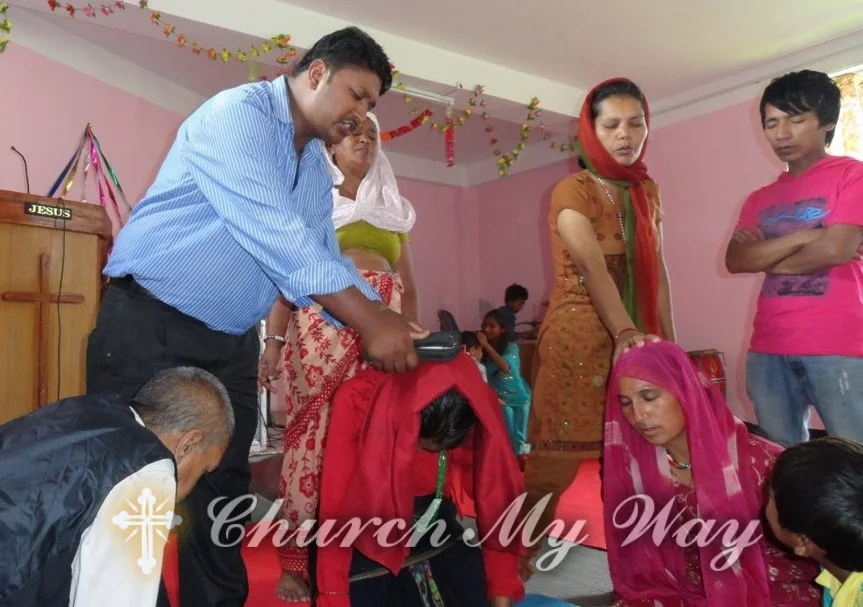
- Involve the church. James does not envision isolated prayer warriors but a community gathered around the sick. Ask your pastor or elders to anoint and pray.
- Confess and forgive. Unconfessed sin and bitterness can weigh on the soul even when they are not the cause of illness. James links confession and healing for a reason.
- Use medicine without shame. Luke, the beloved physician, wrote a Gospel (Colossians 4:14). Paul advised Timothy to use wine medicinally. Medicine and prayer are not rivals.
- Hold hope and surrender together. Pray like the father in Mark 9:24: “I do believe; help me overcome my unbelief!” Then pray like Jesus in Gethsemane: “Not my will, but yours be done” (Luke 22:42).
- Surround the sufferer with presence. Job’s friends did their best work in the first seven days, when they sat with him in silence (Job 2:13).
One more word: be careful with the language of certainty. Telling a grieving family that healing “didn’t happen because you didn’t believe enough” is not biblical faith; it is spiritual abuse dressed in religious clothing. The Bible never makes that claim, and Jesus never rebuked the sick for their lack of faith.
Healing, Hope, and the Church’s Witness Today
The church’s healing ministry is not limited to dramatic miracles. It includes hospital visits, meals brought to the recovering, prayers whispered at bedsides, and the quiet faithfulness of caregivers who serve for years without recognition. It includes mental and emotional healing — the slow work of counseling, forgiveness, and community that Scripture calls “the renewing of your mind” (Romans 12:2). It includes the healing of relationships broken by sin, which is why reconciliation and healing are so often linked in the New Testament.
Historically, Christians have been at the forefront of healing institutions. The first hospitals were founded by Christian communities in the fourth century under Basil of Caesarea. Missionaries like Albert Schweitzer (1875–1965) at Lambaréné and Ida Scudder (1870–1960), who founded the Christian Medical College in Vellore, India, embodied a faith that cared for bodies as well as souls. This is biblical healing in action: not merely praying for miracles, but becoming the hands through which God often answers those prayers.
If you are walking through illness right now, know that your suffering is not hidden from God. The Psalms are full of raw lament — “My God, my God, why have you forsaken me?” (Psalm 22:1), words Jesus himself prayed from the cross. Lament is not a lack of faith; it is faith speaking honestly to a God who listens.
Holding Fast to Hope
Scripture’s teaching on healing is neither a guarantee of earthly recovery nor a resignation to despair. It is an invitation to trust the God who heals — in his timing, in his way, and ultimately in the resurrection of the body. Pray boldly for healing. Seek medical care wisely. Surround yourself with a praying community. Confess, forgive, and lament honestly. And remember that every healing, whether sudden or gradual, points beyond itself to the day when “the dwelling of God is with men” and every tear is wiped away (Revelation 21:3–4).
The Lord who healed Miriam, Naaman, and Hezekiah; who touched lepers and opened blind eyes; who raised Lazarus and walked out of his own tomb — that same Lord is not distant from your pain. He is the one who says, even now, “I am the LORD, who heals you.” Whatever your circumstances, you can bring your body, your fear, and your hope to him. He is faithful, and his mercy endures forever.
