📅 Last updated: 20.11.2026
When the first Christians gathered in Jerusalem, Ephesus, and Rome, they sang. The earliest Christian hymns were not later medieval elaborations or Reformation chorales but raw, Christ-centered confessions born in house churches, catacombs, and prison cells. Long before written liturgies and pipe organs, believers encoded their theology in melody—praising the risen Lord in short, memorable stanzas that survive in the New Testament letters and in fragments preserved by early bishops and martyrs.
Early Christian hymns were short, Christ-centered songs composed and sung by believers between roughly AD 30 and AD 400, often quoting or paraphrasing Scripture. The New Testament itself preserves fragments of these hymns (e.g., Philippians 2:6–11, Colossians 1:15–20), and early writers such as Pliny the Younger, Ignatius of Antioch, and Clement of Alexandria document their use in worship. These songs functioned as theology set to music, transmitting doctrine, encouragement, and praise in a largely oral culture.
- What Did the Earliest Christian Hymns Sound Like?
- How Did the Earliest Christians Use Hymns in Worship?
- What Do the Earliest Christian Hymns Teach Us Theologically?
- Key Early Christian Hymns and Hymn Fragments: A Timeline
- Who Were the First Christian Hymn Writers?
- Why Did Early Christian Hymns Matter So Much?
- What Can Modern Believers Learn from Early Christian Hymns?
- The Enduring Legacy of Early Christian Hymns
What Did the Earliest Christian Hymns Sound Like?
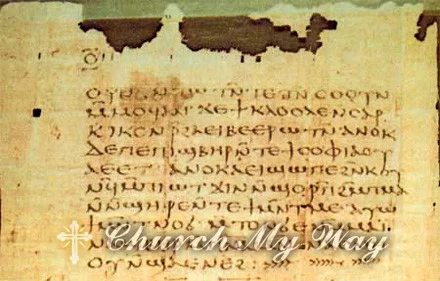
We cannot recover the exact melodies of the first century. No notated Christian music survives from before the third century, and what we have from later centuries—such as the Oxyrhynchus hymn fragment (Papyrus Oxyrhynchus 1786, c. late third century)—is Greek and liturgical rather than apostolic. What we can recover is the shape and substance of early Christian hymns: short stanzas, often built on Old Testament patterns, dense with titles for Christ, and structured for corporate singing.
The New Testament gives us the clearest window. Several passages are widely recognized by scholars as pre-Pauline or pre-Gospel hymn fragments that the biblical authors quoted and adapted. These include:
- Philippians 2:6–11 — the “Christ hymn,” likely an early liturgical poem about Christ’s humiliation and exaltation.
- Colossians 1:15–20 — a hymn celebrating Christ as the image of the invisible God and head of creation and church.
- 1 Timothy 3:16 — a compact six-line confession (“He appeared in the flesh, was vindicated by the Spirit…”) often called a “faithful saying.”
- 2 Timothy 2:11–13 — a short hymn about dying and living with Christ, introduced by “Here is a trustworthy saying.”
- Ephesians 5:14 — a snippet of a baptismal or awakening hymn: “Wake up, sleeper, rise from the dead, and Christ will shine on you.”
These fragments reveal that early Christian hymns were didactic—they taught doctrine—and doxological—they gave glory to God. They were also communal, designed for the gathered assembly rather than private devotion alone.
The Christ Hymn of Philippians 2:6–11
Philippians 2:6–11 is the most studied early Christian hymn fragment. Paul introduces it with “Have this mind among yourselves, which is yours in Christ Jesus” (Philippians 2:5, ESV), then quotes a poem that many scholars believe predates his letter. Its structure is striking: Christ “did not consider equality with God something to be used to his own advantage” (v. 6), “humbled himself by becoming obedient to death—even death on a cross” (v. 8), and therefore “God exalted him to the highest place” (v. 9). The hymn climaxes with every knee bowing and every tongue confessing “that Jesus Christ is Lord” (vv. 10–11), echoing Isaiah 45:23.
What makes this hymn remarkable is its theological density. It contains a full Christology—pre-existence, incarnation, crucifixion, resurrection, exaltation, and universal lordship—compressed into roughly six verses. That the earliest Christians could sing such doctrine suggests they were not theological novices but a community formed by apostolic teaching.
The Colossians Hymn and the Cosmic Christ
Colossians 1:15–20 presents another early Christian hymn, this one emphasizing Christ’s role in creation and reconciliation. “He is the image of the invisible God, the firstborn over all creation” (v. 15), and “in him all things hold together” (v. 17). The hymn likely responded to false teaching in Colossae that diminished Christ’s supremacy; singing it was an act of doctrinal resistance as much as worship.
How Did the Earliest Christians Use Hymns in Worship?
The New Testament assumes singing as a normal part of Christian gathering. Paul instructs the Ephesians to be “filled with the Spirit, speaking to one another with psalms, hymns, and songs from the Spirit” (Ephesians 5:18–19). To the Colossians he writes, “Let the message of Christ dwell among you richly as you teach and admonish one another with all wisdom through psalms, hymns, and songs from the Spirit” (Colossians 3:16). Singing was not optional decoration; it was a means of mutual instruction and thanksgiving.
James 5:13 connects singing with prayer: “Is anyone among you in trouble? Let them pray. Is anyone happy? Let them sing songs of praise.” The early Christian hymns were thus woven into the emotional and spiritual life of the community—grief, joy, persecution, and celebration.
Pliny the Younger’s Report to Trajan (c. AD 112)
One of the most important external witnesses to early Christian hymnody comes from a pagan Roman governor. Pliny the Younger, writing to Emperor Trajan around AD 112, described Christians in Bithynia who met before dawn “to sing a hymn to Christ as to a god” (carmen Christo quasi deo dicere secum invicem). This brief line is remarkable: it confirms that singing to Christ was central to Christian worship, that it happened early in the morning, and that outsiders recognized it as devotion to a divine figure. Pliny did not understand the theology, but he accurately recorded the practice.
Singing in the Darkness: Hymns in Persecution
Early Christian hymns sustained believers under persecution. The Acts of the Apostles records Paul and Silas singing hymns in the Philippian jail (Acts 16:25), and later martyr accounts describe Christians singing as they were led to execution. The Martyrdom of Polycarp (c. AD 155–160) depicts the aged bishop praying and giving thanks before his death, and other accounts note communal singing in the face of suffering. Hymns became a form of witness—a public declaration that Christ was Lord even when Caesar claimed ultimate allegiance.
What Do the Earliest Christian Hymns Teach Us Theologically?
The early Christian hymns are miniature creeds. They preserve the church’s earliest Christology, its understanding of salvation, and its hope for the future. Several themes recur:
- Christ’s pre-existence and incarnation — the Philippians and Colossians hymns both assume Christ existed before Bethlehem and entered human history deliberately.
- The cross as victory, not defeat — the hymns do not gloss over suffering; they interpret it as the path to exaltation.
- Universal lordship — every knee will bow; Christ’s authority is cosmic, not merely local.
- Baptismal identity — fragments like Ephesians 5:14 suggest hymns accompanied baptism, celebrating the believer’s transfer from death to life.
- Eschatological hope — hymns looked forward to Christ’s return and the resurrection of the dead.
This is why the early Christian hymns matter for theology: they show that the church’s doctrine was sung before it was systematized. The councils of Nicaea (AD 325) and Chalcedon (AD 451) did not invent Christology; they clarified what Christians had already been singing for generations.
Key Early Christian Hymns and Hymn Fragments: A Timeline
| Date (approx.) | Source / Hymn | Significance |
|---|---|---|
| AD 30–60 | Philippians 2:6–11; Colossians 1:15–20 | Pre-Pauline Christ hymns embedded in New Testament letters |
| AD 60–90 | 1 Timothy 3:16; 2 Timothy 2:11–13 | “Faithful sayings” likely used as short liturgical hymns |
| c. AD 107 | Ignatius of Antioch, Ephesians 4 | Bishop urges unity “as a choir” singing in harmony to God |
| c. AD 112 | Pliny the Younger, Letters 10.96 | Pagan testimony: Christians “sing a hymn to Christ as to a god” |
| c. AD 200 | Clement of Alexandria, Paedagogus / hymn “Shepherd of Tender Youth” | Earliest surviving Christian hymn text with attributed author |
| c. AD 250–300 | Oxyrhynchus hymn (P. Oxy. 1786) | Earliest surviving Christian hymn with musical notation |
Who Were the First Christian Hymn Writers?
Most early Christian hymns are anonymous. The New Testament does not name the authors of the Philippians or Colossians hymns; they circulated orally before being written down. But early tradition associates several figures with hymn composition:
Ignatius of Antioch (c. AD 35–107)
Ignatius, bishop of Antioch and a martyr, wrote letters on his way to Rome that reveal a church already singing. In his letter to the Ephesians (chapter 4), he urges unity: “Let each one of you join in this chorus, so that being harmonious in concord and taking the key of God in unison, you may sing with one voice through Jesus Christ to the Father.” This is not merely a metaphor; it presumes actual corporate singing.
Clement of Alexandria (c. AD 150–215)
Clement, a theologian in Alexandria, wrote what is often called the earliest surviving Christian hymn with a named author: the closing of his Paedagogus (The Instructor), a hymn beginning “Shepherd of tender youth” (in later English translation). It is a Christ-centered hymn that calls Christ the “King of saints” and “Word of the Father.” Clement’s hymn shows how early Christian hymns blended Greek literary form with biblical content.
Ambrose of Milan (c. AD 339–397)
By the late fourth century, hymnody had become a tool of theological and pastoral reform. Ambrose composed hymns to teach orthodox doctrine to his congregation in Milan, especially during the Arian controversy. His hymns, such as “O Splendor of God’s Glory Bright,” were simple, memorable, and theologically precise—designed to be sung by ordinary believers. Augustine, in his Confessions (Book IX), recalls being moved to tears by Ambrose’s hymns.
Ephrem the Syrian (c. AD 306–373)
In the East, Ephrem the Syrian composed hundreds of hymns (madrashe) that defended Nicene orthodoxy and taught Scripture. His hymns were so effective that opponents reportedly complained about them. Ephrem’s work demonstrates that early Christian hymns were not only devotional but catechetical and polemical.
Why Did Early Christian Hymns Matter So Much?
In a world where most people could not read, singing was one of the most effective ways to transmit theology. Early Christian hymns served several functions at once:
- Catechesis — hymns taught doctrine in memorable form, especially to new converts preparing for baptism.
- Identity formation — singing distinctively Christian songs marked believers as belonging to Christ rather than to the surrounding pagan culture.
- Encouragement under persecution — hymns strengthened resolve and created solidarity in suffering.
- Worship and doxology — hymns gave voice to adoration of Father, Son, and Spirit.
- Defense of orthodoxy — as heresies arose, hymns became weapons of theological clarity.
This is why the early Christian hymns remain important today. They show us that worship and doctrine are not enemies but partners. The church’s earliest songs were both heartfelt and theologically precise—a model for worship in any era.
What Can Modern Believers Learn from Early Christian Hymns?
The early Christian hymns offer several practical lessons for contemporary churches and individual believers:
First, sing your theology. The earliest Christians did not separate worship from doctrine. Their hymns were confessions. Modern worship can recover this by choosing songs that are both emotionally honest and theologically substantial.
Second, remember that singing is formative. What we sing shapes what we believe. The Philippians hymn formed Christological convictions in believers who might never read a theological treatise. Churches today should consider what their songs are teaching, implicitly or explicitly.
Third, let hymns sustain you in hardship. Paul and Silas sang in prison; Polycarp sang on the way to martyrdom. Singing in difficulty is not denial of pain but an act of faith that God is present and Christ is Lord.
Fourth, value the ancient voices. The early Christian hymns connect us to the apostolic and sub-apostolic church. Singing them—or singing modern hymns shaped by them—reminds us that we are part of a long, unbroken chorus of praise.
The Enduring Legacy of Early Christian Hymns
The early Christian hymns did not disappear with the ancient world. They shaped the liturgies of East and West, influenced medieval chant, inspired Reformation hymnody, and continue to echo in modern worship. When a congregation sings “Holy, holy, holy” or recites the words of Philippians 2 in a call to worship, it joins a chorus that began in the upper room and has never fallen silent.
These earliest songs remind us that Christianity is a singing faith. The gospel is not merely a set of propositions to be believed but a reality to be sung—a reality so profound that words alone cannot carry it. The first Christians sang because they had seen something worth singing about: the God who became flesh, died, rose, and reigns. That is still the reason to sing.
Perhaps the most striking legacy of the early Christian hymns is their simplicity and depth. They did not need elaborate production or polished performance. They needed a gathered community, a shared confession, and a risen Lord. In that, they remain a model for every generation of believers who gather to sing the praises of the One who called them “out of darkness into his wonderful light” (1 Peter 2:9).
