How the First Vatican Council Changed How We View God Today
The First Vatican Council (1869-1870) stands as one of the most pivotal and controversial events in modern religious history. Convened by Pope Pius IX, it was a direct response to the sweeping ideological currents of the 19th century—rationalism, liberalism, materialism, and modernism—which were perceived as existential threats to the Catholic faith. While its duration was brief, cut short by the outbreak of the Franco-Prussian War and the dissolution of the Papal States, its theological and philosophical decrees irrevocably shaped the Catholic Church’s self-understanding and its articulation of the divine. This council did not merely adjust doctrine; it erected intellectual and spiritual fortifications, defining with unprecedented precision how God is to be known, understood, and related to in the modern world.
The council’s legacy is a complex tapestry of profound theological clarity and enduring ecclesial tension. Its two constitutions, Dei Filius on faith and reason, and Pastor Aeternus on papal primacy and infallibility, created a new paradigm for Catholic thought. This paradigm shifted the focus of theological discourse toward the knowability of God through both revelation and natural reason, while simultaneously centralizing authoritative interpretation within the papal office. The resulting vision of God—as a rational, self-revealing Creator whose truth is definitively guarded by a visible, infallible magisterium—continues to influence not only Catholic theology but also broader Christian and secular perspectives on authority, certainty, and the relationship between faith and science.

Introduction to Vatican I: The Council in Its Historical Context
The convocation of Vatican I by Pope Pius IX on June 29, 1868, was the culmination of decades of mounting pressure on the Papacy. The Enlightenment had seeded a worldview that privileged empirical reason over revelation, while the political revolutions of the 18th and 19th centuries dismantled the old Christendom and challenged the Church’s temporal power. The Papal States themselves were under threat from the forces of Italian unification, the Risorgimento. Pius IX, whose early pontificate was marked by liberal sympathies, became profoundly conservative after the revolutions of 1848, which forced him into exile.
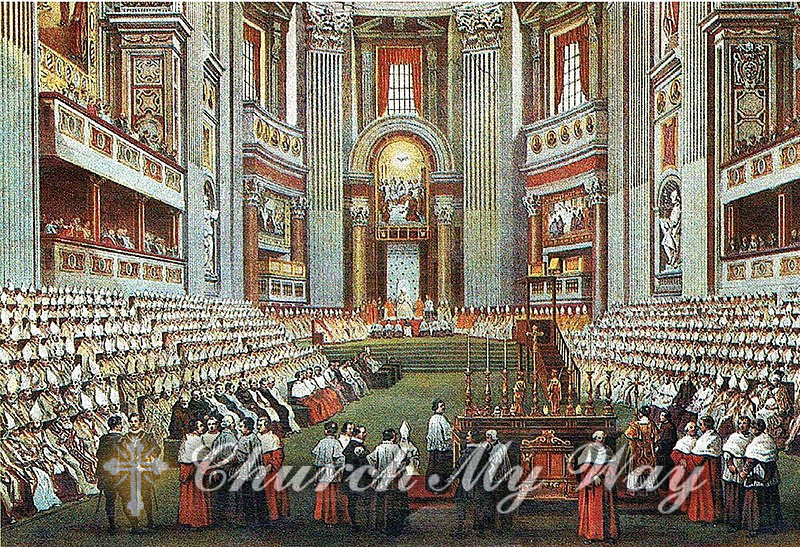
This historical crucible forged the council’s agenda. It was not called to engage in dialogue with the modern world, but to condemn its errors and to reassert the immutable truths of the Catholic faith with unassailable authority. The council was a direct response to what were seen as existential threats to the Catholic faith. Approximately 700 bishops attended the opening session on December 8, 1869, in St. Peter’s Basilica. The council fathers were predominantly from Europe, with a significant contingent from the missionary world, though their influence was limited. The proceedings were dominated by a powerful majority of ultramontane bishops (those favoring strong, centralized papal authority) who were aligned with Pius IX’s vision.
The council’s work was organized into committees that drafted documents for debate. Discussions were often heated, revealing deep divisions between the ultramontane majority and a significant minority of bishops, primarily from Germany, France, and Austria-Hungary. These “inopportunists” feared the dogmatization of papal infallibility would alienate governments and the faithful, and upset the traditional balance of authority between the pope and the episcopal college. They believed the doctrine was true but its formal definition was dangerously inopportune given the political climate. This internal conflict underscores how the council’s legacy is, indeed, a complex tapestry of profound theological clarity and enduring ecclesial tension.
The Doctrinal Fortifications: Dei Filius and the Knowability of God
The first major output of the council, the Dogmatic Constitution on the Catholic Faith Dei Filius, was a direct confrontation with the ideological threats of the 19th century. It sought to erect intellectual and spiritual fortifications against rationalism, liberalism, materialism, and modernism. This document fundamentally addressed how we can come to know God, setting boundaries for the relationship between human reason and divine revelation.
Dei Filius asserted that God, the origin and end of all things, can be known with certainty through the natural light of human reason from the things that are created. This was a crucial affirmation against materialistic philosophies that denied anything beyond the physical world. However, the constitution firmly declared that this natural knowledge is insufficient for humanity’s supernatural destiny. It taught that divine revelation is absolutely necessary, whereby God communicates both truths beyond reason’s grasp and those which, while accessible to reason, are revealed to all people easily and without error.
In this way, the council defined with unprecedented precision how God is to be known, understood, and related to in the modern world. It presented God as a rational Creator whose existence is discernible in creation, and as a gracious communicator who reveals Himself. The constitution also condemned the error of fideism, which distrusted reason, and rationalism, which rejected revelation. By delineating the proper realms of faith and reason, Dei Filius crafted a theological framework intended to protect the integrity of both. This framework insisted that the two could never contradict one another, as they originate from the same divine source of truth. This articulation provided a defensive blueprint for Catholics to engage with scientific and philosophical progress without surrendering core doctrines.
The Centralization of Authority: Pastor Aeternus and the Guardian of Truth
If Dei Filius clarified the sources for knowing God, the Dogmatic Constitution on the Church of Christ, Pastor Aeternus, defined the ultimate earthly authority for interpreting that knowledge. This document addressed papal primacy and papal infallibility, doctrines that have become synonymous with the First Vatican Council itself. This was the other pillar in the council’s effort to reshape the Church’s self-understanding in a hostile age.
The definition of papal primacy affirmed the pope’s full, supreme, and universal jurisdictional power over the entire Church, a direct counter to liberal and nationalistic currents that sought to subordinate the Church to state authority or fracture it along national lines. This reinforced the pope as a unifying figure in an increasingly fragmented political and ideological landscape. More historically significant was the definition of papal infallibility. The council decreed that the Roman pontiff, when he speaks ex cathedra—that is, when he defines a doctrine concerning faith or morals to be held by the universal Church—is possessed of that infallibility with which Christ willed His Church to be endowed.
This decree irrevocably shaped the Catholic Church’s articulation of the divine by centralizing the definitive, protected interpretation of God’s revelation in the office of Peter. It presented a vision of divine truth that, while revealed in Scripture and Tradition, was secured from error by a specific, visible mechanism. In a world questioning all forms of authority, the council presented the papacy as an unassailable rock of certainty. The God who could be known through reason and revelation was now understood to be a God whose truths were definitively guarded and proclaimed by a single, fallible human who was preserved from error under specific conditions. This created a powerful, centralized locus for theological certainty.
Enduring Impact and Tensions: A Paradigm Forged in Crisis
The abrupt suspension of the First Vatican Council in 1870, due to the outbreak of the Franco-Prussian War and the imminent capture of Rome by Risorgimento forces, left its work physically unfinished. Yet, the two constitutions it produced created a complete and lasting theological paradigm. This paradigm was forged in the crisis of the 19th century but was designed to endure beyond it.
The council’s decrees changed how we view God today by inextricably linking the understanding of a rational, self-revealing God to the teaching authority of a single, supreme pontiff. The knowability of God was now framed within a system that offered clear answers and definitive boundaries in the face of modern doubt. This has had profound implications. For many believers, it provided a bastion of certainty and unity. For others, both inside and outside the Church, it accentuated a vision of Christianity as authoritarian, resistant to dialogue, and overly centralized.
The tensions evident during the council’s debates did not vanish. The very act of defining these doctrines with such precision—erecting those intellectual and spiritual fortifications—created a new dynamic within Catholicism. It set the stage for future conflicts over the scope of infallibility, the role of theologians, and the balance between the pope and the bishops. The council’s response to rationalism, liberalism, materialism, and modernism effectively drew a line in the sand, defining Catholic identity in opposition to many core tenets of modern thought.
In conclusion, the First Vatican Council, though brief and convened under the shadow of the loss of the Papal States, permanently altered the theological landscape. Through Dei Filius and Pastor Aeternus, it constructed a coherent vision for the modern era: God is knowable, and the truth about God is guaranteed. This vision, born of Pope Pius IX’s confrontation with the forces of the 19th century, continues to shape how millions of believers conceptualize divine truth, authority, and certainty in an ever-changing world. Its legacy remains that complex tapestry, woven with threads of unwavering clarity and unresolved tension, defining the Catholic engagement with the divine to this day.
Advanced Secrets: The Hermeneutic of Continuity in Dogmatic Development
One of the most effective “insider” tips for understanding conciliar documents like Dei Filius is to analyze them as defensive syntheses, not offensive innovations. To do this, you must first identify the specific philosophical error (e.g., rationalism, fideism) each canon explicitly condemns, then map the positive doctrinal statement to its antecedent in earlier Church Fathers and Councils. This is essential because it reveals the council’s core mission: to protect and clarify the deposit of faith against modern threats, not to invent new theology. Additionally, if you contrast the final promulgated text with the earlier schemas and bishop interventions, you can save time and achieve a much faster understanding of the precise theological boundaries the council intended to establish!
The Technical Breakdown: Analyzing Dei Filius Reference Guide
The dogmatic constitution Dei Filius operates as a theological system. The table below breaks down its core components, showing how it processes contemporary threats to produce definitive Catholic doctrine.
| Theological Threat (Input) | Council’s Dogmatic Action | Doctrinal Output & Result |
|---|---|---|
| Rationalism (Reason alone suffices) | Define the Dual Source of Knowledge: Natural (Reason) & Supernatural (Revelation). | Affirms reason can know God exists, but critical mysteries (e.g., Trinity) require Revelation. |
| Fideism (Faith alone, rejects reason) | Assert the Preambles of Faith: Reason establishes credibility of Revelation. | Faith is a rational, voluntary assent, not blind leap; external signs (miracles) provide motive of credibility. |
| Materialism & Pantheism (Denies a transcendent Creator) | Dogmatize Creation ex nihilo and God’s absolute distinction from creation. | God is defined as “one, true, living, creator of all things, omnipotent, eternal, immense, incomprehensible” in a single, binding canon. |
*Note: A common mistake is reading Vatican I’s definitions in isolation. The “infallibility” defined in Pastor Aeternus is a specific, limited charism applied under strict conditions (ex cathedra pronouncements on faith/morals), not a blanket statement about the Pope’s personal opinions or ordinary governance. Misunderstanding this leads to significant misinterpretation of modern Catholic authority.
Closing Thoughts: The Architecture of Modern Catholic Thought
The First Vatican Council provided the technical schematic for engaging with modernity—a framework of precise definitions that fortified Catholic theology. By mastering its defensive logic and doctrinal outputs, you gain the key to interpreting over a century of subsequent theological development. Apply this technical breakdown to any post-1870 document to instantly grasp its underlying philosophical dialogue and dogmatic intent.
📅 Last updated: 20.12.2025
This post is also available in:
 Español (Spanish)
