📅 Last updated: 13.10.2026
“Jesus wept” stands as the shortest verse in the King James Bible—just two words in English, three in the Greek of John 11:35—yet it has puzzled readers for nearly two thousand years. If Jesus knew He was about to raise Lazarus from the dead, why would He cry at the tomb? The answer is not a riddle to be solved but a window into the heart of God.
Jesus wept because He was fully human and genuinely grieved, even though He knew He would raise Lazarus within minutes. His tears were not tears of despair or unbelief but of compassion—He entered fully into the sorrow of Mary, Martha, and the mourning community, and He was “deeply moved” by the ravages of death itself. The verse proves both Christ’s true humanity and His authority over the grave: the same Person who wept at the tomb then commanded Lazarus to come out.
- What Actually Happened at Bethany? The Context of John 11
- Why Did Jesus Weep If He Knew He Would Raise Lazarus? The Core Answer
- Why "Jesus Wept" Proves He Was Fully Human
- Why "Jesus Wept" Reveals His Anger at Death
- A Timeline of the Raising of Lazarus
- What the Tears of Jesus Teach Us About Grief and Faith
- Why Did Jesus Groan in Spirit? The Deeper Meaning of Embrimaomai
- How "Jesus Wept" Connects to the Rest of Scripture
- Did Jesus Weep Because of Unbelief? A Common Misreading
- What Does "Jesus Wept" Mean for Us Today?
What Actually Happened at Bethany? The Context of John 11
To understand why Jesus wept, we need to walk the road to Bethany ourselves. The eleventh chapter of John’s Gospel opens with a crisis: Lazarus of Bethany, brother of Mary and Martha, is gravely ill. The sisters send word to Jesus, who is ministering across the Jordan. Their message is pointed in its intimacy: “Lord, he whom you love is ill” (John 11:3, ESV). They do not demand; they simply report, trusting that love will act.
Jesus’ response startles everyone. He declares, “This illness does not lead to death. It is for the glory of God, so that the Son of God may be glorified through it” (John 11:4). Then John records something remarkable: “Now Jesus loved Martha and her sister and Lazarus. So, when he heard that Lazarus was ill, he stayed two days longer in the place where he was” (John 11:5–6). The delay was deliberate. Love, in this case, meant waiting until Lazarus had been dead four days—long enough that no one could attribute the miracle to a misdiagnosis or a lucky recovery. Jewish tradition held that the soul lingered near the body for three days; by the fourth, decomposition was undeniable. Jesus let the situation pass the point of human hope so that the glory of God might be unmistakable.
When Jesus finally arrives, Martha meets Him on the road with words that carry both faith and reproach: “Lord, if you had been here, my brother would not have died” (John 11:21). Mary, coming later, says the same (John 11:32). Both women believe Jesus could have healed Lazarus; neither yet imagines He can raise him. Their grief is real, their faith incomplete, their disappointment audible. This is the emotional landscape into which Jesus steps—and it is here that the shortest verse in Scripture lands with such force.
Why Did Jesus Weep If He Knew He Would Raise Lazarus? The Core Answer
Some critics have suggested the tears were performative—a display for the crowd. The text will not allow that reading. John uses two distinct Greek verbs to describe Jesus’ emotional state, and both are visceral.
First, in John 11:33, when Jesus sees Mary weeping and the Jews weeping with her, He is “deeply moved in his spirit and greatly troubled.” The Greek word here, embrimaomai, is unusually strong. It can carry the sense of a snort or growl—an inward indignation, a churning of the spirit. Some scholars render it “He was moved with indignation.” Jesus is not merely sad; He is angry. Angry at what? At death. At the enemy that has stolen His friend and terrorized His people. At the unbelief that surrounds Him. At the whole ruinous empire of the grave.
Second, in John 11:35, “Jesus wept.” The Greek edakrysen describes quiet, flowing tears—not the loud wailing of professional mourners who accompanied Jewish funerals, but silent weeping. This is the same verb used of Peter after he denied Christ (Luke 22:62). It is grief that cannot be hidden but refuses to perform.
So why did He weep? Because He was about to do something He did not have to do emotionally. He could have remained detached, raised Lazarus, and moved on. Instead, He chose to enter the grief. The tears were not a byproduct of ignorance—He knew exactly what He would do in the next few minutes. They were the overflow of a heart that genuinely loves and genuinely hates death. As the writer of Hebrews puts it, Jesus is one who can “sympathize with our weaknesses” (Hebrews 4:15). At Bethany, that sympathy was not theoretical. It was wet.
Why “Jesus Wept” Proves He Was Fully Human
From the earliest centuries, the church fought hard for the doctrine that Jesus Christ is fully God and fully man—one Person with two natures, without confusion or separation. The verse “Jesus wept” became one of the most-cited proofs of His humanity. The second-century heretic Marcion, who taught that Christ only appeared to have a body, could not account for tears. Neither could the Docetists, who denied the physical reality of Christ’s suffering. Real tears require real eyes, real tear ducts, real emotions, a real human soul.
The Council of Chalcedon in AD 451 formalized what Scripture already taught: Christ is “truly God and truly man… like us in all things except sin.” John 11:35 is Chalcedon in miniature. When Jesus wept, He was not pretending. He was not putting on a show for the disciples. He was experiencing the full weight of human sorrow—hunger, thirst, weariness, and grief—without ever sinning.
This matters enormously for the believer. If Christ only seemed to suffer, then His sympathy is only apparent. But if He truly wept, then His compassion is genuine. The tears at Lazarus’s tomb tell us that when we grieve, we are not grieving alone. Our High Priest has been to the cemetery. He knows the way.
Why “Jesus Wept” Reveals His Anger at Death
There is a second layer to the question that many readers miss. Jesus did not weep only because He loved Lazarus. He wept because death itself is an outrage. Death was never part of God’s original design; it entered the world through sin (Romans 5:12). Every funeral is a reminder that something has gone catastrophically wrong with creation. When Jesus stood at the tomb, He was not merely mourning a friend—He was confronting an enemy.
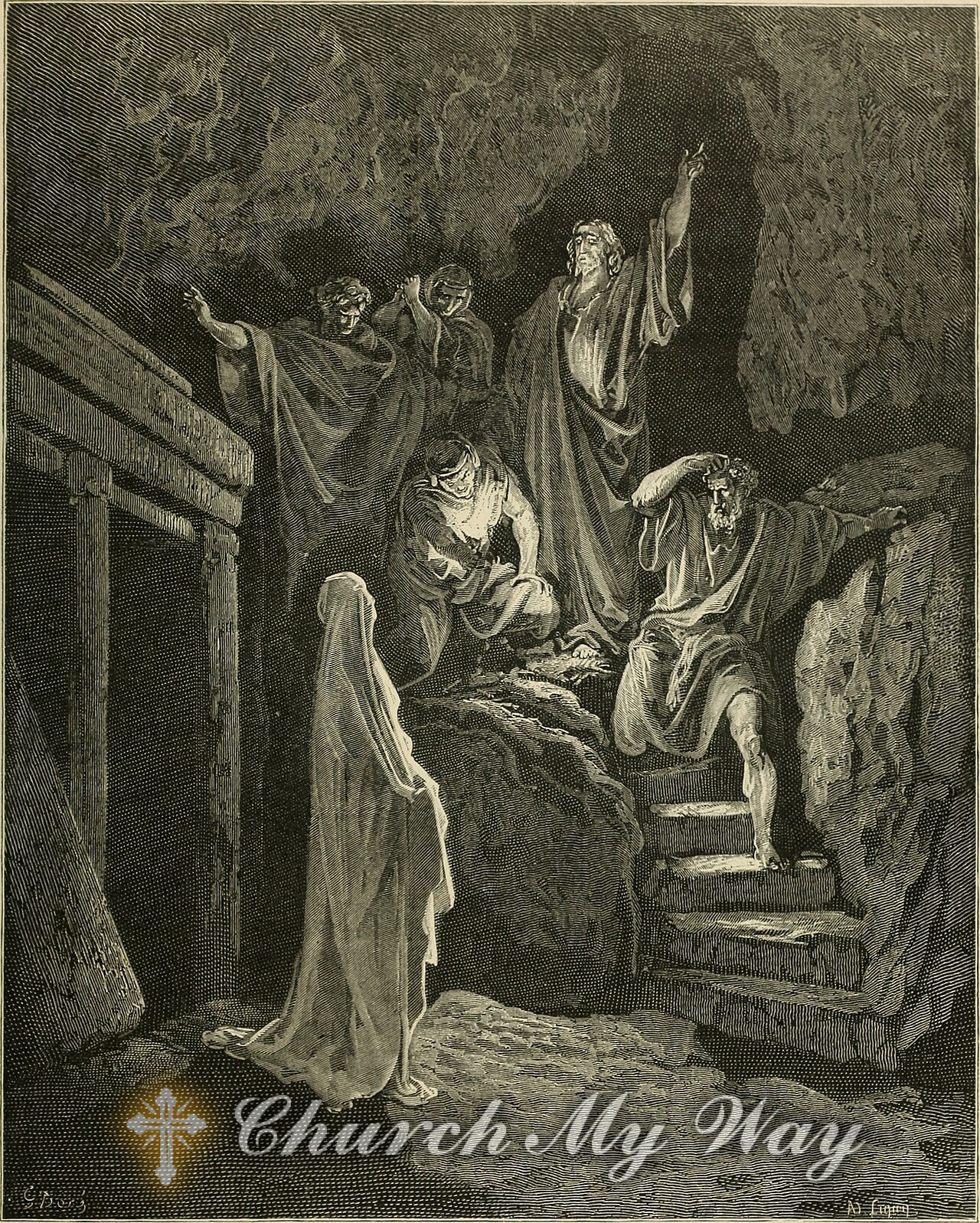
This is why the same passage that records His tears also records His command. “Then Jesus, deeply moved again, came to the tomb” (John 11:38). The Greek verb embrimaomai appears again. Some interpreters hear in it the snort of a warhorse about to charge. Jesus is not resigned to death; He is indignant at it. And that indignation issues in authority: “Lazarus, come out!” (John 11:43).
The tears and the command belong together. If Jesus had only wept, He would be a sympathetic but powerless figure. If He had only commanded, He would be a powerful but distant one. In John 11, He is both—grieved and sovereign, weeping and commanding. That is the Jesus of the Gospels.
A Timeline of the Raising of Lazarus
| Event | Scripture Reference | What It Reveals |
|---|---|---|
| Lazarus becomes ill; sisters send word to Jesus | John 11:1–3 | The family’s trust in Jesus’ love and power |
| Jesus delays two days before departing | John 11:4–6 | Deliberate timing so God’s glory would be unmistakable |
| Lazarus dies and is buried; four days pass | John 11:17 | Death is beyond any natural hope of recovery |
| Martha and Mary each meet Jesus with grief and faith | John 11:20–32 | Real sorrow mixed with incomplete understanding |
| Jesus is “deeply moved” and “greatly troubled” | John 11:33 | He enters the grief of others, indignant at death |
| Jesus weeps | John 11:35 | Genuine human sorrow; compassion in action |
| Jesus commands Lazarus to come out | John 11:43–44 | Divine authority over death itself |
What the Tears of Jesus Teach Us About Grief and Faith
The scene at Bethany dismantles two false ideas about grief and faith that have troubled believers for centuries.
The first false idea is that strong faith eliminates sorrow. If we truly believed, the reasoning goes, we would not cry at funerals. But Jesus had perfect faith—He knew He would raise Lazarus—and He still wept. Faith and tears are not opposites. The believer who grieves with hope is not a contradiction; he is a portrait of Jesus at the tomb.
The second false idea is that grief is unspiritual, something to be suppressed or rushed past. Some Christian traditions have implied that mourning shows a lack of trust. But Jesus, who trusted the Father perfectly, mourned deeply. Paul tells the Thessalonians not to grieve “as others do who have no hope” (1 Thessalonians 4:13)—but he does not say not to grieve. He says to grieve differently, with hope attached.
Here are three practical takeaways from John 11:35:
- Bring your sorrow to Christ, not away from Him. Mary and Martha both went out to meet Jesus with their grief. They did not hide it, and He did not rebuke it.
- Let your tears be honest, not performative. Jesus wept quietly, not for an audience. Grief shared with God is grief that can be carried.
- Remember that the story does not end at the tomb. The same Jesus who wept then spoke life. Your tears are real, but they are not final.
Why Did Jesus Groan in Spirit? The Deeper Meaning of Embrimaomai
The word embrimaomai deserves a closer look, because it is the key that unlocks the emotional logic of the passage. In classical Greek usage, the verb could describe the snorting of horses before a race, the angry rebuke of a superior, or a deep inner agitation. In the Greek Old Testament (the Septuagint), it appears in contexts of divine indignation—God’s fury against sin and death. When John uses it twice in this chapter (John 11:33 and 11:38), he is telling us something profound: Jesus is not merely sad. He is stirred to the depths, like a warrior before battle.
What is He fighting? Death. Sickness. The enemy who holds the human race in bondage. The tears of Jesus are the tears of a king who has come to reclaim territory that was stolen from Him. He weeps because He loves; He groans because He wars. And the war ends at an open tomb with a living friend walking out.
This is why the tears of Jesus are not the tears of resignation. They are the tears of a God who refuses to accept the world as it is. Every Christian who has ever stood at a graveside and wept with hope is echoing that same refusal—grief that does not surrender, sorrow that looks forward to resurrection.
How “Jesus Wept” Connects to the Rest of Scripture
The tears of Jesus at Bethany are not an isolated moment. They stand within a larger biblical pattern of God drawing near to His people in their suffering.
In the Old Testament, God is described as one who hears the cry of the afflicted (Exodus 3:7), who is “gracious and merciful, slow to anger and abounding in steadfast love” (Psalm 103:8), and who is “near to the brokenhearted” (Psalm 34:18). The prophets looked forward to a day when God Himself would come and wipe away tears (Isaiah 25:8).
In the New Testament, that promise begins to be fulfilled in Jesus. He weeps at Bethany (John 11:35). He weeps over Jerusalem (Luke 19:41). He sweats blood in Gethsemane (Luke 22:44). And in the book of Revelation, the risen Christ promises a day when “he will wipe away every tear from their eyes, and death shall be no more” (Revelation 21:4). The God who wept is the God who will one day end all weeping.
This is the scandal and the comfort of the Christian faith: the Creator of the universe has tear ducts. He is not a distant deity who watches human suffering from a safe distance. He entered it, felt it, and wept over it—and then He defeated it.
Did Jesus Weep Because of Unbelief? A Common Misreading
Some preachers have suggested that Jesus wept not out of compassion but out of frustration at the crowd’s unbelief. On this reading, the tears of John 11:35 are tears of grief over hard hearts, similar to His tears over Jerusalem in Luke 19:41. It is a plausible interpretation, and it captures something true: Jesus is grieved by unbelief, and the crowd at Bethany is a mix of mourners, skeptics, and believers.
But the text does not support making this the primary meaning. John explicitly ties the tears to the grief of Mary and the Jews who followed her: “When Jesus saw her weeping, and the Jews who had come with her also weeping, he was deeply moved in his spirit and greatly troubled… Jesus wept” (John 11:33–35). The immediate cause is compassion, not rebuke. The crowd’s response confirms this: “See how he loved him!” (John 11:36). They interpreted His tears as love, not anger.
That said, we should not be too quick to separate the two. Jesus’ compassion and His grief over unbelief are not in conflict; they flow from the same heart. He loves the people He weeps over, and He weeps because He loves them. The tears of Jesus are always the tears of love.
What Does “Jesus Wept” Mean for Us Today?
Two words. Three in Greek. And yet they carry enough weight to hold up a dying world.
If you have ever wondered whether God cares about your pain, John 11:35 is your answer. If you have ever felt that your grief disqualifies you from faith, the tears of Jesus say otherwise. If you have ever stood at a grave and felt the sting of death, you are standing where Jesus stood—and He did not stand there untouched.
The same Jesus who wept at Bethany is the Jesus who now intercedes for His people (Romans 8:34), who knows our frame (Psalm 103:14), and who will one day return to make all things new. His tears are not a sign of weakness. They are a sign of love—love strong enough to enter our sorrow, and strong enough to overcome it.
When you weep, you are not weeping alone. The One who said “Lazarus, come out!” has already wept at the tomb. And He will not leave you there.
