📅 Last updated: 13.10.2026
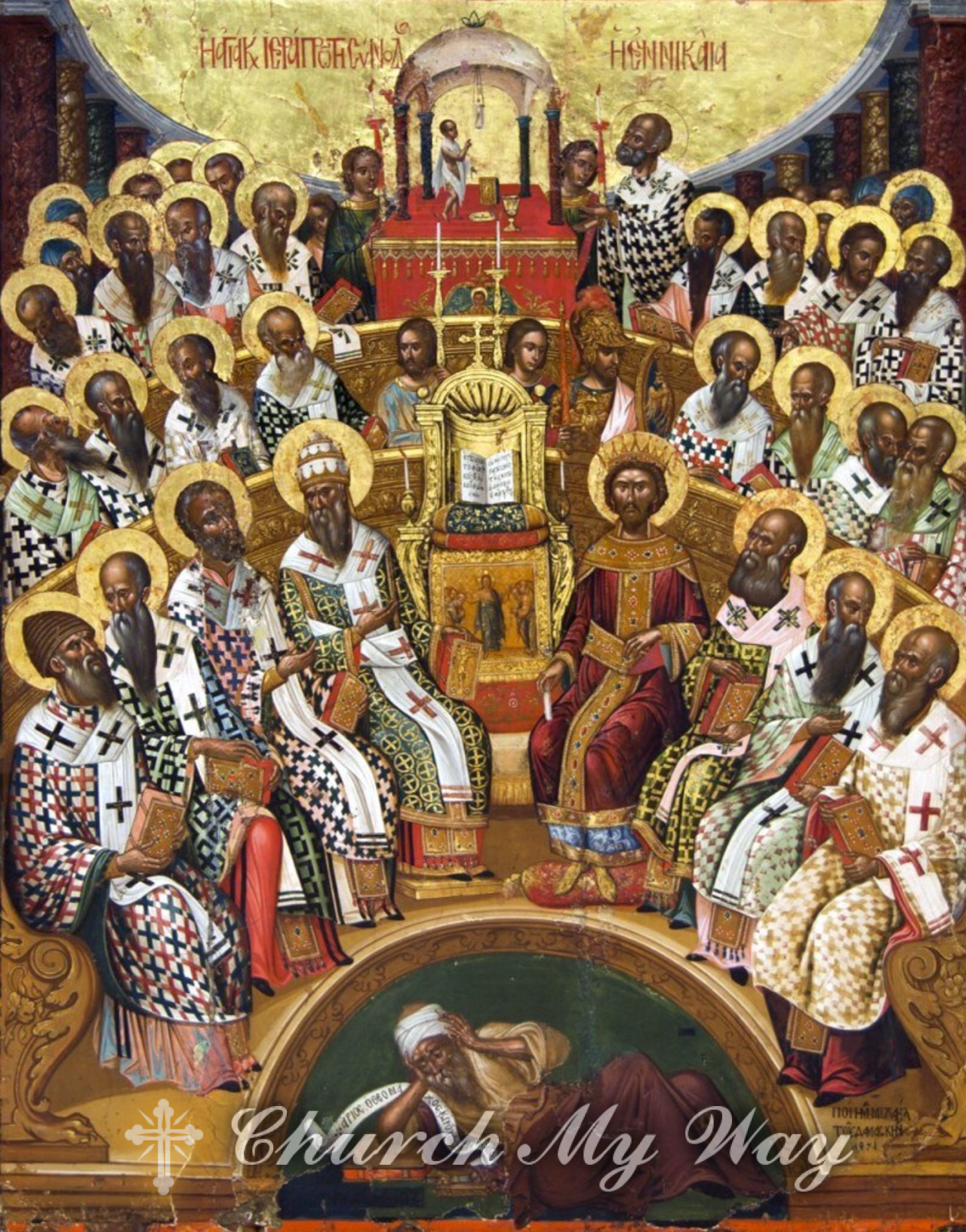
The Council of Nicaea stands as one of the most consequential gatherings in the history of the church—a moment when 318 bishops, many bearing scars from persecution, assembled to confront a theological crisis that threatened to fracture Christianity. Convened by Emperor Constantine in 325 AD, this assembly addressed the explosive question of Christ’s nature and produced a creed that billions of Christians still recite today. Understanding what happened at Nicaea illuminates not merely ancient church history but the very foundations of Christian belief.
The Council of Nicaea was a gathering of 318 bishops convened by Emperor Constantine in 325 AD in Nicaea (modern-day Iznik, Turkey) to resolve the Arian controversy over Christ’s divinity. The council condemned Arianism as heresy, produced the original Nicene Creed affirming Christ as “true God from true God,” and established a unified method for calculating Easter. It became the model for all subsequent ecumenical councils.
- Why Did the Council of Nicaea Become Necessary?
- What Happened at the Council of Nicaea?
- Key Figures at the Council of Nicaea
- How Did the Council of Nicaea Address Other Issues?
- What Were the Immediate Aftermath and Long-Term Consequences?
- Why Does the Council of Nicaea Matter for Christians Today?
- What Can We Learn from the Council of Nicaea?
- The Council of Nicaea and the Shape of Christian History
- Conclusion: 318 Bishops and the Truth They Defended
Why Did the Council of Nicaea Become Necessary?
The crisis that prompted Nicaea began not with emperors or bishops but with a popular Alexandrian presbyter named Arius. Around 318 AD, Arius began teaching that the Son of God was not eternal but was created by the Father—that there was “when he was not.” His logic seemed compelling to many: if the Father alone is unbegotten and eternal, then the Son must have had a beginning. Arius framed his teaching with the slogan, “The Father is greater than the Son,” appealing to passages like John 14:28.
But Arius’s bishop, Alexander of Alexandria, recognized the danger immediately. If Christ is a created being, however exalted, then he cannot save humanity. A creature cannot redeem creatures. The entire edifice of Christian worship—praying to Jesus, baptizing in his name, trusting him for salvation—would collapse if Arius were right.
The controversy spread rapidly through the eastern Mediterranean. Arius composed songs and jingles to popularize his views among ordinary Christians. Alexander convened local councils that condemned Arius, but the dispute only intensified. Bishops took sides. Congregations divided. The pagan emperor Constantine, who had converted to Christianity and credited the Christian God for his military victories, watched with alarm as the faith he hoped would unify his empire threatened to tear it apart.
The Political and Spiritual Stakes
Constantine’s motivations were mixed. As a ruler, he wanted religious harmony to stabilize his empire. As a recent convert (baptized only on his deathbed), he may have genuinely sought theological truth. Whatever his personal convictions, his decision to convene a universal council of bishops set a precedent that would shape church-state relations for centuries.
The bishops who gathered came from across the Christian world—from Egypt and Syria, from Asia Minor and Greece, from North Africa and even from as far as Britain. Many had suffered under the persecutions of Diocletian and Maximian. Some bore the physical marks of torture. Their presence testified that Christianity had survived its most brutal trials and now stood at the center of imperial power.
What Happened at the Council of Nicaea?
The council opened on May 20, 325 AD, in the imperial palace at Nicaea. Constantine presided over the opening session, but he deferred to the bishops on theological matters. The proceedings lasted approximately two months, with sessions held in a hall adjacent to the palace.
The central issue was the relationship between the Father and the Son. Arius and his supporters presented their case, arguing that the Son was a creature, albeit the highest and first of God’s creations. Their opponents, led by Alexander of Alexandria and a young deacon named Athanasius, insisted that the Son is consubstantial (homoousios) with the Father—of the same divine essence, co-eternal, and fully God.
The debate was fierce. According to later accounts, Arius’s arguments were met with such opposition that some bishops covered their ears when they heard his claims. The council eventually rejected a compromise formula proposed by Eusebius of Caesarea that described the Son as “like” the Father (homoiousios). The difference between homoousios and homoiousios was a single letter—but it meant everything.
The Nicene Creed: Original Text and Significance
The council produced a creed that explicitly affirmed Christ’s full divinity. The original Nicene Creed (not to be confused with the longer Niceno-Constantinopolitan Creed of 381 AD) read in part:
“We believe in one God, the Father Almighty, Maker of all things visible and invisible. And in one Lord Jesus Christ, the Son of God, begotten of the Father, light of light, very God of very God, begotten, not made, being of one substance with the Father…”
The phrase “begotten, not made” directly refuted Arius’s claim that the Son was created. The term homoousios (“of one substance”) established that the Son shares the Father’s divine essence. To prevent evasion, the council added anathemas against specific Arian propositions: “But those who say: ‘There was a time when he was not,’ and ‘He was not before he was made,’ and ‘He was made out of nothing,’ or who say ‘The Son of God is of another subsistence or substance,’ or ‘created,’ or ‘changeable’—the catholic and apostolic Church anathematizes.”
Only two bishops refused to sign the creed and were deposed, along with Arius himself. The vote was not unanimous—there were probably more than two dissenters initially, but most came to agreement after extended discussion.
Key Figures at the Council of Nicaea
The council brought together some of the most remarkable Christian leaders of the era. Understanding who they were illuminates why the event carried such weight.
- Athanasius of Alexandria — Though only a deacon at the time, Athanasius served as Alexander’s theological advisor and emerged as the most articulate defender of Nicene orthodoxy. He would spend the rest of his life fighting Arianism, enduring five exiles under four emperors. His persistence earned him the title “Athanasius Contra Mundum” (Athanasius against the world).
- Eusebius of Caesarea — The church historian and bishop who initially proposed a compromise creed. He eventually signed the Nicene formula but remained ambivalent, later defending Arius’s followers. His Ecclesiastical History provides our most important account of the council.
- Nicholas of Myra — The historical figure behind Santa Claus attended the council, though the famous story of him striking Arius is a later legend without contemporary attestation.
- Hosius of Cordoba — Constantine’s ecclesiastical advisor who helped draft the creed and presided over some sessions in the emperor’s absence.
- Marcellus of Ancyra — A fierce opponent of Arianism whose own theology later came under suspicion for overemphasizing the unity of God.
How Did the Council of Nicaea Address Other Issues?
While the Arian controversy dominated the council’s attention, the bishops also addressed other pressing matters that affected church unity and practice.
The Date of Easter
One of the most practical decisions concerned when to celebrate Easter. Different Christian communities followed different calculations. Some, particularly in Asia Minor, celebrated Easter on the 14th of Nisan, the date of the Jewish Passover, regardless of the day of the week. Others, including Rome and Alexandria, celebrated Easter on the Sunday following the first full moon after the spring equinox.
The council decided in favor of the Sunday observance, separating Christian Easter from Jewish Passover calculation. Constantine’s letter after the council expressed hope that this uniformity would prevent future disputes. The decision had lasting consequences, though the exact method of calculation continued to be debated for centuries and remains a point of division between Eastern and Western churches.
The Melitian Schism
The council also dealt with the Melitian schism in Egypt. Melitius of Lycopolis had created a rival hierarchy during the Diocletian persecution, ordaining bishops in sees already occupied by others. The council took a lenient approach, allowing Melitian clergy to retain their positions if they submitted to Alexander’s authority, with reordination required in some cases.
Canons of Discipline
The council issued twenty canons addressing various matters of church discipline: the readmission of the lapsed (those who had denied the faith under persecution), the qualifications for clergy, the treatment of those who had castrated themselves, and the proper procedure for ordaining bishops. These canons shaped church governance for centuries.
What Were the Immediate Aftermath and Long-Term Consequences?
The Council of Nicaea did not end the Arian controversy—it intensified it. Within a few years, Arian and semi-Arian bishops regained influence at court. Constantine himself, influenced by Eusebius of Nicomedia, recalled Arius from exile. Athanasius, who became bishop of Alexandria in 328, was deposed and exiled multiple times. For much of the fourth century, it appeared that Arianism might triumph.
The death of Constantine in 337 and the division of the empire among his sons complicated matters further. Constantius II, who ruled the East, favored Arianism and pressured councils to adopt anti-Nicene formulas. The situation remained fluid until the Council of Constantinople in 381 AD, which reaffirmed and expanded the Nicene Creed and finally established Nicene orthodoxy as the official faith of the empire.
| Date | Event | Significance |
|---|---|---|
| 318 AD | Arius publicly teaches that the Son is a creature | Begins the controversy that leads to Nicaea |
| 325 AD | Council of Nicaea convenes | Condemns Arianism; produces the Nicene Creed |
| 328 AD | Athanasius becomes bishop of Alexandria | Begins decades of resistance to Arianism |
| 337 AD | Constantine dies; empire divided | Arian faction gains imperial favor |
| 381 AD | Council of Constantinople | Reaffirms and expands Nicene faith |
| 451 AD | Council of Chalcedon | Further defines Christ’s two natures |
Why Does the Council of Nicaea Matter for Christians Today?
The Council of Nicaea established that orthodox Christianity requires a high view of Christ’s divinity. This is not theological hair-splitting—it touches the heart of the gospel. If Jesus is a created being, then God did not become human; a creature merely represented God. But the New Testament consistently presents Jesus as the divine Word who “became flesh and dwelt among us” (John 1:14).
The Nicene affirmation that Christ is “true God from true God” safeguards several essential truths:
- Salvation: Only God can save. If Christ is not fully divine, his sacrifice cannot atone for the infinite offense of sin against an infinite God.
- Revelation: Jesus reveals God perfectly because he is God. “Whoever has seen me has seen the Father” (John 14:9).
- Worship: Christians pray to Jesus and worship him as God. If he is a creature, this is idolatry. If he is God, it is right and necessary.
- Unity: The doctrine of the Trinity—one God in three persons—depends on the full divinity of both Son and Spirit.
The creed the bishops produced at Nicaea was not a philosophical innovation but a faithful summary of Scripture. They did not invent the doctrine of Christ’s divinity; they defended it against those who would diminish it.
The Creed as a Rule of Faith
For centuries, the Nicene Creed has served as a summary of apostolic teaching, recited in liturgies across the world. It unites Catholics, Orthodox, Anglicans, Lutherans, Presbyterians, Methodists, and Baptists—Christians who disagree on many things but share a common confession about who Jesus is. When believers recite “very God of very God, begotten, not made,” they stand in continuity with the 318 bishops who gathered at Nicaea.
What Can We Learn from the Council of Nicaea?
Several lessons emerge from this pivotal event in church history.
The Importance of Doctrinal Clarity
The bishops at Nicaea understood that vague language about Christ would not suffice. The difference between “of one substance” and “of similar substance” might seem trivial, but it determined whether Christianity would remain a religion of divine salvation or become a form of elevated creature-worship. Sometimes precision matters.
The Cost of Faithfulness
Athanasius and others who defended Nicene orthodoxy paid a heavy price. Exile, slander, and persecution were their lot for decades. Yet they persevered because they believed the truth was worth suffering for. Their example challenges comfortable Christianity that avoids controversy at any cost.
The Limits of Political Power
Constantine convened the council, but he could not control its outcome. Imperial favor shifted back and forth between Nicene and Arian factions, but the truth of Christ’s divinity did not depend on imperial endorsement. The church’s faith survived because it was true, not because it was powerful.
The Communion of Saints
The 318 bishops represented a living connection to the apostles and martyrs. They did not create new doctrine but defended what had been handed down. Their gathering reminds us that we are part of a community that spans time and space—that our faith is not our private invention but a sacred trust received from those who came before us.
The Council of Nicaea and the Shape of Christian History
The Council of Nicaea set a pattern for how the church would address theological controversies: gather bishops, debate, define, and anathematize error. Subsequent ecumenical councils followed this model—Constantinople (381), Ephesus (431), Chalcedon (451), and others. Each built on Nicaea’s foundation, clarifying and defending aspects of Christian faith against new challenges.
The council also established the principle that the church’s faith is defined corporately, not by individual teachers. Arius was a popular preacher with significant following, but the church as a whole rejected his teaching. The consensus of bishops gathered in council, not the charisma of a single leader, determined orthodoxy.
For Protestant Christians who emphasize Scripture alone, Nicaea raises important questions about authority and tradition. The council did not claim to add to Scripture but to interpret it rightly. Its decisions were accepted because they faithfully summarized biblical teaching, not because councils are automatically infallible. The Nicene Creed functions as a helpful boundary marker, identifying the essential content of apostolic faith.
Conclusion: 318 Bishops and the Truth They Defended
The Council of Nicaea was not a political maneuver or a power grab. It was a gathering of pastors and teachers who faced a question that would not go away: Who is Jesus Christ? Their answer—that he is “true God from true God, begotten, not made, of one substance with the Father”—has shaped Christian faith for seventeen centuries.
The 318 bishops who gathered at Nicaea were not perfect men. They argued, maneuvered, and sometimes acted from mixed motives. But when they spoke together, they spoke the truth. They affirmed what Scripture teaches and what Christians had always believed: that in Jesus Christ, God himself came to save us.
When we recite the Nicene Creed, we join our voices with theirs. We affirm that Jesus is not a creature but the Creator, not a prophet but the Word made flesh, not a good teacher but God incarnate. This is the faith once delivered to the saints, defended at Nicaea, and entrusted to us. May we hold it fast until he comes again.
