📅 Last updated: 19.10.2026
The theosis doctrine teaches that human beings are created for genuine participation in the divine life—not merely moral improvement or legal forgiveness, but an actual, transformative union with God through grace. Rooted in Scripture, articulated by the Greek Fathers, defined in Orthodox councils, and echoed in surprising corners of Western theology, this teaching answers the question Jesus posed in John 10:34–36 by quoting Psalm 82:6: “You are gods.”
The theosis doctrine is the Orthodox Christian teaching that humans can become “partakers of the divine nature” (2 Peter 1:4) through grace, without ceasing to be creatures. It holds that salvation is not only forgiveness of sins but ontological transformation—union with God in Christ by the Holy Spirit—restoring the image of God and attaining likeness to Him.
- What Is the Theosis Doctrine? A Definition and Its Biblical Roots
- How Did the Early Church Develop the Theosis Doctrine?
- Theosis Doctrine in the Orthodox Tradition: Essence, Energies, and the Councils
- What Does the Theosis Doctrine Actually Look Like in a Christian Life?
- Is the Theosis Doctrine Biblical or a Later Addition? Answering the Objection
- Did Western Christianity Reject the Theosis Doctrine?
- What Are the Main Misunderstandings of the Theosis Doctrine?
- Why the Theosis Doctrine Matters for Faith and History Today
- A Lasting Perspective: Becoming by Grace What God Is by Nature
What Is the Theosis Doctrine? A Definition and Its Biblical Roots
At its core, theosis (Greek: θέωσις, also called deification or divinization) is the doctrine that God became human so that humans might become divine—not by nature, but by grace. Athanasius of Alexandria framed the classic formula in On the Incarnation (c. 318 AD): “He became man that we might become god” (section 54). The statement sounds audacious until one reads the New Testament carefully.
The Petrine text is foundational: “His divine power has granted to us all things that pertain to life and godliness… so that through them you may become partakers of the divine nature” (2 Peter 1:3–4, ESV). The Greek word koinōnoi (partakers) means sharers, participants—language of real communion, not metaphor. Psalm 82:6, “I said, ‘You are gods, sons of the Most High, all of you,'” is cited by Jesus Himself in John 10:34–36 in a dispute with religious authorities, and He treats the psalm as valid Scripture. Paul tells the Corinthians that believers are being “transformed into the same image from one degree of glory to another” (2 Corinthians 3:18) and that Christ is “the firstborn among many brothers” (Romans 8:29). John writes that “we are God’s children now, and what we will be has not yet appeared; but we know that when he appears we shall be like him, because we shall see him as he is” (1 John 3:2).
These texts do not teach that creatures become a second God or absorb into a divine ocean. They teach participation: the creature shares in God’s own life—His immortality, holiness, and glory—while remaining creature. The distinction between God’s essence (which remains unknowable and unshareable) and His energies (His grace and life, which He communicates) is the metaphysical guardrail that keeps theosis from collapsing into pantheism.
How Did the Early Church Develop the Theosis Doctrine?
The doctrine did not arrive fully formed. It grew from liturgical practice, martyrdom, and scriptural reflection over three centuries.
From Irenaeus to Athanasius
Irenaeus of Lyons (c. 130–202 AD) set the trajectory in Against Heresies (Book V), describing the Son as the one who “became what we are, that He might bring us to be even what He is Himself.” His theology of recapitulation—Christ summing up and healing humanity in Himself—provided the narrative logic for deification. Origen of Alexandria (c. 185–254) developed the idea of the soul’s progressive assimilation to God through contemplation, though some of his speculative framework was later corrected.
Athanasius gave the doctrine its sharpest early expression in the fourth century, arguing against Arians that only a truly divine Word could deify humanity: “The Word was made flesh… in order that He might make man divine” (On the Incarnation). Gregory of Nazianzus (c. 329–390) wrote in his Theological Orations (Oration 29) that the Son “became man for our sake, that He might save us… that we might become gods through Him.” Gregory of Nyssa (c. 335–395) described the Christian life as epektasis—an eternal, ever-deepening progress into God, since God’s infinity means union is never static.
The Patristic Consensus
By the fifth century, deification language was standard across the Greek-speaking church. Cyril of Alexandria used it constantly in his Christological writings. Maximus the Confessor (c. 580–662) systematized it: the human person, made in God’s image, is called to move from image to likeness through ascetical struggle and sacramental life, with Christ as the pattern and power of that movement. Pseudo-Dionysius the Areopagite described deification as “union with God and becoming like God” (Ecclesiastical Hierarchy), a formula repeated by later Byzantine theologians.
Theosis Doctrine in the Orthodox Tradition: Essence, Energies, and the Councils
The theosis doctrine reached its dogmatic precision in the fourteenth-century Palamite controversy. Gregory Palamas (1296–1359), defending Hesychast monks on Mount Athos, articulated the distinction between God’s essence (ousia) and His uncreated energies (energeiai). The essence remains utterly transcendent and unknowable; the energies—God’s grace, light, and life—are truly God Himself communicated to creatures. The Councils of Constantinople in 1341, 1347, and 1351 vindicated Palamas, and his theology entered the Orthodox synodical tradition.
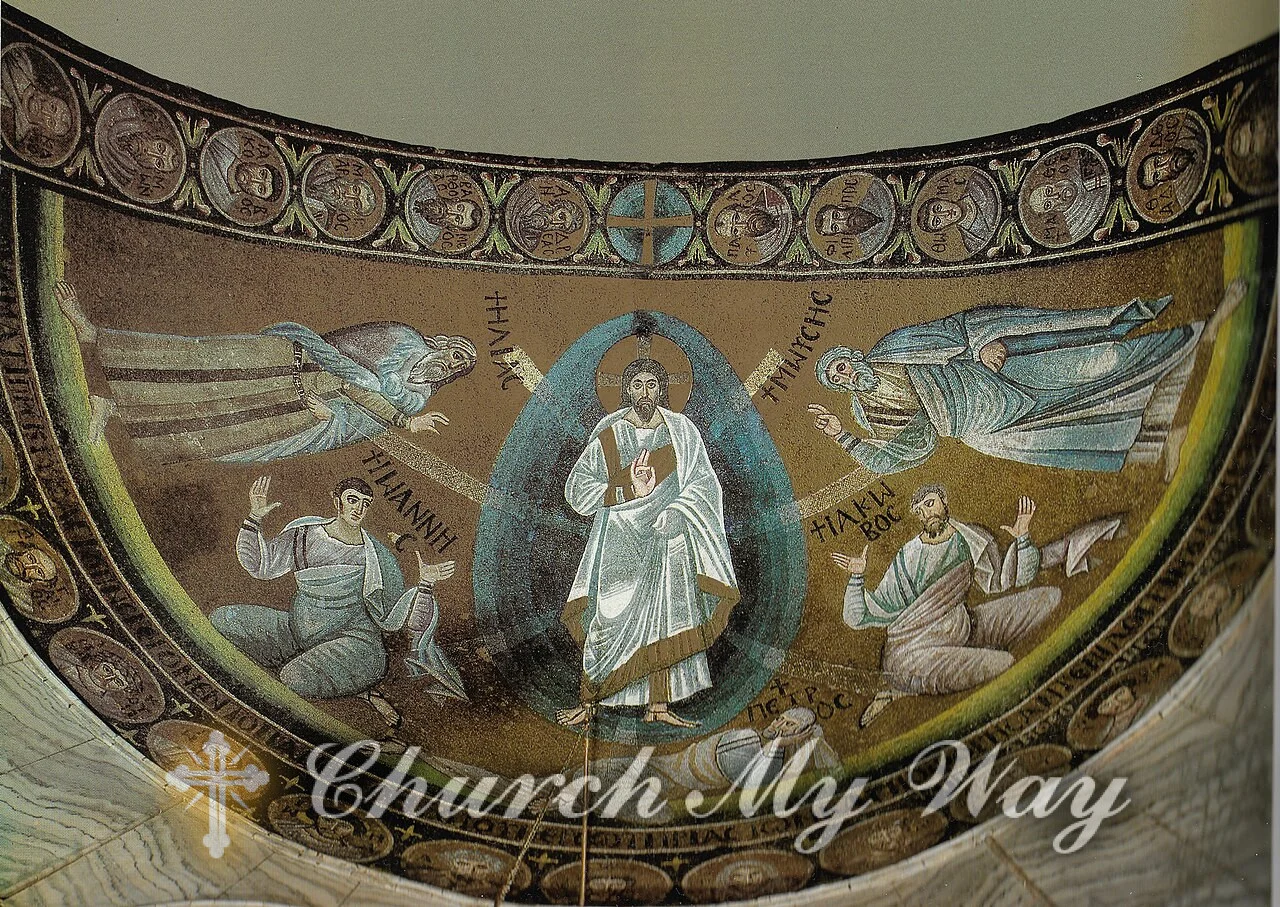
This distinction matters for the theosis doctrine because it explains how union with God is possible without creature-deification. When Peter speaks of partaking in the divine nature, he does not mean sharing God’s essence. He means participating in God’s life as He gives Himself—the same uncreated light seen by the disciples on Mount Tabor at the Transfiguration (Matthew 17:1–8).
| Period | Key Figure / Event | Contribution to the Theosis Doctrine |
|---|---|---|
| c. 180 AD | Irenaeus of Lyons | Recapitulation; Christ became what we are to make us what He is |
| c. 318 AD | Athanasius, On the Incarnation | Classic formula: God became man that man might become god |
| 4th century | Gregory of Nazianzus, Gregory of Nyssa | Deification through the Incarnation; epektasis and infinite progress |
| 7th century | Maximus the Confessor | Systematic synthesis: image, likeness, and the cosmic mediation of Christ |
| 1341–1351 | Palamite Councils, Constantinople | Essence–energies distinction dogmatized; deification as participation in uncreated energies |
What Does the Theosis Doctrine Actually Look Like in a Christian Life?
Deification is not an abstraction for theologians. Orthodoxy treats it as the telos—the purpose—of every baptized life, and the practical means are concrete.
Baptism, Chrismation, and Eucharist
Initiation into Christ is the beginning of deification. Romans 6:3–4 ties baptism to burial and resurrection with Christ; Galatians 3:27 says those baptized “have put on Christ.” Chrismation (anointing with holy oil) confers the Holy Spirit, whose indwelling is the engine of transformation (Romans 8:9–11). The Eucharist is understood as medicine of immortality—Ignatius of Antioch called it “the medicine of immortality” (Ephesians 20) around 107 AD—because in it the believer receives the deified body and blood of Christ.
Asceticism, Prayer, and the Vision of Light
Palamas and the Hesychasts taught that unceasing prayer (1 Thessalonians 5:17) and ascetical struggle purify the heart so that it can perceive the uncreated light. This is not esoteric mysticism but the working out of Matthew 5:8: “Blessed are the pure in heart, for they shall see God.” The Jesus Prayer—”Lord Jesus Christ, Son of God, have mercy on me, a sinner”—became the most widespread tool for this interior transformation.
- Prayer as participation: Unceasing prayer cultivates conscious communion with God, the atmosphere of deification.
- Asceticism as freedom: Fasting, vigilance, and repentance remove obstacles to grace rather than earning it.
- Sacramental life: The Eucharist and confession sustain the real, embodied character of transformation.
- Love of neighbor: 1 John 4:20 grounds the vertical union in horizontal love—no deification without charity.
Is the Theosis Doctrine Biblical or a Later Addition? Answering the Objection
Critics sometimes claim theosis is a Greek philosophical import foreign to Scripture. The historical record complicates that charge. The vocabulary is Greek, but the underlying grammar is biblical: image and likeness (Genesis 1:26–27), divine sonship (Psalm 2:7; Romans 8:14–17), indwelling (John 14:23), glory (2 Corinthians 3:18), and divine nature (2 Peter 1:4). The Fathers did not invent the concept; they read Scripture through the lens of the Incarnation and the liturgy.
What Greek philosophy contributed was conceptual precision—especially the categories of participation and the essence/energies distinction—not the doctrine itself. The patristic method was to use philosophical tools to defend biblical faith, much as later Western scholastics used Aristotle.
Did Western Christianity Reject the Theosis Doctrine?
A common misconception holds that deification is exclusively Eastern. In fact, Western theologians used the same language for centuries.
Augustine, Aquinas, and the Reformers
Augustine of Hippo wrote in Psalm 82’s exposition that God calls us gods because He justifies us—”He made gods of those who were men” (Enarrationes in Psalmos 49/50). Thomas Aquinas, in the Summa Theologiae (I-II, q. 62; III, q. 1), taught that grace makes the soul “a partaker of the divine nature” and that the Incarnation’s purpose includes the elevation of humanity to divine sonship. The medieval West spoke of deificatio and participatio freely.
Luther’s famous exchange—that Christians are “partakers of the divine nature” (2 Peter 1:4) and that God “became man in order that we might become God”—appears in his 1514 Dictata super Psalterium and later writings, echoing Athanasius. John Calvin, in the Institutes (III.2.24; III.25.2), describes union with Christ as the source of all saving benefits. The differences that emerged in the West concern the mechanics of grace (created vs. uncreated), the role of merit, and the essence/energies distinction—not the fundamental goal of likeness to God.
What changed in post-Reformation polemics was emphasis: some Protestant scholastics worried that deification language blurred Creator/creature distinctions, while Orthodox theologians worried that Western categories of created grace made real union impossible. Both concerns are legitimate; the theosis doctrine, properly guarded by the essence/energies distinction, addresses both.
What Are the Main Misunderstandings of the Theosis Doctrine?
Three errors recur in popular discussion.
- Pantheism: The claim that humans merge into God’s essence. Orthodox theology denies this absolutely; the creature remains creature, and God’s essence remains unapproachable (1 Timothy 6:16).
- Works-righteousness: The idea that deification is earned. Grace precedes and enables every step; asceticism is cooperation with grace, not its cause (Philippians 2:12–13).
- Elitist mysticism: The notion that only monastics or advanced contemplatives attain deification. Orthodoxy insists it is the vocation of every baptized person, however slowly realized.
Why the Theosis Doctrine Matters for Faith and History Today
The theosis doctrine answers a question every Christian eventually faces: is salvation merely a verdict, or is it a healing? The New Testament presents both—justification and transformation—and the patristic tradition refuses to separate them. Romans 8:29 says believers are predestined “to be conformed to the image of his Son”; 2 Corinthians 5:17 says that in Christ we are a new creation. Theosis is the theological name for that conformity becoming complete.
Historically, the doctrine also explains the shape of Orthodox worship: iconography, incense, chant, and fasting all serve the formation of a deified person. It explains the veneration of saints, who are living evidence that the doctrine works. And it explains the Orthodox insistence on the real presence of Christ in the Eucharist—if believers are to be transformed into God’s likeness, they must be fed with God’s own life.
A Lasting Perspective: Becoming by Grace What God Is by Nature
The theosis doctrine is the Orthodox tradition’s most ambitious and most pastoral teaching. It says that the gap between Creator and creature is bridged not by human effort but by divine condescension: the Word became flesh (John 1:14), took on our humanity, healed it from within, and opened a way for us to share in His own life. The Christian life is therefore not a moral treadmill but a pilgrimage into God—slow, sacramental, and real. As Athanasius put it, the Son of God became man so that we might become god: not in essence, not by nature, but by grace, through the Spirit, in the Body of Christ. That is the hope the doctrine holds out to every believer, and it remains one of the most compelling answers the church has ever given to the question of what a human being is for.
