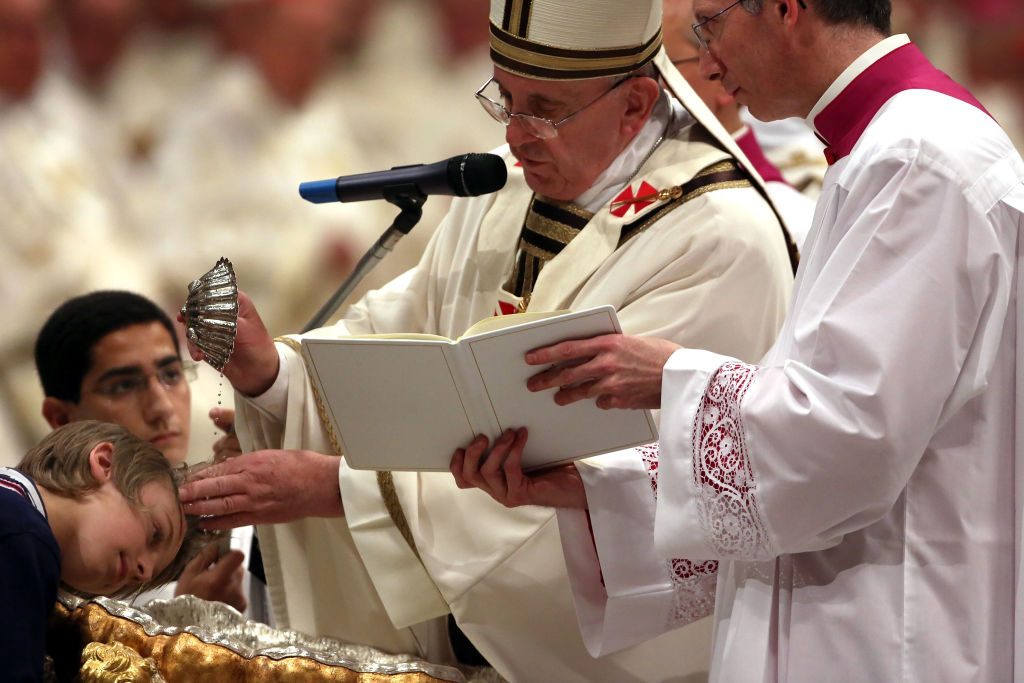
The Vatican on baptism: “If the priest uses the formula we baptize you it is not valid”
The Congregation for the Doctrine of the Faith contested with a note some liturgical abuses carried out by priests during the rite of baptism which, if given with the formula “we baptize you” is not valid and it is as if it has never been celebrated. Those who have received it in this way must be baptized “in absolute form”, that is, by repeating the rite according to the liturgical norms established by the Church.
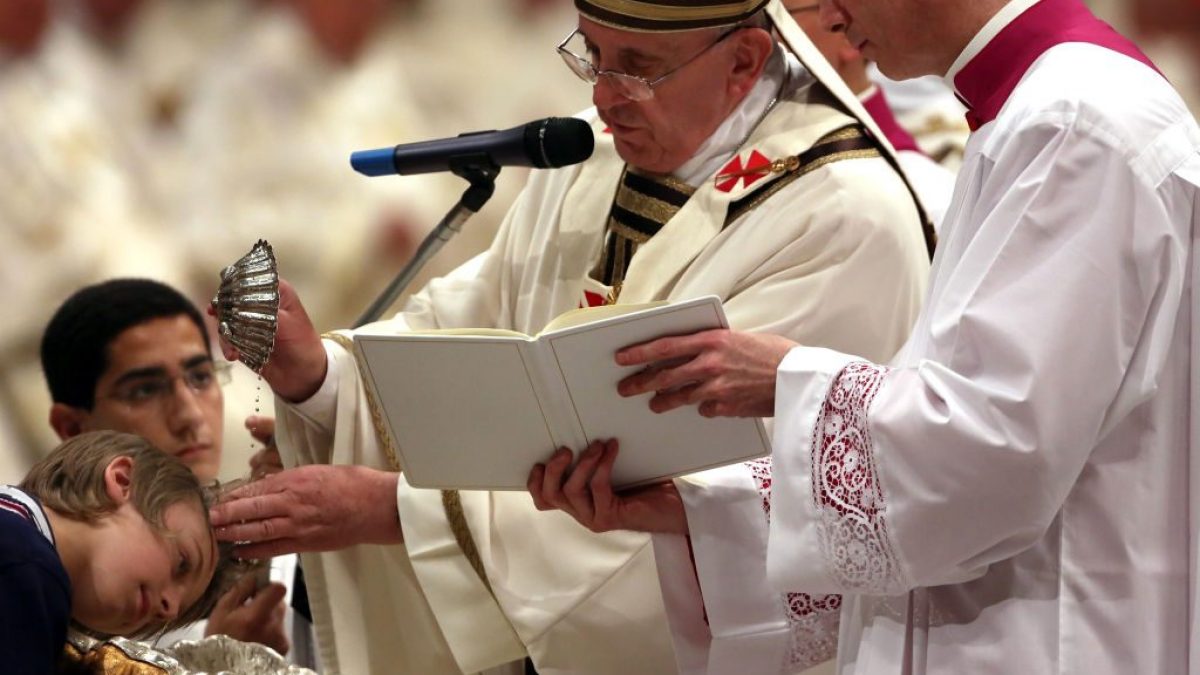
Baptism imparted using the formula “we baptize you“is not valid, on the contrary. It is as if it has never been done. She established it there Congregation for the Doctrine of the Faith which disputes liturgical abuses carried out by some priests. “When the minister says ‘I baptized you’ he does not speak as an official who carries out a role entrusted to him, but works ministerially as a sign-presence of Christ”. So translate that I with “we”, to give the rite a sense of community, effectively renders the sacrament invalid. The Pope “approved” the indications and “ordered their publication”, reports the former Holy Office. However, he adds, “recently there have been celebrations of the Sacrament of Baptism administered with the words: ‘In the name of father and mother, godfather and godmother, grandparents, family members, friends, in the name of the community we baptize you in the name of the Father and the Son and the Holy Spirit. ”Apparently, the deliberate modification of the sacramental formula it was introduced to underline the community value of baptism, to express the participation of the family and those present and to avoid the idea of concentrating sacred power in the priest to the detriment of parents and the community “.
But the “I” which the priest must pronounce has a very precise doctrinal value: “sign-presence of the very action of Christ”. Therefore, he cannot speak on behalf of others. As the note sent by the Vatican explains, in the celebration of the Sacraments the assembly does not act “collegially”, but “ministerially” and the minister “does not speak as an official who plays a role entrusted to him, but acts ministerially as a sign-presence of Christ, who acts in his Body, giving his grace “. In this light “we must understand the Tridentine dictate on the minister’s need to have the intention at least of doing what the Church does”: an intention that cannot remain “only at the interior level”, with the risk of subjectivism, but rather it also expresses in an “external act” performed “not in one’s own name, but in the person of Christ”. Now the question of baptisms celebrated with this opens up wrong rite, also because in practice baptisms with the formula ‘we’ are as if they had never been done. In other words, how many received it in this way must be baptized “in absolute form”that is repeating the ritual according to the liturgical norms established by the Church.
Understanding the Importance of Form and Matter
To fully grasp why a single word can invalidate a sacrament, it is helpful to understand the foundational Catholic theology of "form and matter." For a sacrament to be validly conferred, it requires the correct "matter" (the physical or material element) and the correct "form" (the words spoken). In baptism, the matter is the pouring of or immersion in water. The essential form is the Trinitarian formula: "I baptize you in the name of the Father, and of the Son, and of the Holy Spirit." The Church teaches that Christ himself instituted this form. Altering the pronoun from "I" to "we" changes the very agent of the action from Christ, acting through the ordained minister, to the community. This is not a minor liturgical preference but a fundamental shift that empties the sacrament of its intended meaning and power.
Practical Guidance for Parents and Godparents
For lay Catholics, especially parents preparing for a child's baptism, this clarification serves as important guidance. It is entirely appropriate to be proactive in the preparation process. Here are some practical tips:
- Ask Questions: During pre-baptismal meetings with the priest or deacon, politely inquire about how the rite will be celebrated. You can frame it as a desire to understand the ceremony better.
- Request a Copy of the Rite: Ask to see the liturgical text or booklet that will be used. This allows you to familiarize yourself with the proper structure and wording.
- Focus on Your Role: Parents and godparents have a profound and active role in the rite—renouncing Satan, professing faith, and accepting the duty of raising the child in the faith. These actions are the primary way the community's participation is liturgically expressed.
If you suspect a baptism you or a family member received was invalid due to an incorrect formula, the course of action is private and pastoral. You should contact your parish priest, who can discreetly investigate the matter and, if necessary, arrange for a "conditional baptism" to ensure the sacrament is certainly valid.
A Historical Perspective on Liturgical Precision
The Church's insistence on precise sacramental wording is not a modern legalism but has deep historical roots. Early Church Fathers, like St. Augustine, vigorously defended the necessity of the Trinitarian formula against heretical groups who baptized "in the name of Jesus" alone. The Council of Florence (1439) explicitly defined the required form, and this was reaffirmed at the Council of Trent. The recent note from the Congregation for the Doctrine of the Faith, therefore, continues a centuries-old tradition of safeguarding the integrity of the sacraments. It underscores a belief that the sacraments are not human rituals but gifts from Christ, and the Church is a steward, not an owner, of these sacred mysteries. This historical context helps explain why the Vatican must intervene so definitively, even when the altering priest's intentions—to emphasize community—may be well-meaning.
Ultimately, this instruction highlights a beautiful theological truth: baptism is the doorway to an objective incorporation into the Body of Christ, not a subjective expression of communal goodwill. The validity of the sacrament ensures that every baptized person, anywhere in the world, has received the same indelible spiritual character through the same action of Christ. This universality and objectivity are what guarantee the profound unity of the Catholic Church across cultures and generations, a unity that a single, misplaced pronoun could inadvertently fracture.
📅 Last updated: 20.12.2025
❓ Frequently Asked Questions
💬 Is a baptism valid if the priest says "we baptize you"?
No, according to the Vatican, a baptism using the formula "we baptize you" is not valid. The sacrament is considered as if it never happened and must be repeated using the correct words.
💬 What is the correct formula for Catholic baptism?
The correct and essential formula for a valid Catholic baptism is "I baptize you in the name of the Father, and of the Son, and of the Holy Spirit." The minister must use "I" to act in the person of Christ, not "we."
💬 What should you do if you were baptized with the wrong words?
If you were baptized with an invalid formula like "we baptize you," you must be baptized again "in absolute form." This means repeating the entire rite using the correct, prescribed liturgical formula.
This post is also available in:
 Español (Spanish)
