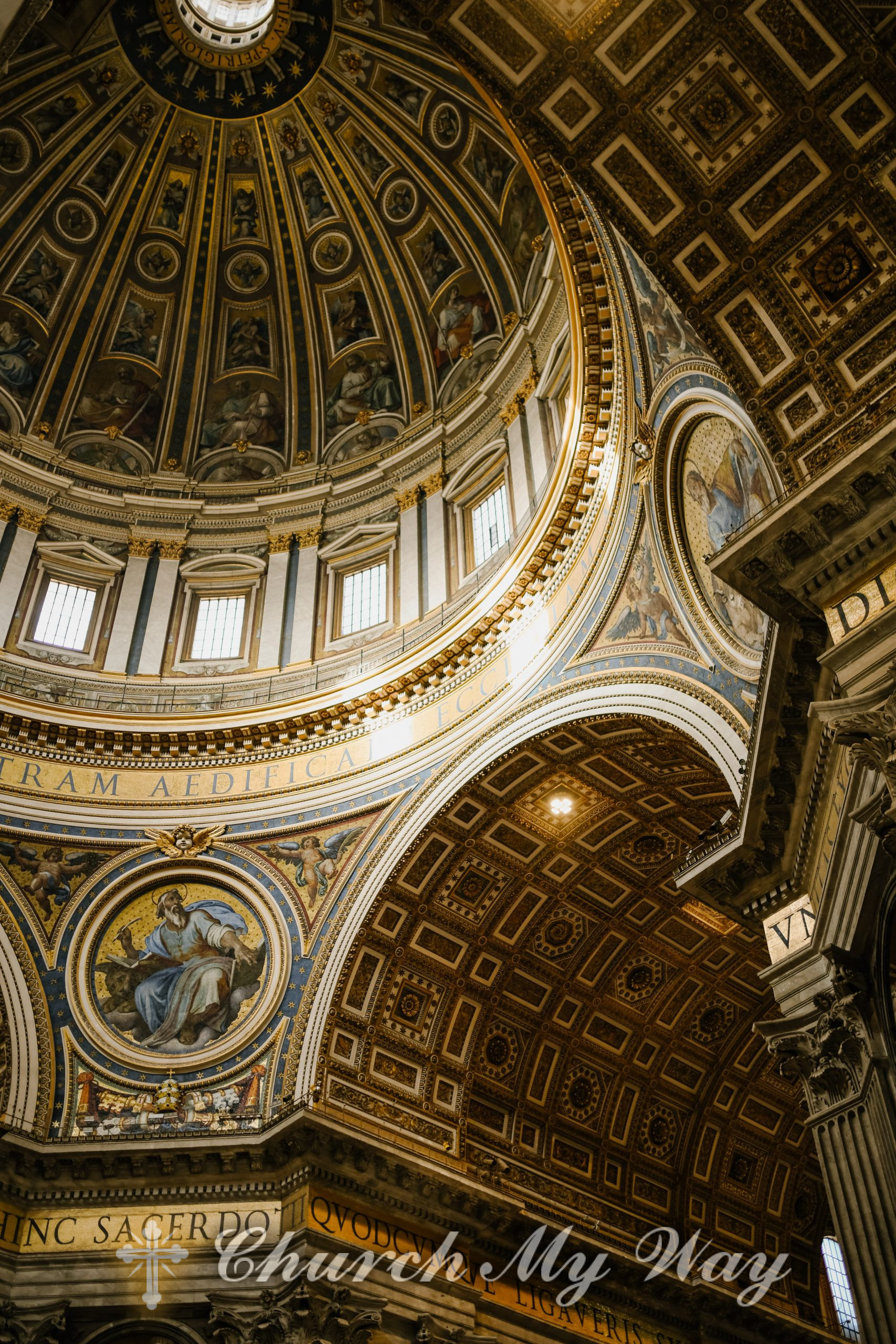
Catholic Churches Near Me: A Comprehensive Guide For New Visitors
Embarking on the journey to find a spiritual home is a profound and personal endeavor. For those exploring the Catholic faith, the search for “Catholic churches near me” is the first step into a rich, 2,000-year-old tradition of worship, community, and sacrament. This guide is designed to be your definitive companion, transforming initial apprehension into confident understanding. We will navigate not only the practicalities of finding a parish but also the beautiful intricacies of Catholic liturgy, etiquette, and community life.
Understanding Catholicism: More Than a Denomination
The word “Catholic,” derived from the Greek *katholikos*, truly means “universal.” This universality speaks to a faith intended for all people, across all cultures and times, united under the leadership of the Pope, the successor of Saint Peter. Catholicism is a sacramental religion, viewing the physical world as a conduit for God’s grace. It is built upon a threefold foundation: Sacred Scripture (the Bible), Sacred Tradition (the lived teaching of the Church passed down from the Apostles), and the Magisterium (the Church’s teaching authority).
At its heart, Catholicism centers on the Paschal Mystery: the life, passion, death, resurrection, and ascension of Jesus Christ. The central act of worship, the Mass, is not merely a memorial but a participation in this once-for-all sacrifice. When you visit a Catholic church, you are stepping into a space designed to make this heavenly reality tangible, from the tabernacle holding the consecrated Eucharist to the saints depicted in stained glass.
The Structure of the Church: Parishes, Dioceses, and the Universal Church
Understanding the hierarchy can help you navigate your search. Your local church is a parish, typically serving a defined geographic area or community, led by a pastor (a priest). Multiple parishes form a diocese, overseen by a bishop. Dioceses are grouped into provinces and, ultimately, part of the global Church under the Holy Father in Rome. When searching, you are likely looking for a parish within your local diocese.
Practical Steps to Find Your Local Catholic Church
Moving beyond a simple online search requires a multi-faceted approach. A combination of digital tools and personal inquiry will yield the best results and help you understand the character of each community.
Leverage Digital Tools and Directories
Begin with your diocesan website. Search for “[Your City/Region] Catholic diocese.” These official sites almost always have a “Find a Parish” or “Directory” tool where you can search by zip code, city, or parish name. They provide canonical information, clergy listings, and official Mass times. Additionally, platforms like Masstimes.org are invaluable, offering a comprehensive, searchable database of Mass schedules, confession times, and parish contact information across the United States and beyond.
Do not underestimate parish websites and social media. A parish’s online presence is a window into its community life. Look for bulletins, photos of events, service opportunities, and descriptions of ministries. A well-maintained site often indicates an engaged and welcoming community.
Seek Personal Recommendations and Insights
If you know practicing Catholics, ask about their parish experience. Inquire about the homilies (sermons), the music ministry, the sense of community, and the availability of sacraments like confession. Personal anecdotes can reveal more than any website. Furthermore, consider visiting your local Catholic bookstore or school. Staff there are often deeply connected to the local church scene and can offer nuanced recommendations.
Visit Your Local Library or Diocesan Office
While digital is primary, physical resources remain. Your local library may carry the Official Catholic Directory (also known as the Kenedy Directory), the definitive annual guide to every diocese, parish, school, and institution in the United States. For the most direct line, you can also call your diocesan chancery office. They can provide a list of parishes in your area and may even be aware of parishes with particularly strong welcoming ministries for newcomers.
What to Expect When You Visit: A Detailed Walkthrough
Walking into a Catholic church for the first time can feel intimidating. Knowing what to expect can turn anxiety into peaceful participation. Here is a detailed breakdown of a typical Sunday Mass, which usually lasts about one hour.
Before Mass: Arrival and Preparation
Arrive 10-15 minutes early. This allows time to find a seat, observe, and pray quietly. As you enter, you will likely see parishioners dipping their fingers in a font of holy water (a stoup) and making the Sign of the Cross. This is a reminder of baptism. You may choose to do this as well, or simply enter respectfully. You will notice some people genuflecting (touching the right knee to the floor) toward the tabernacle before entering a pew. This is an act of reverence for the Real Presence of Christ in the Eucharist. As a visitor, a simple bow of the head is perfectly appropriate.
Find a seat in the pews. Books or missalettes (containing the prayers and readings for the day) are usually available in the pew racks. The Mass is divided into two main parts: the Liturgy of the Word and the Liturgy of the Eucharist. The order of the Mass will often be printed in the missalette or projected on screens.
The Liturgy of the Word: Hearing God Speak
The Mass begins with an entrance procession, an opening hymn, and the Penitential Act, where we acknowledge our sins and ask for mercy. This is followed by the Gloria (a hymn of praise) and an opening prayer. Then, we sit for readings from the Bible. Typically, there is a first reading from the Old Testament, a responsorial Psalm (sung or recited), a second reading from the New Testament letters, and finally, a reading from one of the four Gospels.
The Gospel reading is preceded by the Alleluia and greeted with great reverence; all stand. The priest or deacon then gives a homily, a sermon that breaks open the meaning of the Scriptures for daily life. The Liturgy of the Word concludes with the Profession of Faith (reciting the Nicene Creed) and the Prayer of the Faithful, where petitions are offered for the Church and the world.
The Liturgy of the Eucharist: The Summit of Worship
This is the heart of the Mass. The altar is prepared, and the gifts of bread and wine are brought forward. The priest offers the great Eucharistic Prayer, calling down the Holy Spirit (epiclesis) and repeating the words of Christ at the Last Supper: “This is my Body… This is the chalice of my Blood.” Catholics believe this is the moment of transubstantiation, when the bread and wine become the Body, Blood, Soul, and Divinity of Jesus Christ.
The congregation then prays the Lord’s Prayer together, offers a sign of peace (often a handshake or nod to those nearby), and prepares for Communion. The priest and ministers receive Communion first, then the faithful. Catholics who are in a state of grace (having fasted for one hour and free from mortal sin) process to the altar to receive the host, and sometimes the chalice. If you are not Catholic or are not prepared to receive, you are welcome to remain in your pew or, if you wish, to come forward with your arms crossed over your chest for a blessing. The Mass concludes with a final blessing and dismissal, sending the congregation forth to love and serve the Lord.
Church Etiquette, Dress Code, and Participation Guidelines
While God welcomes all, Catholic churches follow certain customs to foster an atmosphere of reverence for the sacred.
Appropriate Attire for Mass
The general principle is modesty and respect. For men, collared shirts and slacks or neat jeans are common. For women, dresses, skirts, or pants of a modest length, with tops that cover the shoulders and midriff, are appropriate. While “Sunday best” is less formal than in past decades, avoid clothing meant for the gym, beach, or yard work. The goal is to offer God your best, not as a matter of judgment, but as a sign of interior respect.
Active Participation as a Visitor
You are encouraged to participate as you feel comfortable. Stand, sit, and kneel with the congregation (following their lead). You may join in singing the hymns and reciting the prayers if you wish. Silence your phone completely. Conversations should be reserved for the gathering space (narthex) before or after Mass. During periods of silent prayer, especially after Communion, maintain a respectful quiet.
The Sacrament of Reconciliation (Confession)
You will likely see signs for the Confession schedule. This sacrament involves privately confessing sins to a priest, who offers counsel and absolution (forgiveness) in the name of Christ. While Catholics are obligated to confess serious sins before receiving Communion, visitors are simply welcome to observe and learn about this beautiful sacrament of mercy.
Evaluating a Parish: Finding Your Spiritual Home
Not every parish will feel like the right fit. It is advisable to visit several times, or try different parishes, to discern where you are called. Consider these factors in your evaluation.
Assessing the Liturgy and Preaching
Was the liturgy celebrated with dignity and reverence? Was the music uplifting and prayerful, drawing you into worship rather than being a performance? Most importantly, was the homily insightful, well-prepared, and applicable to your spiritual life? The homily is a key window into the pastor’s spiritual leadership.
Exploring Community and Ministries
Did people greet you or seem friendly? Are there visible opportunities to connect, such as coffee and donuts after Mass, newcomer welcome packets, or a vibrant bulletin listing ministries? Look for communities that offer adult faith formation (RCIA for those considering joining the Church), Bible studies, service groups, and ministries for your age or life stage (young adult, family, senior).
Considering Practical and Aesthetic Elements
While secondary to the spiritual, practical matters count. Are the Mass times compatible with your schedule? Is the church accessible? Does the architecture and sacred art inspire a sense of the transcendent? A clean, well-maintained church often reflects a caring community.
Advanced Secrets: Decoding Parish Cultures & Liturgical Styles
For the discerning visitor, understanding the often-unspoken nuances of parish culture can greatly aid in finding a community where you will thrive. Catholic parishes, while united in doctrine, can vary significantly in liturgical expression, community character, and pastoral emphasis. This expert module provides a technical breakdown to help you categorize and evaluate what you experience.
| Parish Culture Type | Liturgical Emphasis | Common Musical Style | Community Vibe | Key Identifying Features |
|---|---|---|---|---|
| Traditional/Reform of the Reform | Ad orientem celebration possible, Latin (Novus Ordo or Extraordinary Form), strict rubrical adherence, silence emphasized. | Gregorian Chant, Polyphony, Traditional Hymns with organ. | Reverent, formal; demographically may skew younger families seeking tradition; strong emphasis on catechism. | Kneelers for Communion, communion rail, mantillas (head coverings) worn by some women, use of 1962 Roman Missal (TLM). |
| Charismatic/Spirit-Filled | Expressive, extended praise and worship, prayers for healing, spontaneous prayer encouraged. | Contemporary Praise & Worship bands (guitar, drums, keyboard), uplifting choruses. | Warm, emotionally expressive; strong small group ministry; emphasis on personal relationship with Jesus and gifts of the Holy Spirit. | Raised hands during prayer, possibility of speaking in tongues (usually during prayer groups), strong healing ministry presence. |
| Neo-Classical/”Benedictine” | “Novus Ordo done well,” noble simplicity, vernacular with high-quality language, contemplative pace. | Mix of dignified hymns and modern classics (e.g., Taizé, Dan Schutte), often with choir and organ. | Intellectual and contemplative; strong adult education programs; attracts those seeking beauty and depth in the ordinary form. | Focus on sacred art and architecture, use of incense and chant within English Mass, robust lecture series. |
| Ethnic/Cultural Parish | Incorporates cultural traditions (music, language, feast day celebrations) into the Roman Rite. | Cultural music (e.g., mariachi, polka, African drums, Vietnamese hymns). | Tight-knit, family-oriented, serves as a cultural hub for immigrant or ethnic community. | Mass in a language other than English, feast day festivals, statues of saints popular in specific cultures. |
| Vatican II Community-Focused | Active participation stressed, versus populum (facing people), emphasis on communal aspect. | Folk-style music from the 70s/80s (St. Louis Jesuits, Marty Haugen), guitar-led. | Strong social justice focus, committee-driven, older demographic, emphasis on parish council and lay involvement. | Circular or semi-circular church design, sign of peace is lengthy, extraordinary ministers of Holy Communion are numerous. |
Professional Reference Guide: Use this table as a diagnostic tool. No parish fits perfectly into one column, but identifying dominant characteristics can clarify your experience. A parish’s website often reveals its orientation: look for keywords like “traditional,” “charismatic,” “active,” “contemporary,” or “ethnic.” The music listed for Mass is also a prime indicator. Remember, orthodoxy of teaching is paramount; these styles represent legitimate diversity within the unity of the faith. The best practice is to visit with an open heart, seeking where you can best worship, grow, and serve.
Beyond Sunday Mass: Engaging with Parish Life
Your journey does not end after Mass. Full immersion into parish life is where faith deepens and community forms.
Introducing Yourself and Getting Connected
After Mass, linger. Attend the coffee social. Introduce yourself to the priest after Mass—he is usually at the church doors greeting people. A simple, “Hello, Father, I’m new and visiting,” is a great start. Fill out a visitor card if available. This is the first step to getting on the parish mailing list and receiving information about newcomer events.
Exploring the Rite of Christian Initiation of Adults (RCIA)
If you feel called to join the Catholic Church, inquire about RCIA. This is not a class but a spiritual journey of formation, typically running from September to Easter, involving weekly meetings, liturgical rites, and a team of sponsors and catechists. It is a process of prayer, study, and discernment for non-baptized adults, those baptized in another Christian tradition, or baptized Catholics who never received First Communion or Confirmation.
Participating in Sacraments and Devotions
Explore other liturgical and devotional opportunities. Attend a weekday Mass for a quieter, more intimate experience. Participate in Eucharistic Adoration, where the Blessed Sacrament is exposed for silent prayer and contemplation. Discover parish devotions like the Rosary, Stations of the Cross, or novenas to particular saints. These practices are the spiritual heartbeat of a parish outside of Sunday.
Special Considerations for Families, Couples, and Individuals
For Families with Children
Look for parishes with a vibrant children’s liturgy of the Word (where children are dismissed during the readings for age-appropriate instruction), a strong religious education program (CCD), and family-friendly events. Don’t worry about noise; the Church welcomes the sound of children. Many parishes have cry rooms or nurseries if needed.
For Couples (Dating, Engaged, Married)
Parishes often offer marriage preparation programs (Pre-Cana), enrichment retreats for married couples, and ministries that support strong Catholic families. A parish with a dedicated young adult or couples group can be an invaluable source of fellowship.
For Individuals and Solo Visitors
You may seek a parish with active adult faith formation, Bible study groups, or service ministries like St. Vincent de Paul. These are excellent ways to build connections rooted in shared faith and purpose. Do not hesitate to reach out to the parish office; they can connect you with ministries that match your interests.
Conclusion: Embarking on a Sacred Journey
The search for “Catholic churches near me” is the beginning of a sacred adventure. It is a process of both external discovery and internal listening. Be patient with yourself and with the process. You are not just evaluating a parish; you are discerning where God is calling you to plant your spiritual roots, to grow in grace, and to contribute your unique gifts to the Body of Christ.
Take the first step this weekend. Choose a parish, arrive a few minutes early, and enter with an open heart. Participate as you are able. Observe the community. Listen for God’s voice in the Scripture, the homily, and the quiet of your own prayer. The right parish will feel like a homecoming—a place where you are welcomed, nourished by the Eucharist, and challenged to become the saint God created you to be. May the Holy Spirit guide your steps as you seek your home in the Catholic Church.
📅 Last updated: 15.12.2025
❓ Frequently Asked Questions
💬 What should I wear to a Catholic church?
Catholic churches generally expect modest attire. Men are typically expected to wear collared shirts, and women are encouraged to dress modestly, avoiding items like shorts.
💬 What should I expect at my first Catholic Mass?
As a first-time visitor, you can expect a formal service with prayers, scripture readings, and Communion. Don’t worry if parts are unfamiliar; many churches provide translation guides or screens to help you follow along.
💬 What does “Catholic” mean?
The word “Catholic” means “universal,” signifying that God’s love and forgiveness are all-encompassing. It reflects the church’s mission to include everyone.
💬 Is Catholic Mass still in Latin?
While some parts of the Mass may be in Latin, especially in traditional parishes, it is most commonly celebrated in your local language. Churches often provide translations via handouts or screens.
💬 How do I find a good Catholic church near me?
Start with an online search for “Catholic churches near me” and visit a few. Each parish has its own community feel, so attending different ones can help you find a spiritual home that suits you.
This post is also available in:
 Español (Spanish)
