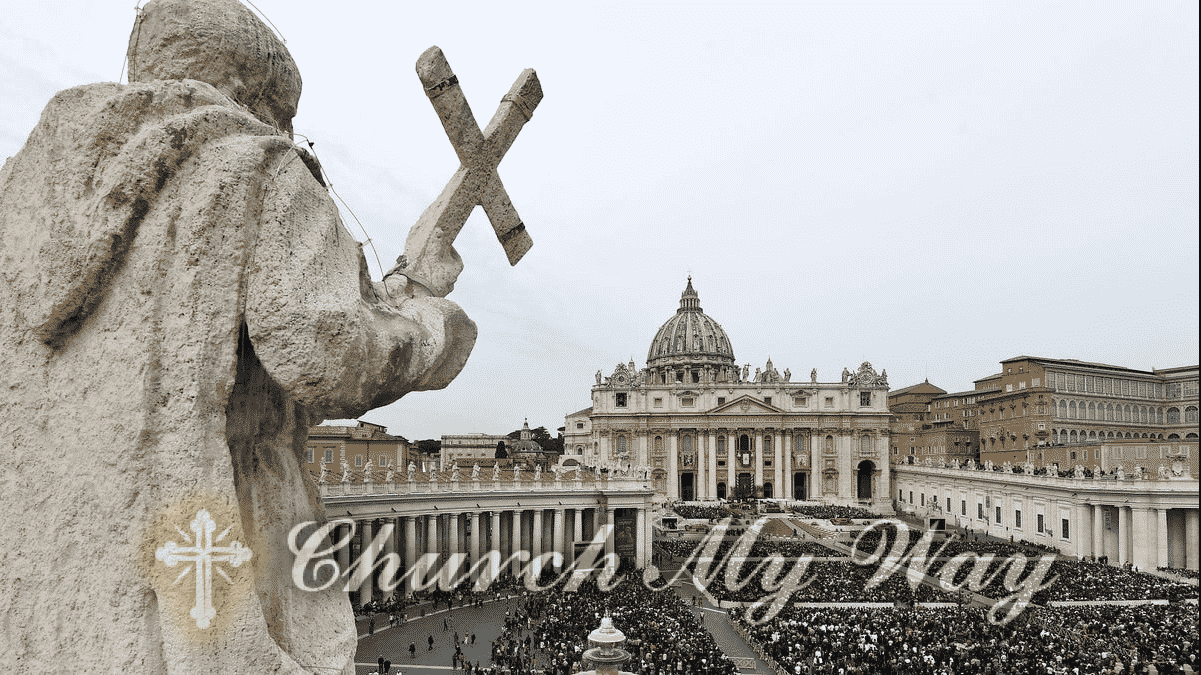
The Church as a Beacon of Light for Catholics
Throughout history, in times of spiritual darkness, societal upheaval, and personal doubt, the Catholic Church has stood as a steadfast beacon of light. This light is not its own, but the reflected radiance of Christ, who declared, “I am the light of the world” (John 8:12). For the faithful, the Church serves as the living vessel of this light, guiding the journey of faith, illuminating truth, and offering hope and sanctuary to all who seek it. In a world often clouded by confusion and moral ambiguity, this guiding presence provides a constant and reliable point of orientation, a source of clarity that cuts through the obscurity of the age.
Its role transcends that of a mere institution; it is a sacrament—a visible sign of God’s invisible grace in the world. This sacramental nature means the Church itself is a profound mystery, a tangible point where the divine and human meet, making the light of Christ accessible and real within human history and experience. As a beacon, therefore, the Catholic Church does not generate light from within its own structure but faithfully holds aloft and transmits the luminous truth entrusted to it. It is a lighthouse on the rocky shores of time, its beam cutting through the fog of uncertainty, its foundation unshaken by the waves of changing eras, constantly signaling the way to safe harbor.
The Church, in this sacred function, operates as both a reflector and a conduit, receiving the divine illumination and projecting it outward for the navigation of all peoples. This guiding function is essential because the light it offers addresses the deepest needs of the human heart: the need for truth, for communion, and for redemption. The Church, as this beacon, provides a fixed reference point by which individuals and communities can navigate the complex moral and spiritual landscapes of their lives.
The Nature of the Church’s Light
The fundamental claim that the Church’s light is the reflected radiance of Christ shapes every aspect of its identity and mission. Since the light originates from Christ’s declaration in the Gospel of John, the Church’s primary task is one of faithful witness and transmission. It does not invent new doctrines or create novel spiritual paths. Instead, it meticulously guards, studies, and proclaims the original light source—the life, teachings, passion, and resurrection of Jesus Christ.
This reflective quality ensures that the beacon remains pure and undistorted, its beam always pointing back to its divine origin rather than to the Church itself as an end. The Church, therefore, is most luminous when it is most transparent to Christ, allowing His truth and love to shine through its teachings, its sacraments, and the witness of its members. This understanding directly influences how the Catholic Church views itself in relation to the world.
Sacramental Reality: The Visible and Invisible
It is not a social club or a philosophical society, though it engages with society and philosophy. Its core identity is that of a sacrament. As a visible sign, it makes the invisible grace and presence of God tangible. The bricks of its buildings, the words of its liturgy, the community of its believers—all these visible elements serve to make an invisible spiritual reality perceptible.
They are the lens through which the divine light is focused and made accessible to human senses. This meeting point of the divine and human is not a static location but a dynamic, living encounter facilitated by the Church’s entire life. Each of the seven sacraments, from Baptism to the Anointing of the Sick, acts as a specific channel of this light, illuminating key moments of the human journey with divine grace.
The Lighthouse Function: Guidance and Sanctuary
The metaphor of the lighthouse powerfully captures the dual role of the Catholic Church as both a guide and a sanctuary. Like a lighthouse, its beam provides a fixed reference point. In the tumult of societal upheaval, when cultural norms shift rapidly and ethical frameworks are often relative, the Church offers teachings that provide a stable foundation.
These teachings form a consistent moral geography, a map by which one can chart a course. They illuminate hazards—the rocks of sin, error, and despair—and they highlight the safe channel that leads to human flourishing and eternal life. Furthermore, the lighthouse itself is a place of refuge. The Church offers sanctuary not merely in the physical sense but in the spiritual and communal sense.
Sanctuary in Sacrament and Community
It is a place where those battered by the storms of personal doubt, grief, or failure can find shelter. Within its embrace, through the sacrament of Reconciliation, the Eucharist, and the compassionate ministry of its members, wounds are bound, souls are nourished, and hope is rekindled. The Church as sanctuary is embodied in the parish, a local community that becomes a spiritual home, offering fellowship, support, and a shared identity rooted in something greater than the individual.
This dual function is active, not passive. The lighthouse keeper must maintain the light. Similarly, the Church, through its Magisterium (teaching authority), ensures the clarity and integrity of its guiding beam. It engages in ongoing theological reflection, addresses new ethical challenges, and calls its members to continual conversion, ensuring the light remains a relevant and powerful guide for every generation.
Historical and Modern Manifestations of the Beacon
The Church’s role as a beacon has been tested and proven throughout history. During the collapse of the Roman Empire, monastic communities preserved not only faith but also learning, agriculture, and culture, becoming islands of light in a dark age. In the face of 20th-century totalitarian regimes, figures like St. Maximilian Kolbe and St. Teresa of Calcutta stood as brilliant witnesses to human dignity and self-giving love, their lives reflecting Christ’s light against profound darkness.
Today, the beacon functions in new but no less vital ways. In a digital age characterized by fragmentation and isolation, the Church offers a counter-narrative of communion and intrinsic human worth. Its social teaching on the dignity of work, care for creation, and option for the poor provides a coherent framework for justice that challenges both unbridled capitalism and collectivist materialism.
The Liturgical Year: A Cycle of Illumination
One profound way the Church acts as a beacon is through the liturgical year. Advent anticipates the Light coming into the world. Christmas celebrates His arrival. Ordinary Time reflects on His teachings. Lent invites purification, Easter erupts in the glory of the Resurrection, and Pentecost celebrates the descent of the Holy Spirit—the ongoing presence of Christ’s light in the Church.
This cyclical rhythm reorients the faithful’s perception of time itself. It pulls individuals out of the mundane flow of secular calendars and into “kairos”—God’s time. Each season casts the light of Christ on different aspects of the human condition, providing annual opportunities for growth, repentance, and celebration, ensuring the beacon’s guidance is not a one-time signal but a continuous, formative rhythm.
The People of God: Refracting the Light
The Church’s light is not confined to its hierarchy or doctrines; it is carried and refracted by every baptized member. The laity are called to be “the light of the world” (Matthew 5:14) in their families, workplaces, and civic engagements. Through their daily witness of integrity, charity, and hope, they become countless points of light, extending the Church’s beacon into every corner of society.
This is the concept of the “universal call to holiness.” The beacon is not a solitary searchlight but a constellation, with each saint and every faithful person adding their unique brilliance. The communion of saints, encompassing those on earth, in purgatory, and in heaven, represents the full, dazzling spectrum of this reflected light, a cloud of witnesses that guides and encourages the pilgrim Church.
Challenges to Luminosity: Scandal and Renewal
Acknowledging the Church as a beacon requires an honest confrontation with times when its human elements have obscured the light. Scandals of abuse, corruption, and hypocrisy have cast long shadows. Yet, the theology of the beacon accounts for this. The Church is “simul justus et peccator”—at once holy and in need of purification.
These shadows do not extinguish the divine light but highlight the distinction between the enduring treasure of faith and the fragile earthenware of its human vessels (2 Corinthians 4:7). The call to continual reform, “ecclesia semper reformanda,” is the process of cleaning the lens, ensuring it does not distort the light it exists to transmit. Repentance and renewal are thus intrinsic to the beacon’s fidelity.
Expert Analysis: The Theological and Structural Mechanics of the Beacon
Advanced Insights: The Church’s function as a beacon operates on a sophisticated theological architecture. Its “luminosity” is derived from a triadic source: the fons vitae (source of life, the Father), the lux mundi (light of the world, the Son), and the ignis caritatis (fire of charity, the Holy Spirit). The Magisterium’s role is analogous to a prism, not creating light but ensuring the pure, white light of Divine Revelation is properly dispersed into its constituent truths (doctrines) without distortion. Furthermore, the concept of “sensus fidelium” (the sense of the faithful) acts as a feedback mechanism, where the lived faith of the entire people of God helps the teaching authority perceive and articulate how the eternal light applies to contemporary realities.
| Component of the Beacon | Theological Principle | Practical Manifestation | Key Document/Reference |
|---|---|---|---|
| Light Source | Divine Revelation (Scripture & Tradition) | Proclamation of the Gospel; The Celebration of the Eucharist | Dei Verbum (Dogmatic Constitution on Divine Revelation) |
| Lens & Reflector | The Magisterium (Teaching Authority) | Encyclicals, Councils (e.g., Vatican II), Catechism of the Catholic Church | Lumen Gentium (Dogmatic Constitution on the Church) |
| Power Transmission | The Grace of the Sacraments | Liturgical life; Sanctification of the faithful | Sacrosanctum Concilium (Constitution on the Sacred Liturgy) |
| Structural Tower | Apostolic Succession & Ecclesial Structure | The hierarchy (Pope, Bishops, Priests) ensuring continuity and unity | Christus Dominus (Decree on the Bishops’ Pastoral Office) |
| Beam Propagation | Evangelization & Mission (Missio Dei) | Missionary work; Diakonia (service); Catholic education and media | Evangelii Gaudium (Apostolic Exhortation on Evangelization) |
Professional Reference Data: Sociological studies, such as those by the Pew Research Center and the Vatican’s own statistics, quantify the beacon’s reach but also its challenges. While global Catholicism remains the world’s largest Christian body, its “luminous efficacy” varies regionally. Data shows correlation between vibrant parish life (high sacramental participation, small group engagement) and community resilience metrics (lower rates of despair, higher charitable activity). This empirical data underscores the tangible impact of the beacon’s light on human social and psychological well-being, validating its role as a sanctuary. The ongoing synodal process initiated by Pope Francis represents a modern structural effort to optimize the beacon’s function through enhanced listening and communal discernment.
The Beacon in a Pluralistic World
In today’s pluralistic society, the Church’s beacon does not operate in isolation. It exists amidst other sources of light—other faiths, philosophies, and worldviews. The Catholic understanding, articulated in documents like Nostra Aetate and Dignitatis Humanae, is that all truth and goodness originate from God. The Church thus engages in respectful dialogue, recognizing rays of truth elsewhere while holding firm to the conviction of the fullness of truth found in Christ.
This engagement is not a dilution of its light but a confident sharing of it. The beacon’s purpose is not to blind but to illuminate a path. It proposes, never imposes. In the public square, the Church contributes the light of reason informed by faith, offering principles for human dignity, the common good, and solidarity that can appeal to people of diverse beliefs, thereby serving as a leaven within society.
The Eschatological Goal: The Beacon and the Heavenly Jerusalem
The ultimate purpose of the beacon is not merely to guide earthly navigation but to lead humanity to its final destination. The Church on earth (the Church Militant) is oriented toward the heavenly Jerusalem, described in Revelation as a city that “has no need of sun or moon to shine on it, for the glory of God gives it light, and its lamp is the Lamb” (Revelation 21:23).
The earthly beacon, therefore, is provisional. Its entire mission is to make itself obsolete by guiding all people into the unending day of God’s direct presence. The Church is the pilgrim people journeying toward that light, its own luminescence a promise and a foretaste of the eternal glory to come, where every tear will be wiped away, and all shadows will be banished by the fullness of the Divine Light.
Conclusion: An Enduring Luminescence
The Catholic Church, as a beacon of light, remains an indispensable reality for Catholics and a sign of contradiction and hope for the world. Its light, which is the reflected glory of Christ, provides unwavering guidance through the clear teachings of its faith and the constancy of its moral compass. It offers profound sanctuary in its sacraments and its community, healing and strengthening the wounded and weary.
This luminous role is carried out through a dynamic interplay of divine gift and human response, of sacred structure and living witness. Despite the shadows cast by human failing, the core light persists, calling for repentance and promising redemption. As the world navigates the complex currents of the third millennium, the Church’s ancient yet ever-new beacon continues to shine, inviting all to find in its radiance the truth, communion, and ultimate home for which every human heart yearns. It stands, not as a monument to itself, but as a faithful witness pointing toward the eternal dawn of the Kingdom of God.
References & Further Reading: The Catechism of the Catholic Church; Vatican II Documents, particularly Lumen Gentium and Gaudium et Spes; Pope Francis, Apostolic Exhortation Evangelii Gaudium; St. Augustine, The City of God; theological works by Henri de Lubac and Joseph Ratzinger on ecclesiology.
Advanced Secrets: The Principle of Intentional Engagement
One of the most effective “insider” tips for deepening one’s spiritual life within the Church is strategically alternating between communal liturgy and private sacramental contemplation. To do this, you must first, participate fully in the Mass—mentally vocalizing responses and offering specific personal intentions during the Prayers of the Faithful, then schedule 15 minutes of post-Mass reflection in the pews or before the Tabernacle to internalize the received grace. This is essential because it transforms a passive ritual into an active channel of grace, cementing the Eucharist’s spiritual impact. Additionally, if you align your private reflection with the liturgical calendar (e.g., focusing on sacrifice during Lent or joy during Easter), you can save time on spiritual direction and achieve a more profound, resonant connection to the universal Church’s rhythm much faster!
The Technical Breakdown: Sacramental & Liturgical Engagement Reference Guide
To optimize your engagement with the Church as a beacon, treat your involvement with technical precision. The table below outlines key spiritual inputs and their documented theological outputs for maximum efficacy.
| Sacramental Channel | Action/Input | Result/Output (Grace & Community Impact) |
|---|---|---|
| Eucharist (Holy Communion) | Receive after a deliberate examination of conscience & with a specific intention (e.g., for patience). | Sanctifying Grace increase (soul’s holiness) and Actual Grace specific to the intention, strengthening the entire Mystical Body. |
| Sacrament of Reconciliation | Confess with contrition, citing frequency and context of sins; perform the assigned penance immediately. | Absolution of mortal/venial sin and restoration of sanctifying grace. Moral fortitude for future avoidance, cleansing the local church community. |
| Liturgy of the Word | Active listening, note-taking on the readings/homily, and a silent prayer of application to one’s week. | Illumination of the intellect (understanding God’s will) and formation of conscience. Becomes a shared scriptural language for parish small groups. |
*Note: A common mistake is treating sacraments as discrete, transactional events. The true “secret” is in the continuum—the grace from Confession amplifies your reception of the Eucharist, and the Word prepares you for both. Breaking this chain drastically reduces cumulative efficacy.
Closing Thoughts: Integrating the Technical with the Spiritual
The Church’s power as a beacon is not mystical abstraction but a structured system of grace distribution. By applying these technical, actionable insights—viewing sacraments as channels and liturgy as an interactive protocol—you move from being a passive observer to an active node within the light network. Begin this Sunday: implement one Action from the table and note the spiritual output in a journal to start optimizing your journey.
📅 Last updated: 20.12.2025
❓ Frequently Asked Questions
💬 How did the Catholic priesthood begin?
According to Catholic doctrine, Jesus Christ instituted the sacrament of Holy Orders during the Last Supper with the twelve apostles. This apostolic tradition forms the basis of the Church’s priesthood, as referenced in St. Paul’s letters.
💬 Why is it called the Catholic Church?
The term “Catholic” means universal, reflecting the Church’s worldwide mission given by Jesus to his apostles. The article states that after appointing Peter as head, the group became known as “Catholic” Christians, emphasizing their mission to reach all people.
💬 Who founded the Catholic Church?
The Catholic Church was founded by Jesus Christ. As described in the article, he established it at the Last Supper, appointed Peter as its head, and charged the apostles with continuing his mission after his death.
💬 What is the Vatican in the Catholic Church?
The Vatican is the central administrative body and the sovereign city-state headquarters of the Catholic Church. The article notes it is one of the two main arms of the Church’s structure, alongside dioceses, and is located in Rome.
This post is also available in:
 Español (Spanish)
