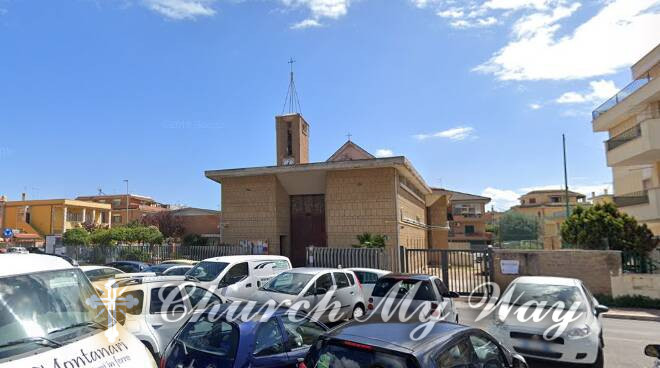
Fiumicino, from the Municipality funds for religious buildings: the announcement has been published
Fiumicino – The Municipal Administration, pursuant to art. 7 of the Regional Law n. 27 of 09/03/1990, makes contributions to religious confessions to be allocated to works for new churches and religious buildings as well as maintenance and expansion, restructuring, restoration, equipping systems of religious buildings and existing churches, according to the approved Regulation with the City Council Resolution no. 25 of 19 April 2017.
The diocesan ordinary for the Catholic Church or the legal representative of another recognized confession that has an organized presence within the municipal territory can apply.
The application, addressed to the Manager of the Construction and TPL Area, must be submitted exclusively by PEC addressed to the Municipality of Fiumicino – Construction and TPL Area
To find out which documentation to send and other details, you can consult the notice published on the praetorian notice board from 25/08 to 25/09.
Navigating the Application: A Practical Guide for Religious Institutions
While the announcement outlines the formal criteria, successful applications often hinge on understanding the nuances beyond the published notice. The first and most critical step is a pre-application dialogue. Representatives of religious confessions are strongly advised to contact the Construction and TPL Area of the Municipality for an informal consultation. This meeting can clarify ambiguous points, provide insight into the current allocation priorities of the administration, and establish a direct line of communication. It is far better to resolve questions about eligible expenses or required documentation before submission than to face a rejection on a technicality.
Common Pitfalls to Avoid
Historical data from similar municipal funding programs across Italy reveals recurring mistakes that applicants should vigilantly avoid. One of the most frequent is the submission of incomplete or generic project descriptions. The application must move beyond stating a need for a “new roof” and instead provide a detailed technical scope, explaining how the work preserves the building’s structural integrity, safety, and function. Another common error is the misalignment between the project and the governing Regulation (Resolution no. 25/2017). Applicants must explicitly reference how their request fulfills specific articles of this regulation, demonstrating a clear understanding of the legal framework.
Furthermore, many applications fail on financial grounds. The request must include a detailed and realistic cost estimate, preferably from multiple contractors, and clearly state any co-financing from the religious community itself. The municipality’s contribution is often a share of the total cost, and proving the project’s financial viability and the institution’s commitment is paramount. Finally, neglecting the PEC (Certified Email) requirement is a fatal administrative error. Applications sent via regular email or post will not be considered, underscoring the necessity of mastering Italy’s official digital communication protocols.
Expert Insight: The Broader Impact of Preservation Funding
According to urban planners and cultural heritage experts, initiatives like Fiumicino’s funding announcement serve a purpose far greater than mere building maintenance. Dr. Elena Marchetti, a historian of religious architecture in the Lazio region, notes, “These municipal funds, while seemingly pragmatic, are a vital tool for community cohesion and historical preservation. A local church or synagogue is rarely just a place of worship; it is often a community center, a repository of local art, and a landmark that defines the neighborhood’s identity.” She emphasizes that restorative work funded through such grants can safeguard not only the physical structure but also frescoes, stained glass, and architectural details that tell the story of Fiumicino’s diverse communities.
From a social perspective, well-maintained religious buildings often host non-liturgical activities that benefit the entire municipality—such as charity drives, cultural concerts, language classes for immigrants, and meeting spaces for youth groups. Therefore, a successful application should, where relevant, hint at this broader utility. Illustrating how the building serves as a multifunctional hub for civic life can strengthen a proposal by aligning it with wider municipal goals for social welfare and cultural vitality.
Interesting Context: Fiumicino’s Evolving Religious Landscape
Fiumicino’s announcement is set against the backdrop of a uniquely dynamic and evolving demographic. As the home of Rome’s primary international airport, the municipality is a gateway, experiencing a steady influx of diverse populations. This has led to a growing plurality of religious expressions beyond the historic Catholic presence. The funding notice, by explicitly including “other recognized confessions,” acknowledges this changing social fabric. It is an institutional recognition of the Orthodox communities from Eastern Europe, the Muslim communities from North Africa and South Asia, and Protestant evangelical groups that have established themselves in the area.
This pluralism adds a fascinating layer to the application process. For smaller or newer confessions, navigating the Italian legal framework for recognition can be complex. The notice specifies that the applicant must be the “legal representative of another recognized confession.” This necessitates that the religious group has already undertaken the process of formal recognition at the national or regional level, a step that requires its own detailed documentation and legal scrutiny. Thus, for some communities, accessing these municipal funds is the final step in a much longer journey of institutional establishment within the Italian state.
Strategic Planning for Future Calls
Given that this funding is governed by a 2017 regulation and aligns with regional law, it is likely to be a recurring opportunity, even if annual budgets fluctuate. Savvy religious institutions should engage in long-term planning. This involves maintaining a rolling “project portfolio”—a prioritized list of needed interventions, from urgent structural repairs to desirable expansions. Each project in the portfolio should have a preliminary cost assessment and a basic scope of work ready. When a notice is published, the institution can then quickly adapt the most suitable or urgent project for submission, rather than starting from scratch during the short application window.
Building a positive track record with the municipality is also invaluable. Successfully managing a grant, providing transparent accounting, and completing projects on time establishes credibility. This can be beneficial not only for future applications to this specific fund but also for potential access to other regional, national, or European Union cultural heritage funds. In essence, the municipal announcement is more than a one-off chance for funding; it is an invitation to begin a structured, professional dialogue between religious institutions and the local government for the sustained care of the community’s shared spiritual and architectural patrimony.
📅 Last updated: 23.12.2025
❓ Frequently Asked Questions
💬 What are the Fiumicino municipality funds for religious buildings?
The Municipality of Fiumicino offers contributions for the construction of new churches and religious buildings, as well as for the maintenance, expansion, restoration, and system upgrades of existing ones. This is governed by a specific municipal regulation and regional law.
💬 Who can apply for the religious building funds in Fiumicino?
The diocesan ordinary for the Catholic Church or the legal representative of another recognized religious confession can apply. The key requirement is that the religious group must have an organized presence within the municipal territory of Fiumicino.
💬 How do I apply for the Fiumicino religious building grant?
Applications must be submitted via certified email (PEC) to the Municipality’s Construction and TPL Area by September 25th. It is strongly recommended to first contact that office for an informal consultation and to consult the full notice on the praetorian notice board for required documentation.
