📅 Last updated: 17.10.2026
The story of Jesus cursing the fig tree is one of the strangest and most misunderstood episodes in the Gospels. Found in Mark 11:12–25 and Matthew 21:18–22, it records the only miracle of judgment Jesus ever performed—a miracle directed not at a person but at a tree. Why would the compassionate Savior, who healed the sick and raised the dead, pronounce a curse on a fig tree for failing to bear fruit out of season? The answer opens a window into the character of God, the nature of fruitfulness, and the spiritual condition of first-century Israel.
The Jesus cursing the fig tree account describes an event on the Monday of Passion Week, when Jesus, hungry and finding a leafy fig tree with no fruit, cursed it and it withered by the next day. The act was a prophetic sign of judgment on religious hypocrisy and a living parable teaching that faith without fruit—and profession without substance—invites divine judgment.
- What Actually Happened When Jesus Cursed the Fig Tree?
- Why Did Jesus Curse the Fig Tree? The Prophetic Meaning of the Fig Tree
- Why Was Jesus Hungry? The Humanity of Christ in the Jesus Cursing the Fig Tree Account
- What Did Jesus Teach About Faith and Prayer After the Jesus Cursing the Fig Tree?
- How Do Matthew and Mark's Accounts Differ—and Why?
- What Does Jesus Cursing the Fig Tree Reveal About Judgment and Grace?
- What Does Jesus Cursing the Fig Tree Mean for Believers Today?
- Frequently Asked Questions About Jesus Cursing the Fig Tree
- The Lasting Lesson of the Withered Fig Tree
What Actually Happened When Jesus Cursed the Fig Tree?
Mark’s Gospel gives the most detailed account and sets the event in a precise chronological frame. On the day after the Triumphal Entry—what we call Monday of Holy Week—Jesus and His disciples were traveling from Bethany to Jerusalem. Mark 11:12–14 records: “On the next day, when they had left Bethany, He became hungry. Seeing at a distance a fig tree in leaf, He went to see if perhaps He would find anything on it; and when He came to it, He found nothing but leaves, for it was not the season for figs. He said to it, ‘May no one ever eat fruit from you again!’ And His disciples were listening.”
The narrative then pauses while Jesus cleanses the temple (Mark 11:15–19). On Tuesday morning, as they passed by again, Peter remembered the curse and said, “Rabbi, look, the fig tree which You cursed has withered” (Mark 11:20–21). Jesus used the moment to teach about faith and prayer (Mark 11:22–25). Matthew compresses the timeline, recording that the tree withered “at once” (Matthew 21:19–20), and adds that the disciples “marveled” at how quickly it happened.
Several details matter for interpretation. The tree was “in leaf” early in the season, which was unusual and visible from a distance. Mark’s aside—”for it was not the season for figs”—has troubled readers for centuries, because it seems to make Jesus’ expectation unreasonable. Understanding the agricultural reality of first-century Palestine resolves much of the confusion.
The Agricultural Reality Behind the Fig Tree
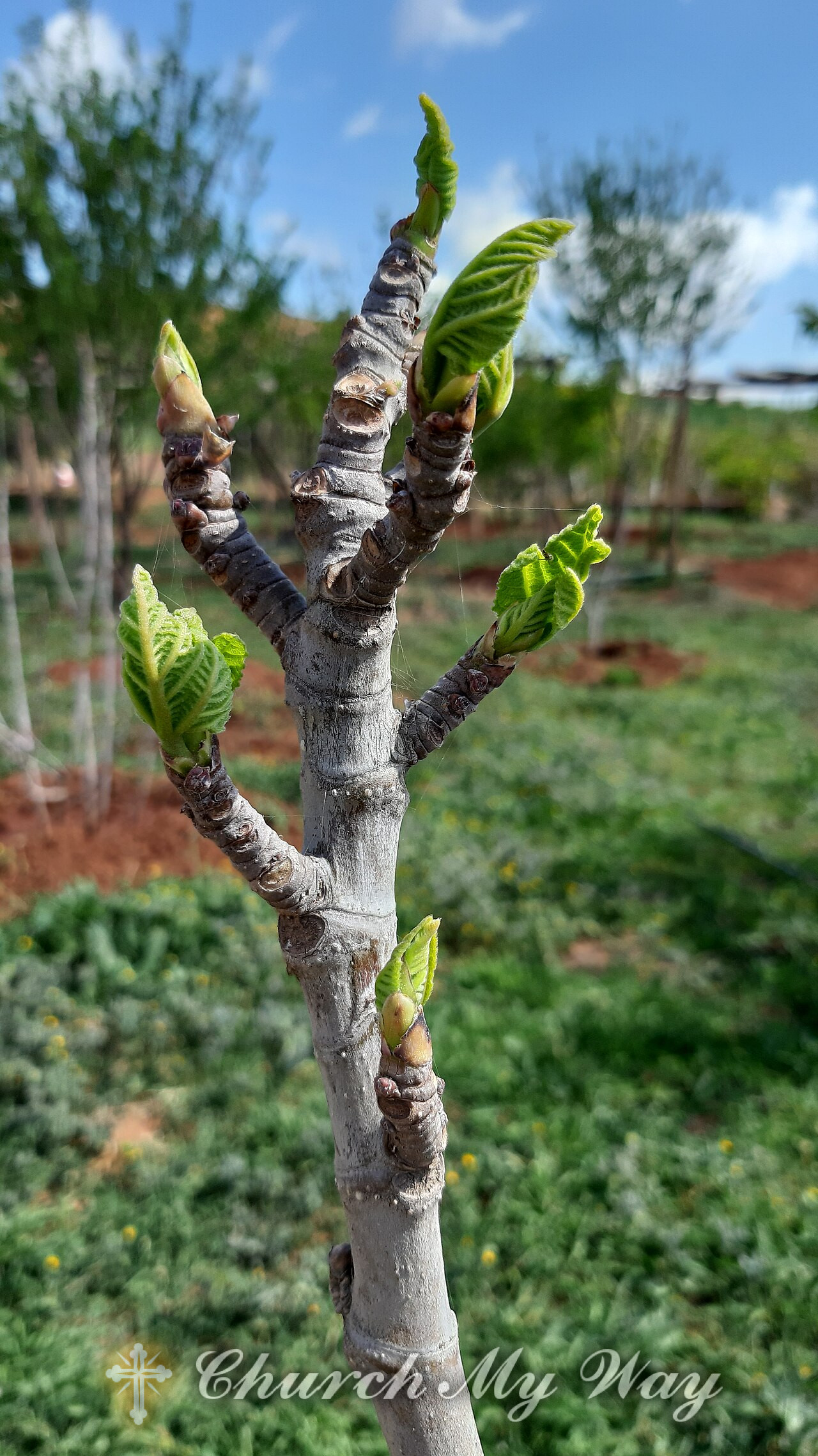
The fig tree (Ficus carica) was a staple of Judean life and a common biblical symbol of peace and prosperity (1 Kings 4:25; Micah 4:4). In Israel, fig trees typically produce two crops: the taqsh or early figs, which appear in spring before the leaves and are edible though small, and the main summer crop. Botanists and historians of the region note that when a fig tree leafs out fully in spring, it ordinarily signals that early fruit is present or imminent. A tree covered in foliage but bearing no fruit was an anomaly—a picture of promise without substance.
Jesus was not acting out of petty frustration over a missed breakfast. He was performing a deliberate, prophetic act, in keeping with the Old Testament tradition of prophets who enacted their messages through signs—Isaiah walking barefoot (Isaiah 20:2–3), Jeremiah smashing a clay jar (Jeremiah 19:1–13), Ezekiel lying on his side for hundreds of days (Ezekiel 4:1–8). The fig tree was a living parable, and its placement in the Gospel narrative is no accident.
Why Did Jesus Curse the Fig Tree? The Prophetic Meaning of the Fig Tree
The fig tree in Scripture is closely associated with Israel itself. Hosea 9:10 says, “I found Israel like grapes in the wilderness; I saw your forefathers as the earliest fruit on the fig tree in its first season.” Joel 1:7 describes the nation under judgment: “It has stripped off its bark and thrown it away; its branches are white.” Micah 7:1 laments, “There is no cluster to eat, nor a first-ripe fig which my soul desires.” By the time of Jesus, the fig tree had become a standard image for Israel’s covenant life and expected fruitfulness.
Placed immediately before the cleansing of the temple, the cursing of the fig tree functions as a visual commentary on that scene. The temple was magnificent, bustling with activity, adorned with gold and offerings—leafy and impressive. But it bore no fruit of true worship. Jesus quoted Isaiah 56:7 and Jeremiah 7:11 when He declared, “My house shall be called a house of prayer for all the nations; but you have made it a robbers’ den” (Mark 11:17). The fig tree and the temple tell the same story: outward show, inward emptiness, and impending judgment.
Fruitfulness as a Test of Authentic Faith
This theme runs throughout Jesus’ teaching. In Luke 13:6–9, He told a parable about a fig tree planted in a vineyard that produced no fruit for three years; the owner ordered it cut down, but the gardener pleaded for one more year of cultivation. In John 15:2, Jesus said, “Every branch in Me that does not bear fruit, He takes away.” In Matthew 7:19, “Every tree that does not bear good fruit is cut down and thrown into the fire.” The cursing of the fig tree is the acted-out version of these parables.
- Leaves represent profession: The tree advertised life but delivered nothing—a picture of religious appearance without substance.
- Fruit represents obedience: Scripture consistently ties fruit to repentance (Matthew 3:8), the fruit of the Spirit (Galatians 5:22–23), and love in action (John 15:12).
- Timing represents urgency: The tree was cursed during Passion Week, days before the crucifixion—Israel’s window of grace was closing.
The curse was not vindictive but revelatory. It dramatized what Jesus had already said in parable form and what He would say again before the week ended.
Why Was Jesus Hungry? The Humanity of Christ in the Jesus Cursing the Fig Tree Account
Mark’s detail that Jesus “became hungry” (Mark 11:12) is a quiet but profound testimony to His full humanity. The Gospels rarely mention Jesus’ physical needs, but when they do—hunger in the wilderness (Matthew 4:2), thirst at the well (John 4:7), weariness in a boat (Mark 4:38), sleep in the storm—they anchor the incarnation in ordinary human experience. The one who created figs (Genesis 1:11–12) walked the dusty road from Bethany and felt the ache of an empty stomach.
This matters for the interpretation of the passage. Some critics have charged Jesus with irrational anger, comparing the event to a childish tantrum. But the text shows deliberate intention: He saw the tree “at a distance” (Mark 11:13), went to it purposefully, examined it, and spoke a considered pronouncement. This was not a flash of temper but a calculated prophetic sign. The hunger provided the occasion; the hypocrisy of Israel provided the meaning.
Did Jesus Act Unjustly Toward the Tree?
Some ask whether punishing a tree for not bearing fruit out of season is fair. The objection assumes the tree is merely a tree. But in the prophetic tradition, trees, cities, and objects can serve as signs of larger realities. The fig tree was not a moral agent receiving punishment; it was an object lesson, like the altar at Bethel that Josiah defiled (2 Kings 23:15–16) or the linen waistband Jeremiah buried by the Euphrates (Jeremiah 13:1–11). The withering was a sign, not a sentence on vegetation. And notably, the tree’s destruction was permanent—”May no one ever eat fruit from you again”—signaling the finality of the judgment it represented.
What Did Jesus Teach About Faith and Prayer After the Jesus Cursing the Fig Tree?
Mark and Matthew both record that the disciples were stunned by the speed of the withering, and Jesus turned the moment into instruction on faith. Mark 11:22–24 reads: “Have faith in God. Truly I say to you, whoever says to this mountain, ‘Be taken up and cast into the sea,’ and does not doubt in his heart, but believes that what he says is going to happen, it will be granted him. Therefore I say to you, all things for which you pray and ask, believe that you have received them, and they will be granted you.”
The disciples had just watched a word from Jesus dry up a living tree. Jesus told them that kind of effective word—rooted in faith in God—is available to them. The lesson is not that faith is a magic formula for getting whatever we want, but that faith connects believers to the living God, for whom nothing is impossible (Matthew 19:26).
The Context of Forgiveness in Mark’s Account
Mark uniquely adds a condition: “Whenever you stand praying, forgive, if you have anything against anyone, so that your Father who is in heaven will also forgive you your transgressions” (Mark 11:25). Faith that moves mountains must be accompanied by a forgiving heart. A believer who nurses bitterness while demanding great things from God misunderstands the nature of prayer. The fig tree teaches faith; the next verse teaches love.
How Do Matthew and Mark’s Accounts Differ—and Why?
Comparing the two Gospel accounts clarifies the chronology and reveals each evangelist’s emphasis. Mark, writing with a vivid, chronological style, separates the curse (Monday) from the discovery of the withered tree (Tuesday), sandwiching the temple cleansing between them. Matthew, writing for a Jewish audience with a thematic arrangement, compresses the events and emphasizes the immediacy of the miracle and the disciples’ amazement.
| Feature | Mark 11:12–25 | Matthew 21:18–22 |
|---|---|---|
| Timeline | Curse on Monday; withered tree seen Tuesday | Curse and withering presented as immediate |
| Placement | Wraps around the temple cleansing | Follows the temple cleansing |
| Emphasis | Prophetic sign; faith and forgiveness | Immediacy of the miracle; power of faith |
| Key phrase | “For it was not the season for figs” | “It withered at once” |
| Teaching added | Faith, prayer, and forgiving others | Faith that moves mountains |
The differences are complementary, not contradictory. Mark’s “sandwich” technique—curse, temple, withered tree—is a recognized literary device in his Gospel (he does the same with the healing of Jairus’ daughter and the woman with the hemorrhage in Mark 5). The structure forces the reader to interpret the tree in light of the temple and vice versa.
What Does Jesus Cursing the Fig Tree Reveal About Judgment and Grace?
The episode holds judgment and grace in tension. On one side, it declares that barren religion will not stand forever. The temple, for all its splendor, was destroyed by Rome in AD 70, just as Jesus predicted (Mark 13:1–2). The fig tree’s withering was a preview. On the other side, the same week that witnessed the curse also witnessed the cross, where Jesus prayed, “Father, forgive them; for they do not know what they are doing” (Luke 23:34). Judgment is real, but grace is offered first and fully.
The parable of the barren fig tree in Luke 13:6–9 captures this balance. The owner wanted to cut the tree down; the gardener asked for one more year to dig around it and fertilize it. Jesus told that parable on His way to Jerusalem, knowing that His own ministry was that final year of cultivation for Israel. The cursing of the fig tree in Passion Week shows what happens when the year of grace runs out.
Historical Note: Fig Trees and First-Century Judea
Fig cultivation was ubiquitous in the Judean hills. The Mishnah and later rabbinic literature discuss fig harvests and the distinction between early and late figs. Bethphage, the village near where the event occurred, literally means “house of figs” or “house of unripe figs” in Aramaic—a detail that underscores how ordinary and recognizable the imagery was to Jesus’ audience. Every listener knew what a leafy fig tree should mean.
What Does Jesus Cursing the Fig Tree Mean for Believers Today?
The passage asks every reader a direct question: Is there fruit? Not leaves of religious activity, not the appearance of devotion, but the actual fruit of obedience, love, and repentance. Jesus’ harshest words were reserved not for tax collectors and prostitutes but for religious professionals whose lives contradicted their profession (Matthew 23:13–36). The fig tree warns against the same danger in every generation.
- Examine your fruit, not your foliage: Ask whether your faith produces love, joy, peace, patience, kindness, goodness, faithfulness, gentleness, and self-control (Galatians 5:22–23).
- Respond to the season of grace: The gardener’s extra year does not last forever. Today is the day of salvation (2 Corinthians 6:2).
- Pray with faith and forgive with sincerity: The power Jesus described is inseparable from a heart free of bitterness (Mark 11:24–25).
The cursing of the fig tree also dignifies the ordinary. Jesus used a common roadside tree to teach eternal truth. He still speaks through the everyday—through a meal, a season, a garden, a hunger pang on a morning walk—if we have ears to hear.
Frequently Asked Questions About Jesus Cursing the Fig Tree
Was it unfair for Jesus to curse a tree for not having fruit out of season?
The tree was a prophetic sign, not a moral subject receiving punishment. Its unusual full foliage advertised fruit that was not there, making it a fitting symbol of Israel’s hollow profession. Jesus’ action was deliberate and instructive, in line with the Old Testament prophets who enacted their messages.
Does the fig tree represent Israel or the temple?
Both, and by extension all religious profession without substance. The fig tree was a recognized biblical symbol for Israel (Hosea 9:10; Joel 1:7), and its placement around the temple cleansing links it to the temple’s corruption. The withered tree anticipated the temple’s destruction in AD 70.
Why does Mark say it was not the season for figs?
Mark’s detail heightens the symbolism. The tree was in full leaf, which in first-century Judea should have signaled the presence of early figs. Its barrenness was an anomaly—a picture of a people whose appearance promised fruit but whose life delivered none.
What did Jesus mean by faith that moves mountains?
He meant trust in God’s power, not a formula for controlling outcomes. The disciples had just seen a word of judgment wither a tree; Jesus told them that faith rooted in God can accomplish what seems impossible, provided it is joined with forgiveness and submission to God’s will (Mark 11:22–25; 1 John 5:14).
The Lasting Lesson of the Withered Fig Tree
Jesus cursing the fig tree remains one of the most searching signs in the Gospels. It was not an outburst but a sermon, not a random act but a revelation. On a spring morning between Bethany and Jerusalem, the Son of God walked up to a leafy tree, found nothing but leaves, and pronounced a curse that dried it to the roots. The disciples remembered it. Peter pointed it out. Jesus used it to teach about faith, prayer, and forgiveness. And two thousand years later, the withered tree still asks its question of every church, every ministry, and every heart: where is the fruit?
The good news embedded in this hard text is that the same Lord who cursed the barren tree is the gardener who pleads for one more year, the vine who gives life to the branches, and the Savior who bore the curse in our place (Galatians 3:13). The warning is real. But so is the invitation—to abide in Him, to bear fruit that remains, and to live not as a tree in leaf but as a life in bloom.
