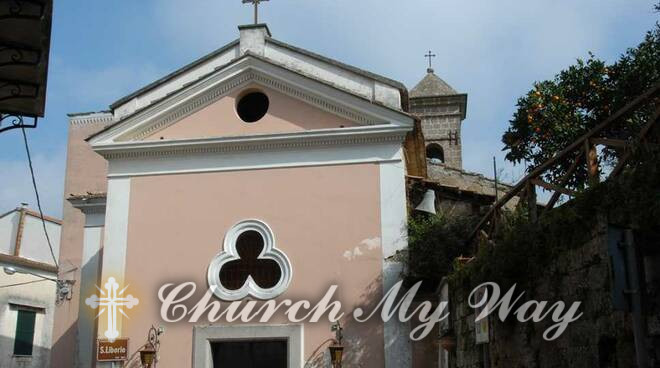
Piano di Sorrento, the hamlet of San Liborio is preparing to celebrate the patron saint Sant’Antonio
Piano di Sorrento. In the hamlet of San Liborio Monday 13 June we return to celebrate the patron saint Sant’Antonio with an intensity of faith while also respecting precious pages of history.
At ore 10.00 the celebration of the Eucharist is presided over by Don Luigi Manganaro.
At ore 19.00 in the Piazzetta S. Caterina Volpicelli Celebration of the Eucharist presided over by Don Rito Maresca.
At 19.45 torchlight procession for the parse with the following itinerary: Departure from Piazzetta S. Caterina Volpicelli – Via Rivolo San Liborio (first section) – Via Mortora / San Liborio (sports field) to the Fiorentino -Maresca property, number 156 and back to Via Mortora / San Liborio – Via San Liborio (ceramic) up to Cereali Zurino – Via Mortora / San Liborio – Via Rivolo San Liborio (still the first section) with a return to the Chapel of San Liborio.
After the return of the torchlight procession to Piazzetta S. Caterina Volpicelli musical evening with 12 Corde with Gennaro and Paolo.
On the occasion of the solemnity of St. Anthony, the blessed bread will be distributed.
Deepening the Devotion: The Heartbeat of a Hamletic Feast
While the schedule of masses and the procession route provide the skeleton of the festa, its true spirit is woven from the quieter traditions and communal preparations that begin days, even weeks, before June 13th. The celebration of Sant’Antonio in San Liborio is not a spectacle imported for the day, but rather the flowering of a year-round devotion, a moment where the private faith of families becomes public joy. Understanding this deeper context transforms a visitor from a spectator into a respectful participant in a living tradition.
Practical Tips for the Pilgrim and Visitor
Navigating a local *festa patronale* like this one requires a blend of preparation and spontaneity. Firstly, consider your transportation. The procession route will temporarily close several small streets in the hamlet. Arriving early by public transport or parking respectfully in the wider Piano di Sorrento area and walking in is highly advised. Secondly, dress codes, while not formally strict, are observed. This is primarily a religious event; modest attire suitable for entering a chapel is appreciated, especially if you plan to attend a mass. Comfortable shoes are non-negotiable for the torchlight procession, which traverses uneven, historic lanes. Finally, engage with the “blessed bread” (*pane benedetto*) tradition. This isn’t merely a snack but a sacramental. It is typically distributed after the main mass. Accept it respectfully—it is often a simple, unsalted bread—and understand it is a symbol of Sant’Antonio’s charity, meant to be shared and consumed with a sense of community.
Avoiding Common Misunderstandings
Several common mistakes can separate a visitor from the authentic experience. One is mistaking the scale. This is a *hamlet’s* celebration, not Sorrento’s city-wide *Festa della Madonna del Carmine*. Expect intimate crowds, not overwhelming throngs. The charm lies in its locality. Another error is focusing solely on the evening events. The 10:00 AM Mass, presided by Don Luigi Manganaro, is the theological heart of the day, where the community gathers in its entirety. Missing it means missing the foundational solemnity. Furthermore, while the musical evening with 12 Corde promises delightful local music, remember it follows the return of the statue to its chapel. The procession is a prayerful journey, not a carnival parade. Loud conversations or flash photography during the torchlit walk can be disruptive. Lastly, don’t confuse Sant’Antonio. This is Sant’Antonio da Padova (Anthony of Padua), the Franciscan “finder of lost things” and beloved preacher, often depicted with the Child Jesus. He is distinct from Sant’Antonio Abate, the patron saint of animals celebrated in January.
Expert Insights: The Layers of Local History
Local historians and elder residents speak of layers of meaning in the festa’s geography. The procession route is not arbitrary. Passing by landmarks like the “ceramic” point on Via San Liborio and the Fiorentino-Maresca property at number 156 is a ritualistic “blessing of the bounds.” It symbolically weaves the spiritual protection of the saint around the homes, fields, and businesses of the hamlet. The choice of Piazzetta S. Caterina Volpicelli as a focal point is also significant. Volpicelli, a 19th-century Neapolitan saint who founded the order of the “Handmaids of the Sacred Heart,” represents a more modern thread of Campanian sanctity, subtly linking the hamlet to a wider regional religious tapestry. The very name of the hamlet, San Liborio, points to an older, perhaps even pre-existing, patronal history before the devotion to Sant’Antonio took center stage, revealing the evolving nature of local piety over centuries.
Fascinating Facts: From Bread to Brotherhood
The traditions surrounding Sant’Antonio are rich with symbolism. The distribution of blessed bread directly references the “Saint’s Bread” (*Pane di Sant’Antonio*), a charity begun by the Saint himself and continued by the “Charities of St. Anthony” worldwide, where the faithful donate grain or bread for the poor. In San Liborio, this act connects the community to a global Franciscan mission of charity. The torchlight procession itself echoes ancient Mediterranean traditions of illuminating the path for sacred figures, a practice Christianized into representing Christ, the “Light of the World,” and the illuminating wisdom of the saints. Interestingly, the musical choice of “12 Corde” (12 Strings) is a thoughtful one. The acoustic, folk-like resonance of string music aligns far more with the rustic, heartfelt tone of a hamlet feast than a brass band would, showing a keen cultural curation by the organizers.
The Unwritten Schedule: Community in Action
Beyond the printed program, the real festa happens in the hidden spaces: women preparing extra portions of *parmigiana di melanzane* or *ragù* for extended family and unexpected guests; men checking the electrical lines for the illuminations and setting up chairs for the elderly; children practicing the hymns they will sing in the chapel. The cleaning and decorating of the Chapel of San Liborio is a communal labor of love. The floral displays, often featuring white lilies (symbolic of purity) and yellow blooms (echoing the Franciscan color), are arranged by volunteers with meticulous care. To truly experience the feast, arrive not just for the procession, but linger in the piazzetta beforehand. Observe the greetings, the laughter, the solemn conversations. This is where the feast is truly made—not just in honor of a saint who lived centuries ago, but in the ongoing saintly acts of community, charity, and shared identity that his memory inspires in the vibrant, tight-knit hamlet of San Liborio.
📅 Last updated: 23.12.2025
❓ Frequently Asked Questions
💬 When is the feast of Sant’Antonio in Piano di Sorrento?
The feast of Sant’Antonio in the San Liborio hamlet of Piano di Sorrento is celebrated on June 13th. The main events, including masses and a procession, take place on that day.
💬 What is the schedule for the Sant’Antonio festival in San Liborio?
The schedule includes a morning Mass at 10:00 AM and an evening Mass at 7:00 PM in Piazzetta S. Caterina Volpicelli. This is followed by a torchlight procession at 7:45 PM and a musical evening to conclude the celebration.
💬 What happens during the Sant’Antonio procession in Piano di Sorrento?
A torchlight procession travels through the streets of the San Liborio hamlet, following a specific route that passes key local landmarks. It begins and ends at the Piazzetta S. Caterina Volpicelli, and the tradition includes the distribution of blessed bread.
