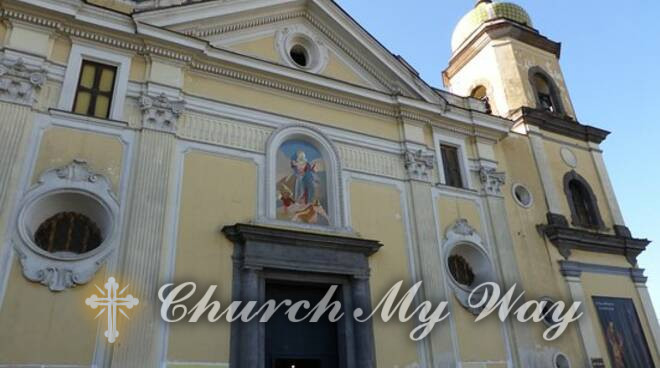
Solemnity of Corpus Domini 2022, the Parish of Mortora is dressed in flowers
Piano di Sorrento (NA) Sunday 19 June at 19:00 on the occasion of the solemnity of Corpus Domini, Holy Mass will be celebrated in the parish court of Mortora, adjacent to the church of Santa Maria di Galatea, with a collection in favor of the interventions of charity of the Vincentian volunteer, will follow the ritual Corpus Domini procession with the monstrance, whose itinerary will involve the following city streets: via S. Andrea, via Delle Acacia, via Legittimo, via Mortora San Liborio, Corso Italia, Piazza Cota, via Casa Rosa, via dei Tigli, via Stazione and via San Michele with a conclusion at the Basilica of San Michele Arcangelo.
We will finally return to celebrate one of the main solemnities of the liturgical year of the Catholic Church, the “Corpus Domini” or “Corpus Christi” (in English-speaking and Spanish countries) in the presence, and wanting to emphasize its exceptional nature, beauty, and emotion, citizens are invited to embellish the path with flowers, flower petals, and blankets embroidered on the balconies, as well as from an ancient tradition born in the Vatican basilica in 1625 by Benedetto Drei, head of the Vatican Floreria, and his son Pietro, who used leafy and minced flowers to emulation of the works of sacred mosaics.
The introduction of this holiday in the Christian calendar, on the other hand, is due to a woman, Sister Juliana of Cornillon, an Augustinian nun who lived in the first half of the thirteenth century. As a young woman, she had a vision of herself: the Church appeared to her with the appearance of a full moon, but with a dark spot, indicating the lack of a holiday.
In 1208 she had another vision, but this time Christ himself would appear to her, who asked her to do her best to establish the feast of the Blessed Sacrament, revive the faith of the faithful, and atone for the sins committed against the sacrament of the Eucharist. From 1222, the year in which she had been appointed prioress of the convent of Mont Cornillon, she sought advice from the major theologians and ecclesiastics of the time to ask for the institution of the festival.
She also wrote a petition to Hughes de Saint-Cher, to the archdeacon of Liège, Jacques Pantaléon (future Urban IV) and to Roberto de Thourotte, bishop of Liège. It was precisely the nun’s initiative and insistent requests that, in 1246, Roberto de Thourotte convened a council and ordered, starting from the following year, the celebration of the feast of Corpus Domini. At the time, the bishops had in fact the faculty to institute holidays within their dioceses.
Deepening the Devotion: The “Why” Behind the Beauty
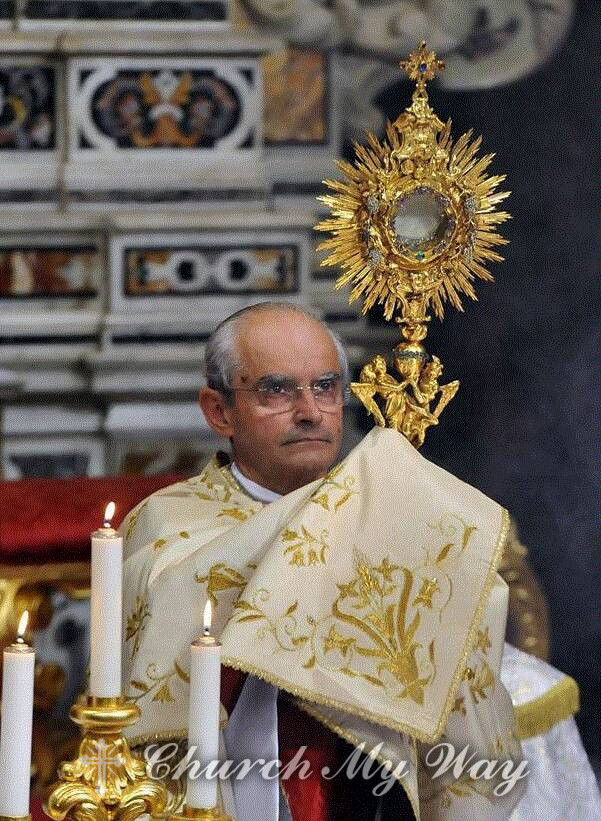
While the visual spectacle of flower carpets and adorned balconies is a central feature of Corpus Domini, understanding the profound symbolism behind these acts transforms mere observation into participation. The path of flowers is not simply decoration; it is a collective act of humility and honor. Each petal, carefully placed, represents a prayer or an act of reparation, creating a fragrant, temporary “road” worthy of the King of Kings who passes in the Eucharist. This echoes the biblical gesture of laying cloaks and palm branches before Jesus on his entry into Jerusalem. In Mortora, the community itself becomes the active landscape of welcome, using the beauty of creation to honor the Creator present in the Blessed Sacrament.
Practical Tips for a Meaningful Contribution
For those inspired to contribute to the floral tapestry, a little planning ensures your efforts are both beautiful and sustainable. First, coordinate with neighbors on your street or balcony row; a unified color scheme or simple pattern has a far greater visual impact than scattered, unconnected efforts. When collecting flower petals, choose those that are freshly fallen or gently picked, avoiding overly bruised or wet petals that will stain the pavement. For balcony displays, secure blankets and hangings firmly against the afternoon breeze that often sweeps in from the Sorrento coast. Most importantly, involve children in safe, supervised ways—letting them place petals or hold small flags—fostering a living tradition that passes to the next generation.
A Common Mistake to Avoid
One frequent oversight in the hustle of preparation is forgetting the journey itself. It’s easy to become so focused on decorating one’s own section of the route or preparing for the social aspect of the evening that the spiritual heart of the procession is secondary. The procession is a public profession of faith, a moment of communal prayer in motion. A helpful perspective is to see the time of the procession not as a break after Mass, but as its liturgical continuation. The monstrance is not merely carried through the streets; it is carried to the streets, bringing Christ’s presence into the very spaces of daily life—the shops, the homes, the crossroads—and sanctifying them.
The Theological Significance of the Procession
Expert theologians often highlight that the Corpus Domini procession makes visible what happens at every Mass. At the consecration, the bread and wine become the Body and Blood of Christ, who then comes spiritually to each communicant. The procession extends this reality geographically and communally. As Pope Benedict XVI once reflected, “In the procession we accompany the Risen Lord in a public way through the streets of our city… We testify that He is the One to whom we entrust our lives.” The itinerary through Via San Michele, Corso Italia, and back to the Basilica of San Michele Arcangelo is not a random walk; it is a symbolic act of claiming the entire community for Christ, asking for his protection and blessing upon all aspects of civic life.
Interesting Historical Facts: Beyond the Vatican Floreria
The tradition of flower carpets, or infiorate, while popularized by the Vatican’s example, taps into even older human impulses. Pre-Christian Romans celebrated floralia, festivals honoring Flora, goddess of flowers. The Church, in her wisdom, often “baptized” such natural human celebrations, redirecting them toward divine praise. Furthermore, the specific connection to Corpus Domini has unique roots in 16th-century Italy. The first documented use of flower petals for a Eucharistic procession is often credited to the town of Genzano in 1625, the very same year Benedetto Drei worked in the Vatican. This suggests a powerful, synchronous movement of the Holy Spirit inspiring different communities to similar acts of breathtaking devotion. The procession in Mortora, therefore, is a link in a centuries-old chain of faith that transforms local artistry into universal worship.
📅 Last updated: 22.12.2025
❓ Frequently Asked Questions
💬 What is the meaning of Corpus Domini?
Corpus Domini, also known as Corpus Christi, is a solemn feast in the Catholic Church that celebrates the Real Presence of Jesus Christ in the Eucharist. It is one of the main liturgical celebrations of the year, typically marked by a public procession with the consecrated host.
💬 What is the tradition of flower carpets for Corpus Domini?
The tradition of creating flower carpets or embellishing procession routes with flowers and petals for Corpus Domini originated in the Vatican in 1625. It was started by Benedetto Drei and his son Pietro, who used minced flowers to create designs emulating sacred mosaics, a practice now common in many towns.
💬 Who started the Feast of Corpus Christi?
The introduction of the Feast of Corpus Christi into the Christian calendar is credited to Sister Juliana of Cornillon, an Augustinian nun from the 13th century. Her visions and advocacy led to the establishment of the feast, which was later extended to the entire Church by Pope Urban IV.
